
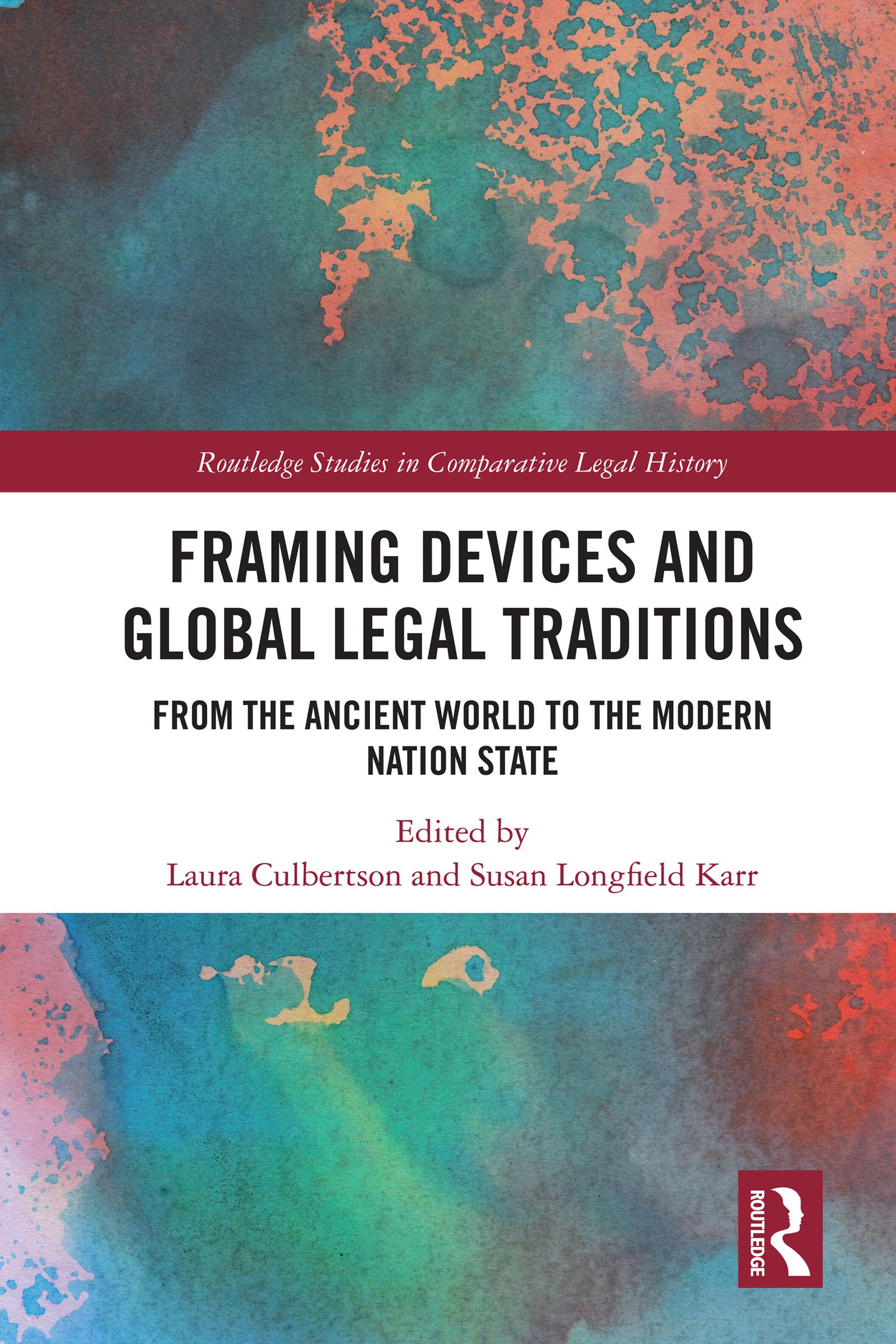
This collection explores prefaces, prologues, paratexts, and other types of framing devices. Across world history, these devices have introduced the law, articulated its context and audience, identified the basis of legal and moral authority, critiqued existing conditions, or even tried to "restore" something that never was. Scribes, lawmakers, and legal theorists also used frames to position the law in time and space, purporting to define populations and their identities. Despite the ubiquity and complexity of these phenomena, few studies have drawn out methods for studying their role in constructing, fortifying, or reimagining legal frameworks within legal cultures or traditions. This volume offers new ways to consider the significance of framing apparatuses regarding how and why they are created, remembered, forgotten, utilized, and recovered within legal traditions. The studies range from the ancient world to the modern nation-state system, aiming to explore the intersections and collisions between juridical and political interpretation practices.
The book will be of interest to academics and researchers in the areas of legal history, comparative law, legal cultures and traditions, legal theory, jurisprudence, constitutional law and legislative drafting.
Płać wygodnie kartą, Klarną, Apple Pay lub Google Pay. Nie jesteś zadowolony? Zawsze masz 14-dniową gwarancję zwrotu pieniędzy. Więcej przeczytasz w naszych warunkach. Masz pytania? Napisz do nas na hello@memmo.org.
Memmo ułatwia naukę – gdziekolwiek jesteś na świecie. U nas znajdziesz podręczniki i sprytne narzędzia do nauki w jednym miejscu: streszczenia, quizy, podcasty i fiszki. A do tego Ted, Twój kumpel do nauki, który odpowie na wszystko, co Cię nurtuje. Ponad 50 000 studentów już tu się uczy – stworzone, byś uczył się szybciej i mniej stresował.