
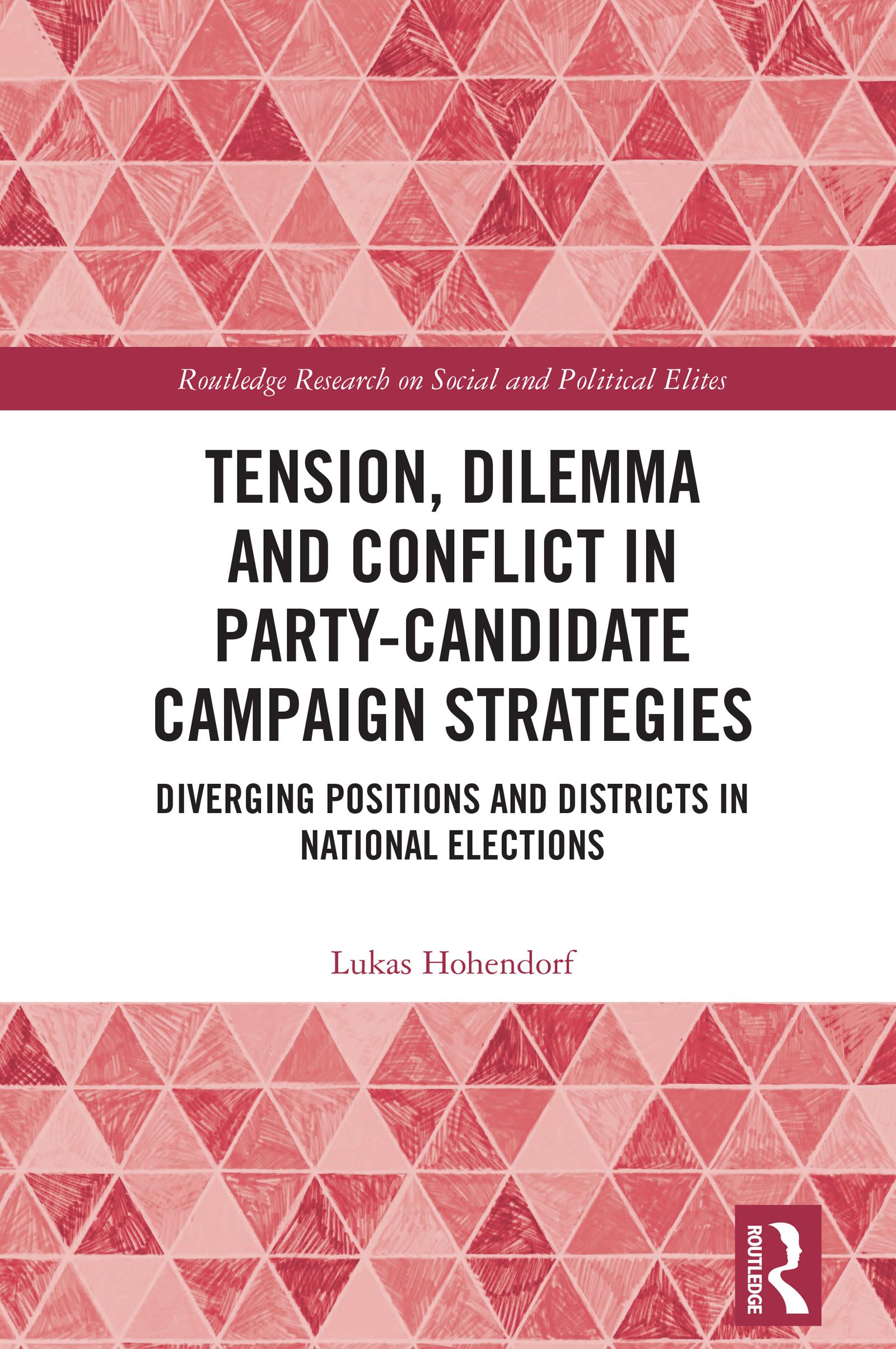
This book examines the campaign communication of political candidates in parliamentary democracies, set within the broader trends of globalization and political personalization.
It explores how district candidates balance local voter preferences, national party demands, and personal beliefs in their campaigns. Using Germany as a case study and drawing on a wide range of data sources, the book reveals how situational factors, such as electoral rules, candidate experience, and local party organization, influence campaign strategies. It demonstrates how campaign positions in parliamentary democracies often deviate from national party stances, with implications on party unity and democratic representation. Framed by the pressing challenges of regional divergence and the rise of political personalization, the book shows why studying individual candidate behavior – rather than simply focusing on party leaders – is crucial for understanding modern democratic systems.
This book will be a key resource for scholars, students, and practitioners in the fields of political parties and elites, electoral studies, political communication, and, more broadly, comparative politics.
Płać wygodnie kartą, Klarną, Apple Pay lub Google Pay. Nie jesteś zadowolony? Zawsze masz 14-dniową gwarancję zwrotu pieniędzy. Więcej przeczytasz w naszych warunkach. Masz pytania? Napisz do nas na hello@memmo.org.
Memmo ułatwia naukę – gdziekolwiek jesteś na świecie. U nas znajdziesz podręczniki i sprytne narzędzia do nauki w jednym miejscu: streszczenia, quizy, podcasty i fiszki. A do tego Ted, Twój kumpel do nauki, który odpowie na wszystko, co Cię nurtuje. Ponad 50 000 studentów już tu się uczy – stworzone, byś uczył się szybciej i mniej stresował.