
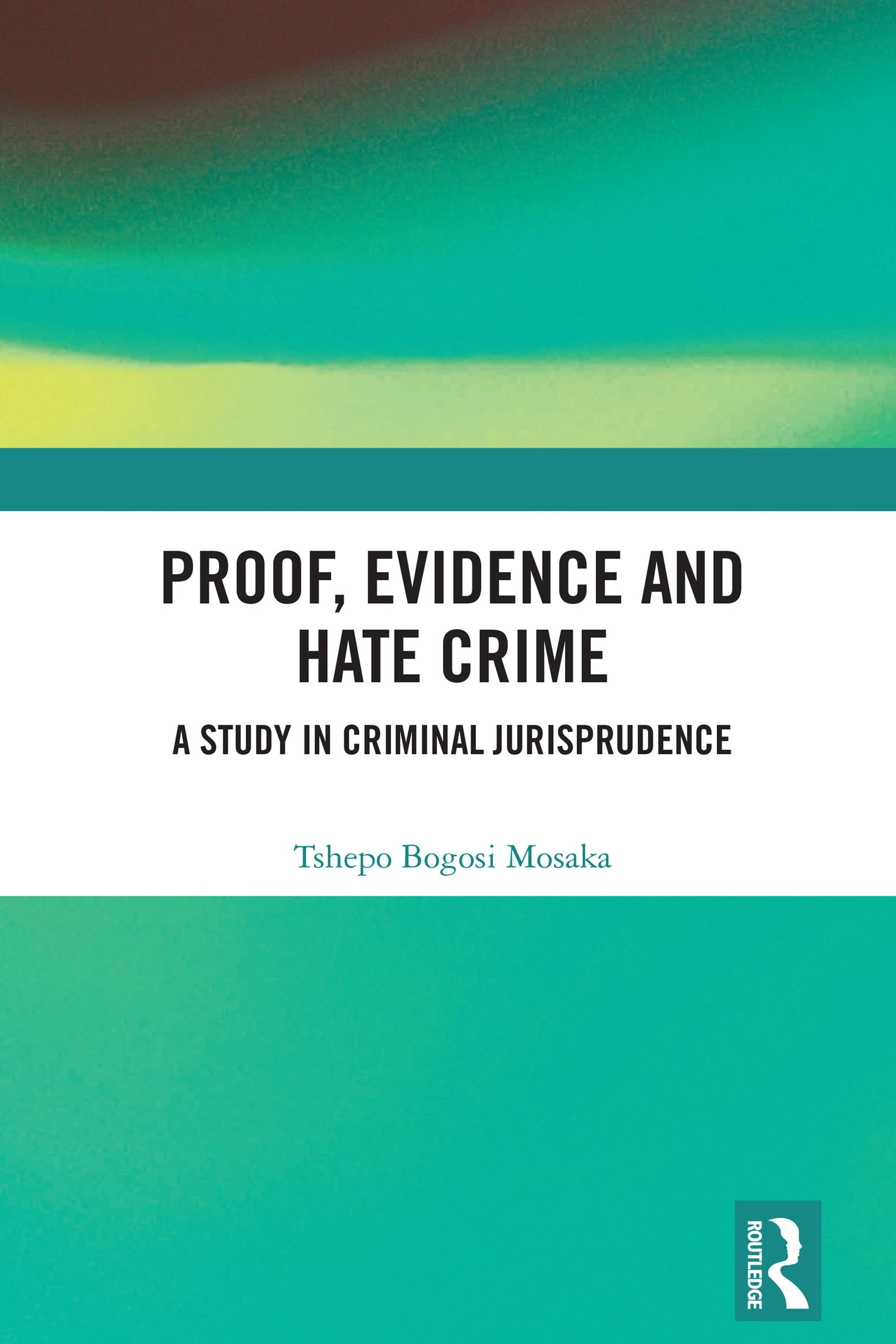
Proof is the property of a disputed fact being established inferentially from an extant fact. This book explicates the structural components of this phenomenon in the context of hate crimes across various jurisdictions around the world. It departs from the orthodox conception of evidence and proof as being a general, value-neutral (or non-normative) and epistemic subject, and offers a relativistic conception of this area of law. The core argument is that proof is both semantically and methodologically determined by three conditions of materiality, process and probativity. This argument is then justified by the context-specific application of this relativistic theory of proof to hate crimes. This theoretical application of proof is sustained throughout the book using multiple examples and illustrations of hate crimes around the world. The discussion, both at the level of proof and hate crimes, while focusing on the grounds of race, religion and ethnicity specifically, is framed in jurisprudential, cross-jurisdictional and interdisciplinary terms. The book will be of interest to academics and researchers working in the areas of criminal law, legal philosophy and procedural law.
Płać wygodnie kartą, Klarną, Apple Pay lub Google Pay. Nie jesteś zadowolony? Zawsze masz 14-dniową gwarancję zwrotu pieniędzy. Więcej przeczytasz w naszych warunkach. Masz pytania? Napisz do nas na hello@memmo.org.
Memmo ułatwia naukę – gdziekolwiek jesteś na świecie. U nas znajdziesz podręczniki i sprytne narzędzia do nauki w jednym miejscu: streszczenia, quizy, podcasty i fiszki. A do tego Ted, Twój kumpel do nauki, który odpowie na wszystko, co Cię nurtuje. Ponad 50 000 studentów już tu się uczy – stworzone, byś uczył się szybciej i mniej stresował.