
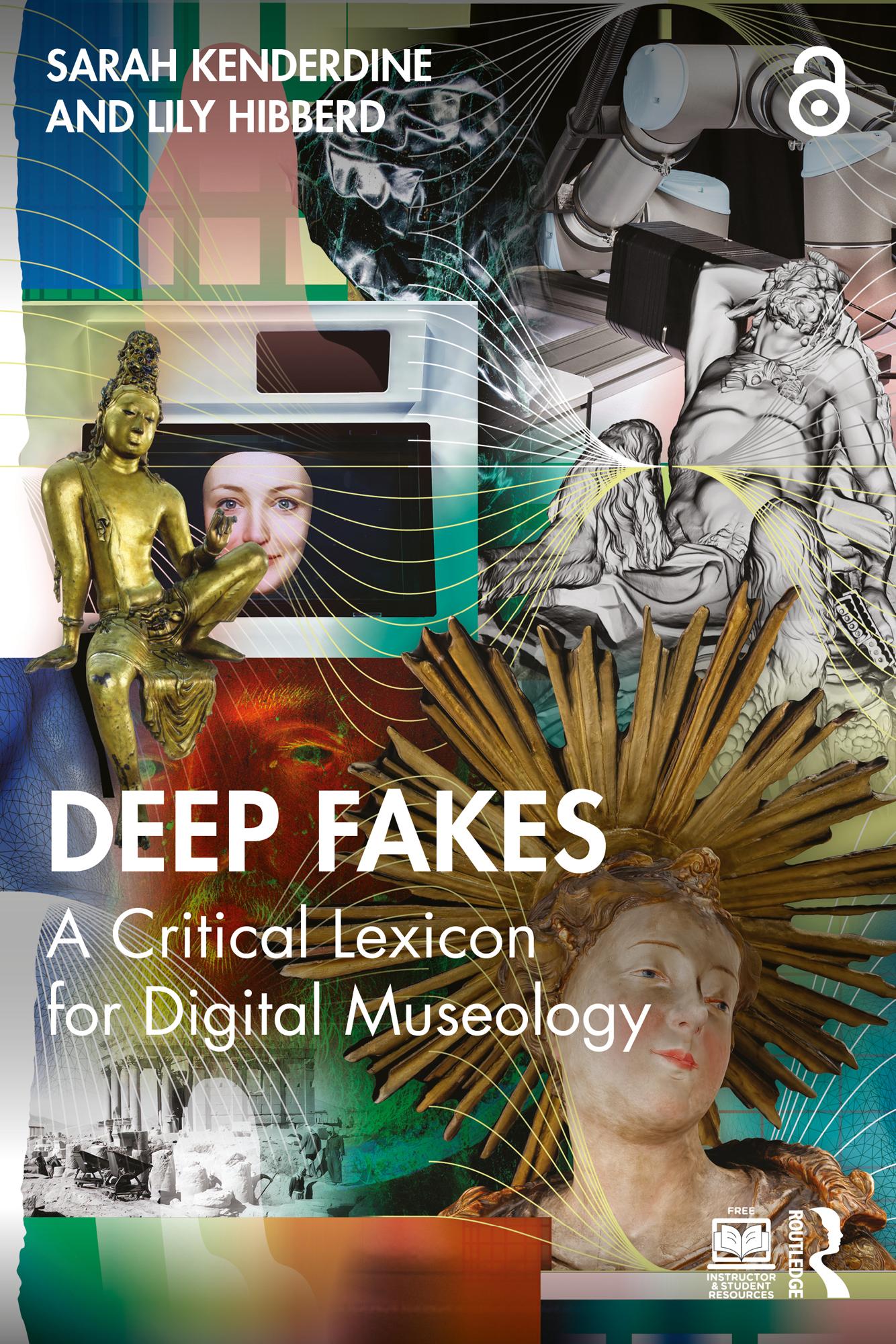
Deep Fakes: A Critical Lexicon for Digital Museology is an illustrated monograph articulated through a comprehensive lexicon of key concepts in next-generation museology. Each of the book’s ten chapters explores specific terms in the lexicon, further interpreted through installations from the 2021 exhibition Deep Fakes: Art and Its Double in Switzerland.
Deep Fakes: A Critical Lexicon for Digital Museology contends with the intensification of questions compounded by rapid technological change affecting contemporary museological and curatorial authority. This book introduces a novel theorization of computational techniques and their transformation of museological objects in the form of cultural deep fakes—the consummate shape-shifting doppelgängers of the post-digital age. Conceived by Sarah Kenderdine and written by Lily Hibberd, this volume elaborates on a spectrum of established theoretical concepts, including affect, aura, authenticity, embodied knowledge, mimesis, the post-original, presence, replication, reenactment, and the simulacrum. Grounded in the methods and techniques of computational museology and participatory visitor experience, it critically examines the practical, epistemological, societal, and ethical implications of emerging technologies and their cultural heritage material. Harnessing the affordances of these transformative approaches for communities and societies, this critical lexicon empowers future-focused curatorship for memory organizations.
This book supports museum professionals in navigating the ramifications of dynamic technological change. Readers include directors, curators, researchers, and designers. Archival and imaging scientists, data managers, and software engineers are also broadly implicated. It has added significance for research disciplines in the history and theory of art and media studies, critical and cultural theory, digital humanities, and museum studies, alongside artists and producers in the cultural domain.
Płać wygodnie kartą, Klarną, Apple Pay lub Google Pay. Nie jesteś zadowolony? Zawsze masz 14-dniową gwarancję zwrotu pieniędzy. Więcej przeczytasz w naszych warunkach. Masz pytania? Napisz do nas na hello@memmo.org.
Memmo ułatwia naukę – gdziekolwiek jesteś na świecie. U nas znajdziesz podręczniki i sprytne narzędzia do nauki w jednym miejscu: streszczenia, quizy, podcasty i fiszki. A do tego Ted, Twój kumpel do nauki, który odpowie na wszystko, co Cię nurtuje. Ponad 50 000 studentów już tu się uczy – stworzone, byś uczył się szybciej i mniej stresował.