
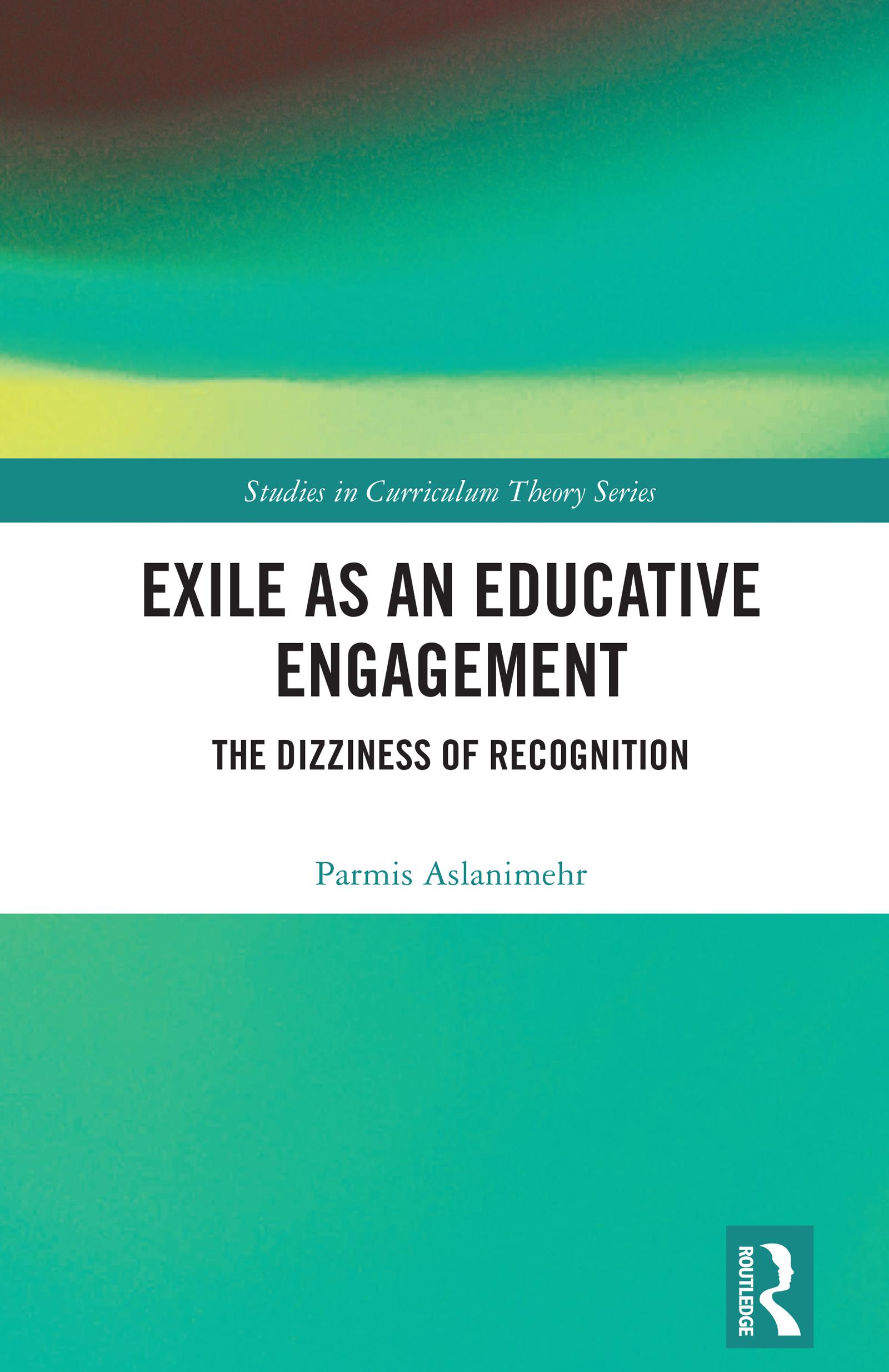
This book explores the concept of exile, experienced not as a physical displacement but as a subjective experience of disconnection from the Other. It further clarifies the notion of exilic subjectivity, whereby a hidden facet of the self—ineffable both to the Other and to the Self—causes a distance between self-comprehension and external perception. In doing so, it poses a challenge to recognition theory’s assertion that self-understanding occurs through interactions with Others. Engaging with the writings of Georg Wilhelm Friedrich Hegel, Charles Taylor, Axel Honneth, Søren Kierkegaard, and Rumi, the book explores the difficulties individuals encounter when transitioning their inwardly focused private identities into public spaces, such as educational institutions. It emphasizes the critical role educators can play in cultivating an atmosphere of attentive listening attuned to the unique experiences that may exile the self. Through the complex interplay of writings by thinkers such as Hegel, Kierkegaard, Rumi, Taylor, and Pinar, this work transcends traditional theories of recognition. Rather than resolving misrecognition, it embraces it as a central aspect of the human condition, examining the tension between self-perception and external acknowledgement. The text phenomenologically investigates “seeing” the Other and the risk of misrecognizing an individual’s innermost depths. These insights find resonance in academia, where even amid success, a chasm may persist, isolating students and educators from each other. As the self dwells in the uneasiness of estrangement, the discussion welcomes the ownership of silence and inwardness into the classroom. From this detached perspective, the possibility of recognizing the convergence of familiarity and strangeness before and within oneself may emerge.
This book is tailored for scholars, educators, and readers interested in the intersections of philosophy, education, and lived experience. It offers readers innovative approaches to understanding exile and recognition, fostering deeper engagement with the complexities of identity, alienation, and the self.
Płać wygodnie kartą, Klarną, Apple Pay lub Google Pay. Nie jesteś zadowolony? Zawsze masz 14-dniową gwarancję zwrotu pieniędzy. Więcej przeczytasz w naszych warunkach. Masz pytania? Napisz do nas na hello@memmo.org.
Memmo ułatwia naukę – gdziekolwiek jesteś na świecie. U nas znajdziesz podręczniki i sprytne narzędzia do nauki w jednym miejscu: streszczenia, quizy, podcasty i fiszki. A do tego Ted, Twój kumpel do nauki, który odpowie na wszystko, co Cię nurtuje. Ponad 50 000 studentów już tu się uczy – stworzone, byś uczył się szybciej i mniej stresował.