
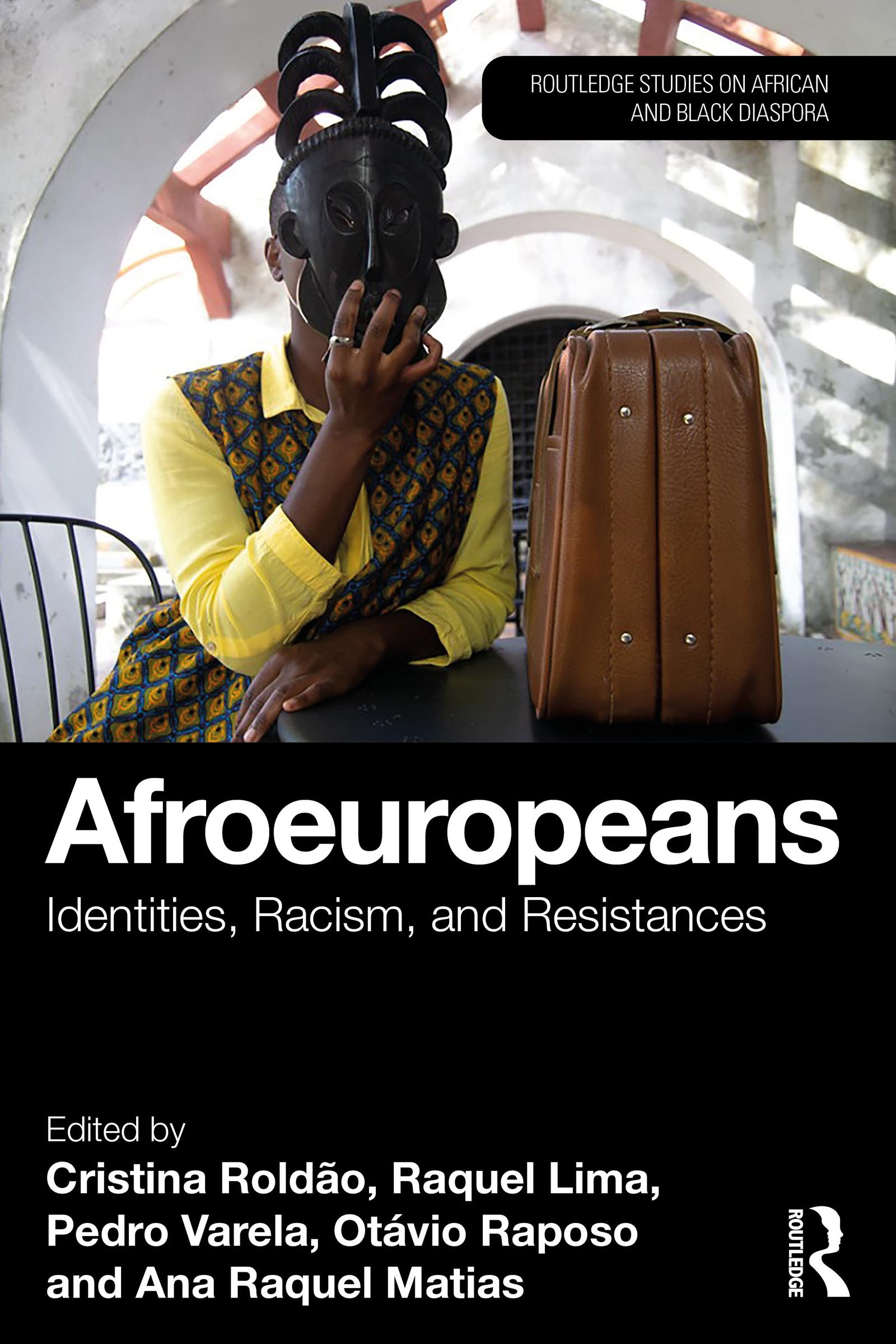
Afroeuropeans: Identities, Racism, and Resistances reflects on the tensions, ambiguities, and paradoxes of Blackness in Europe.
The book addresses relations of domination and modes of racial exclusion, but also Afro-European interventions in the political, social, cultural, and artistic spheres, and the multiple resistances that have sustained Black bodies in the European continent. At the same time as Black histories, cultures, and social conditions are made invisible in hegemonic accounts in Europe, there is a hypervisibility and presence of Black stereotyping in European popular culture. Black identities have become even more conditioned by new mainstream far-right discourses and the tightening immigrant and refugee policies that affect people of African descent. One of the book’s most innovative contributions is the attention it gives to Black South European thought, experiences, and resistance—particularly in the Portuguese context. This constitutes not only a critique Europe’s pervasive racism and "color blindness" policies but also makes a significant contribution to a broader understanding of Blackness and racism, extending beyond the U.S. and Northern European contexts.
This book is forged in a moment of particularly strong Black intellectual and political vitality. Given the book’s intersectional and transdisciplinary approach, it will be an important go-to for students and researchers across the humanities and social sciences, as well as to artists, activists, politicians, and journalists.
Płać wygodnie kartą, Klarną, Apple Pay lub Google Pay. Nie jesteś zadowolony? Zawsze masz 14-dniową gwarancję zwrotu pieniędzy. Więcej przeczytasz w naszych warunkach. Masz pytania? Napisz do nas na hello@memmo.org.
Memmo ułatwia naukę – gdziekolwiek jesteś na świecie. U nas znajdziesz podręczniki i sprytne narzędzia do nauki w jednym miejscu: streszczenia, quizy, podcasty i fiszki. A do tego Ted, Twój kumpel do nauki, który odpowie na wszystko, co Cię nurtuje. Ponad 50 000 studentów już tu się uczy – stworzone, byś uczył się szybciej i mniej stresował.