
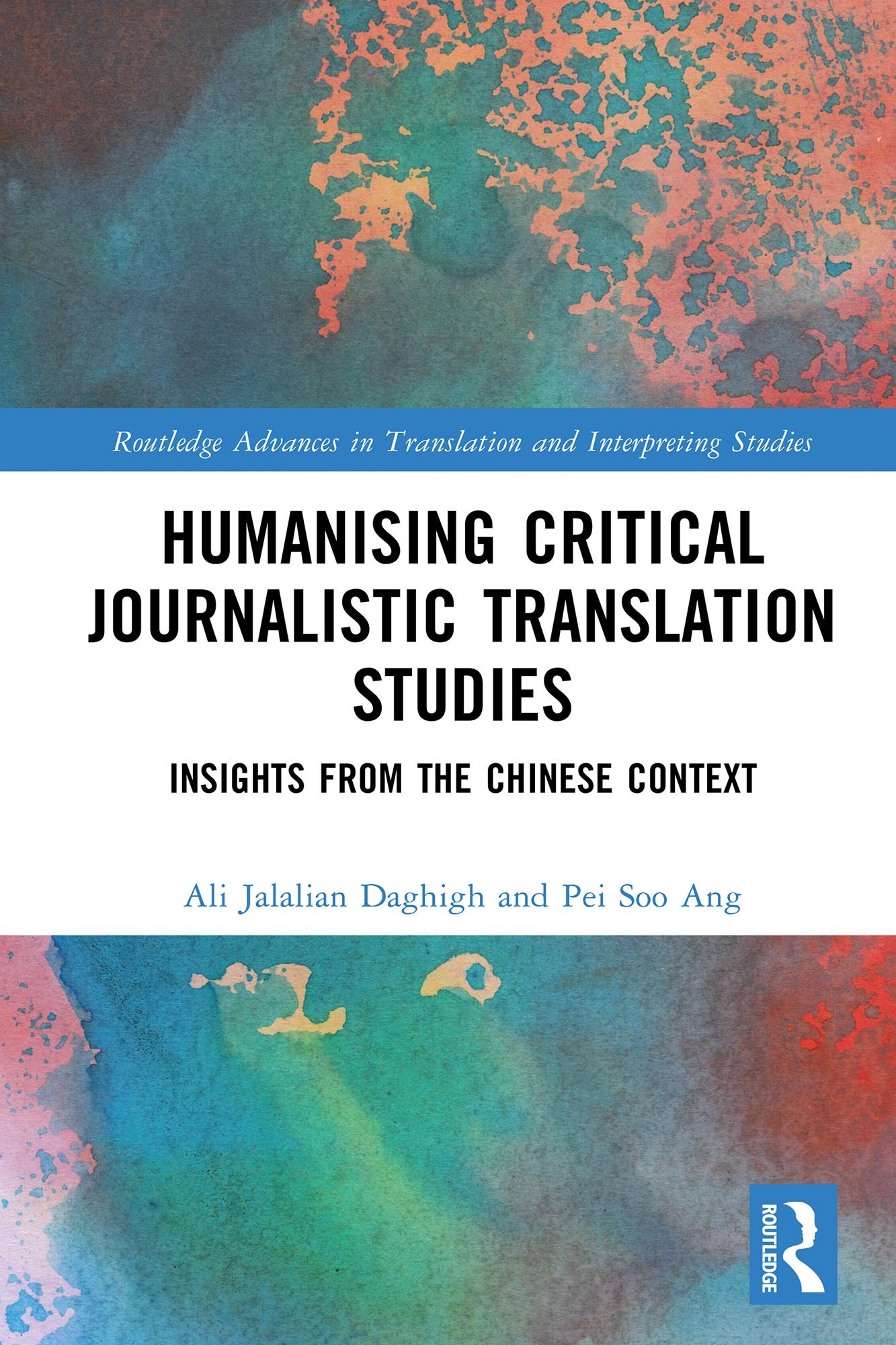
Ali Jalalian Daghigh and Pei Soo Ang’s book provides new insights into the relationships between translation, journalism, ideology, and power via a humanising approach. Carving out a niche within Journalistic Translation Studies, the book introduces and expands on Critical Journalistic Translation Studies (CJTS). The authors critically evaluate the state of the art while advocating for humanising research by focusing on the experiences of both translators and readers.
Using the Chinese journalistic translation landscape as a case study, the book investigates the socio-political and socio-cognitive dimensions of journalistic translation. Through applications of sociological, cognitive, and critical discourse approaches, it sheds light on the working conditions of news translators, their cognitive and emotional experiences, the influence of power and ideology on the translation process, the effects of ideological manipulation on translated news texts, and the subsequent impact of such news on audience perceptions and emotions.
By opening fresh methodological pathways, not only does this book illuminate the Chinese journalistic translation landscape, but it also opens new avenues in CJTS. This book is an indispensable resource for academics, postgraduate students, and researchers in Translation Studies, Media Studies, and Journalism Studies, offering a transformative focus on humanising CJTS.
Płać wygodnie kartą, Klarną, Apple Pay lub Google Pay. Nie jesteś zadowolony? Zawsze masz 14-dniową gwarancję zwrotu pieniędzy. Więcej przeczytasz w naszych warunkach. Masz pytania? Napisz do nas na hello@memmo.org.
Memmo ułatwia naukę – gdziekolwiek jesteś na świecie. U nas znajdziesz podręczniki i sprytne narzędzia do nauki w jednym miejscu: streszczenia, quizy, podcasty i fiszki. A do tego Ted, Twój kumpel do nauki, który odpowie na wszystko, co Cię nurtuje. Ponad 50 000 studentów już tu się uczy – stworzone, byś uczył się szybciej i mniej stresował.