
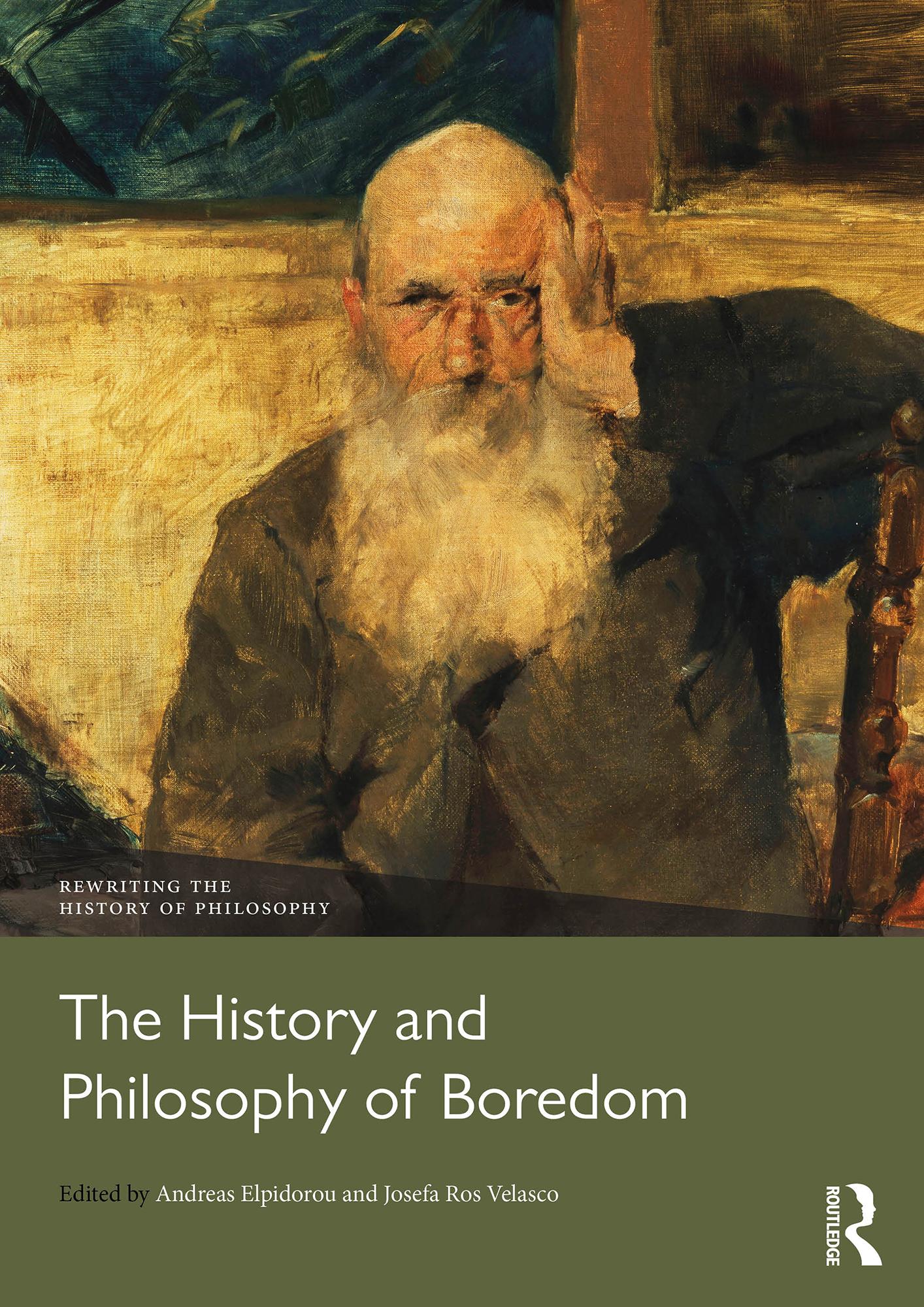
From Lucretius’s horror loci and Buddhist drowsiness to the religious boredom of acedia and the philosophical explorations of Kant, Schopenhauer, Kierkegaard, and Heidegger, boredom has long been a subject of philosophical fascination. Its story, unfolding through millennia, encompasses apathy, weariness, disaffection, melancholy, ennui, tedium, and monotony. Today, boredom assumes new forms: the drudgery of precarious work, the alienation of neoliberalism, the emptiness of leisure, and the overstimulation of our hyperconnected, technologically saturated lives.
The History and Philosophy of Boredom is an outstanding collection, exploring boredom’s intellectual history from its early origins in classical thought to its contemporary manifestations. Containing eighteen specially commissioned chapters by an international team of contributors, the volume is organized into four thematic parts:
- Ancient Philosophical Perspectives
- Religious and Medieval Explorations
- Modern Philosophical Investigations
- Critical and Interdisciplinary Approaches
Topics include boredom in Socratic dialogue, Daoist and Buddhist traditions, Stoicism, and Cynicism; the religious significance of boredom in Judaism and early Christianity; boredom’s role in the works of Kant, Kierkegaard, Schopenhauer, Mill, and Nietzsche; philosophical pessimism; phenomenological approaches; boredom as a political phenomenon; and boredom’s intersections with capitalism, socialism, racial identity, and transhumanism.
The History and Philosophy of Boredom is indispensable for students and researchers in the history of philosophy, emotion studies, phenomenology, and moral psychology. It will also interest scholars in religion, classics, sociology, and the history of psychology.
Płać wygodnie kartą, Klarną, Apple Pay lub Google Pay. Nie jesteś zadowolony? Zawsze masz 14-dniową gwarancję zwrotu pieniędzy. Więcej przeczytasz w naszych warunkach. Masz pytania? Napisz do nas na hello@memmo.org.
Memmo ułatwia naukę – gdziekolwiek jesteś na świecie. U nas znajdziesz podręczniki i sprytne narzędzia do nauki w jednym miejscu: streszczenia, quizy, podcasty i fiszki. A do tego Ted, Twój kumpel do nauki, który odpowie na wszystko, co Cię nurtuje. Ponad 50 000 studentów już tu się uczy – stworzone, byś uczył się szybciej i mniej stresował.