
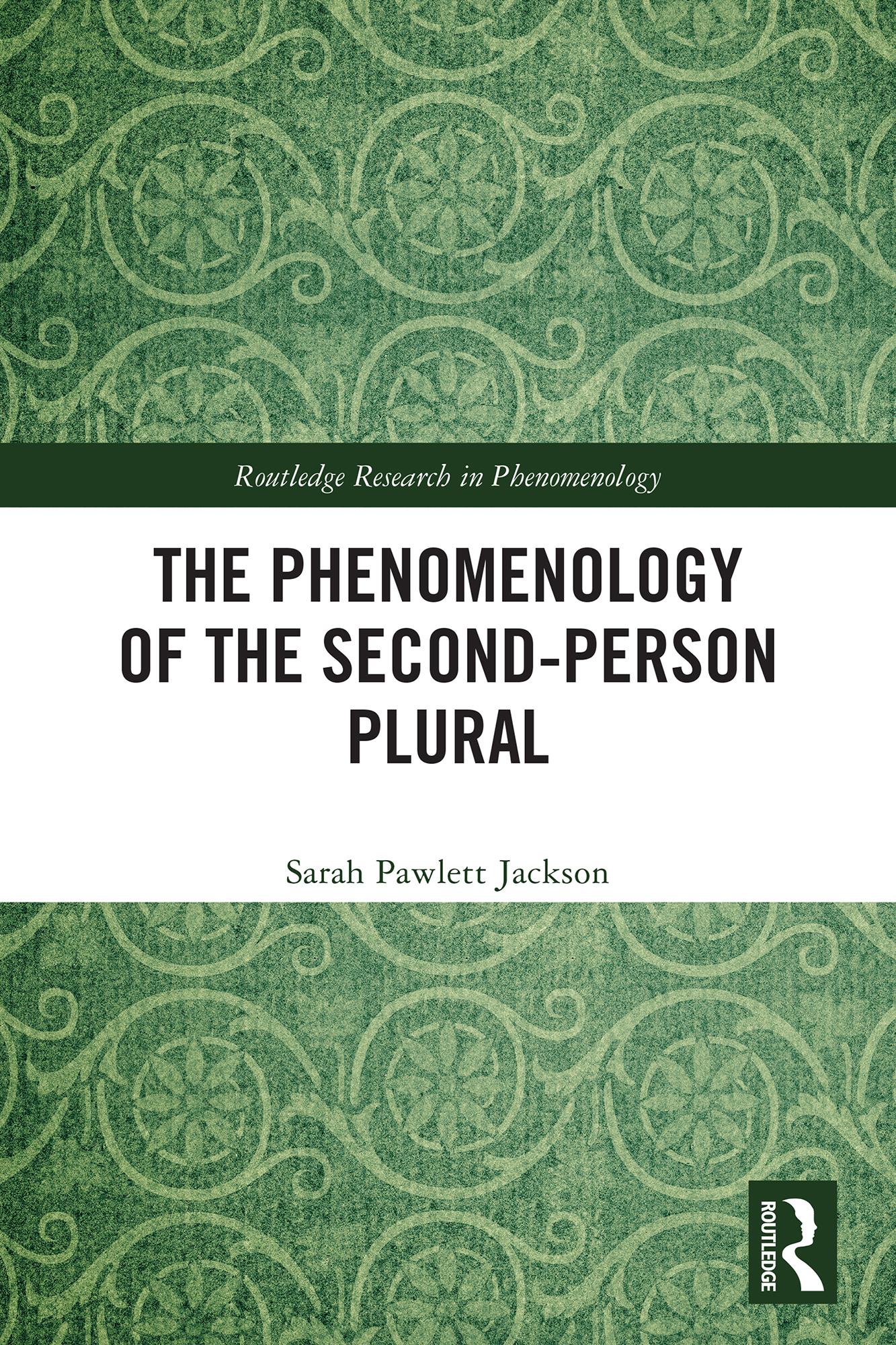
This book presents the case that there are forms of human interaction which should be understood as properly second-person plural. It engages with the work of Sartre, Levinas and contemporary phenomenology to show that this claim is not just about grammatical forms of address, but about the phenomenology and structure of our intersubjective experience.
While there has been plenty of recent work exploring the phenomenology of the second-person singular and the first-person plural, we have not so far seen a systematic account of the second-person plural: the I-yous or we-you. This book outlines the phenomenology of the specific structures of interlocking intersubjective reciprocity which need to be in place between multiple subjects for an interaction to be properly second-person plural. The author considers and defends her account from various possible objections – both a conceptual worry, and a range of empirical worries. These objections are shown to be misguided, and the thread that runs through them – a problematically disembodied conception of the human subject – is exposed. She proceeds to offer a positive account of the second-person plural, supported by an understanding of subjectivity as necessarily embodied and embedded in the world. This account opens an exciting path for further analyses of complex multi-person intersubjectivities in small group contexts.
The Phenomenology of the Second-Person Plural will appeal to scholars and graduate students working in phenomenology, social ontology, and the philosophy of intersubjectivity.
Płać wygodnie kartą, Klarną, Apple Pay lub Google Pay. Nie jesteś zadowolony? Zawsze masz 14-dniową gwarancję zwrotu pieniędzy. Więcej przeczytasz w naszych warunkach. Masz pytania? Napisz do nas na hello@memmo.org.
Memmo ułatwia naukę – gdziekolwiek jesteś na świecie. U nas znajdziesz podręczniki i sprytne narzędzia do nauki w jednym miejscu: streszczenia, quizy, podcasty i fiszki. A do tego Ted, Twój kumpel do nauki, który odpowie na wszystko, co Cię nurtuje. Ponad 50 000 studentów już tu się uczy – stworzone, byś uczył się szybciej i mniej stresował.