
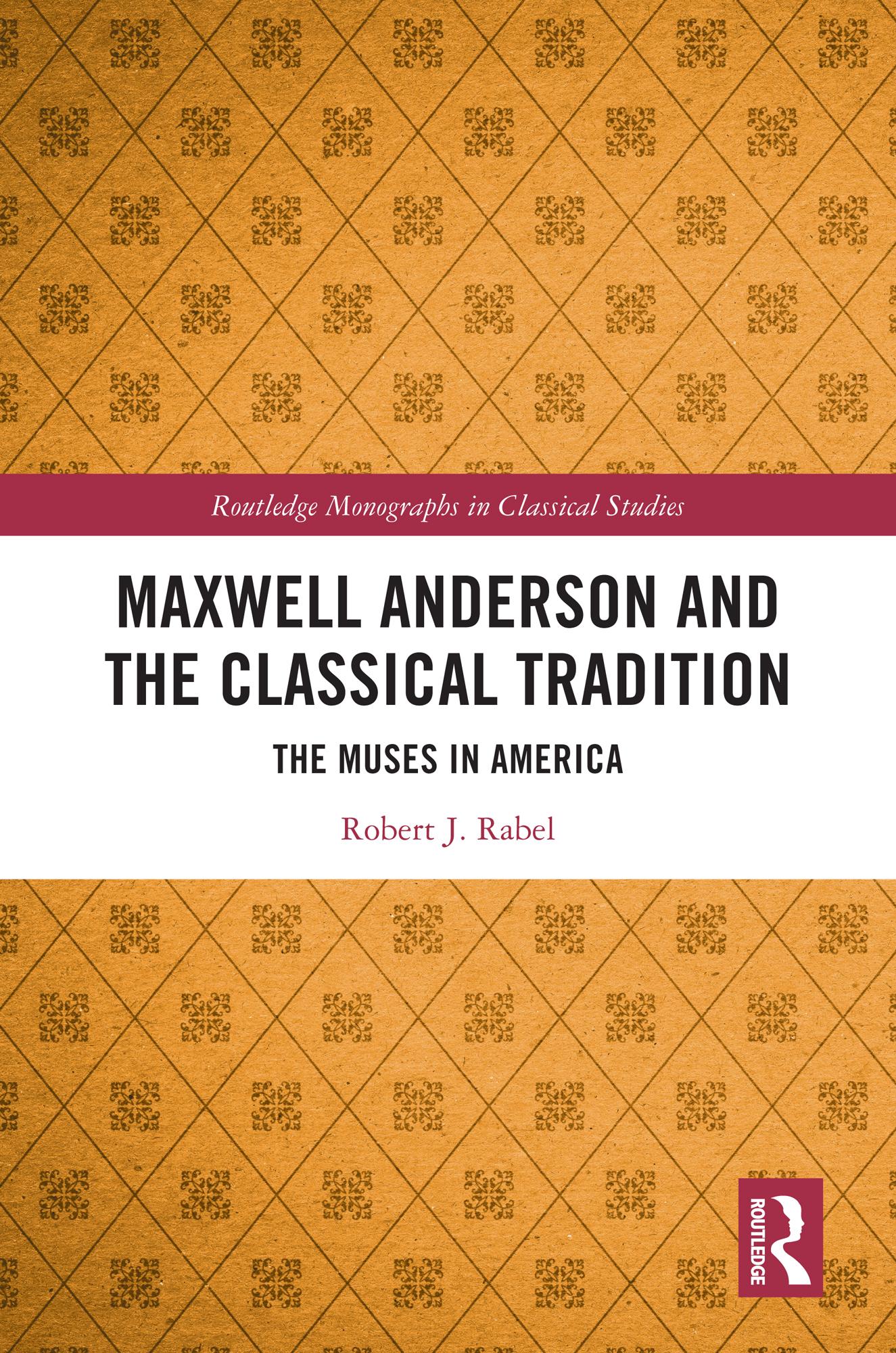
This book sheds new light on the dramatic works of the American playwright, poet, and lyricist Maxwell Anderson, assessing the pervasive influence of Greek and Roman antiquity on his plays that dominated Broadway in the first half of the twentieth century.
Anderson is an important, though often forgotten, figure in the history of American drama and the Classical Tradition. The book highlights Anderson’s remarkably creative use of classical antiquity, while also illustrating how he served as a first-hand witness and reactor to some of the main social and political events of his time. It explores Anderson’s major theatrical works and adaptations of ancient Greek drama and poetry, including Winterset, The Winged Victory, the never-published Ulysses Africanus, and Bad Seed, as well as his later minor works. Anderson found in tragedians such as Aeschylus, Sophocles, and Euripides ideal models for the dramatic portrayal of human emotion amidst the social and political backdrop of the United States from the interwar period to the nuclear age, which this book seeks to explore at length for the first time.
This volume is of interest to students and scholars of Classical Reception and the Classical Tradition, as well as those working on twentieth century American literature, drama, history, and politics.
Płać wygodnie kartą, Klarną, Apple Pay lub Google Pay. Nie jesteś zadowolony? Zawsze masz 14-dniową gwarancję zwrotu pieniędzy. Więcej przeczytasz w naszych warunkach. Masz pytania? Napisz do nas na hello@memmo.org.
Memmo ułatwia naukę – gdziekolwiek jesteś na świecie. U nas znajdziesz podręczniki i sprytne narzędzia do nauki w jednym miejscu: streszczenia, quizy, podcasty i fiszki. A do tego Ted, Twój kumpel do nauki, który odpowie na wszystko, co Cię nurtuje. Ponad 50 000 studentów już tu się uczy – stworzone, byś uczył się szybciej i mniej stresował.