
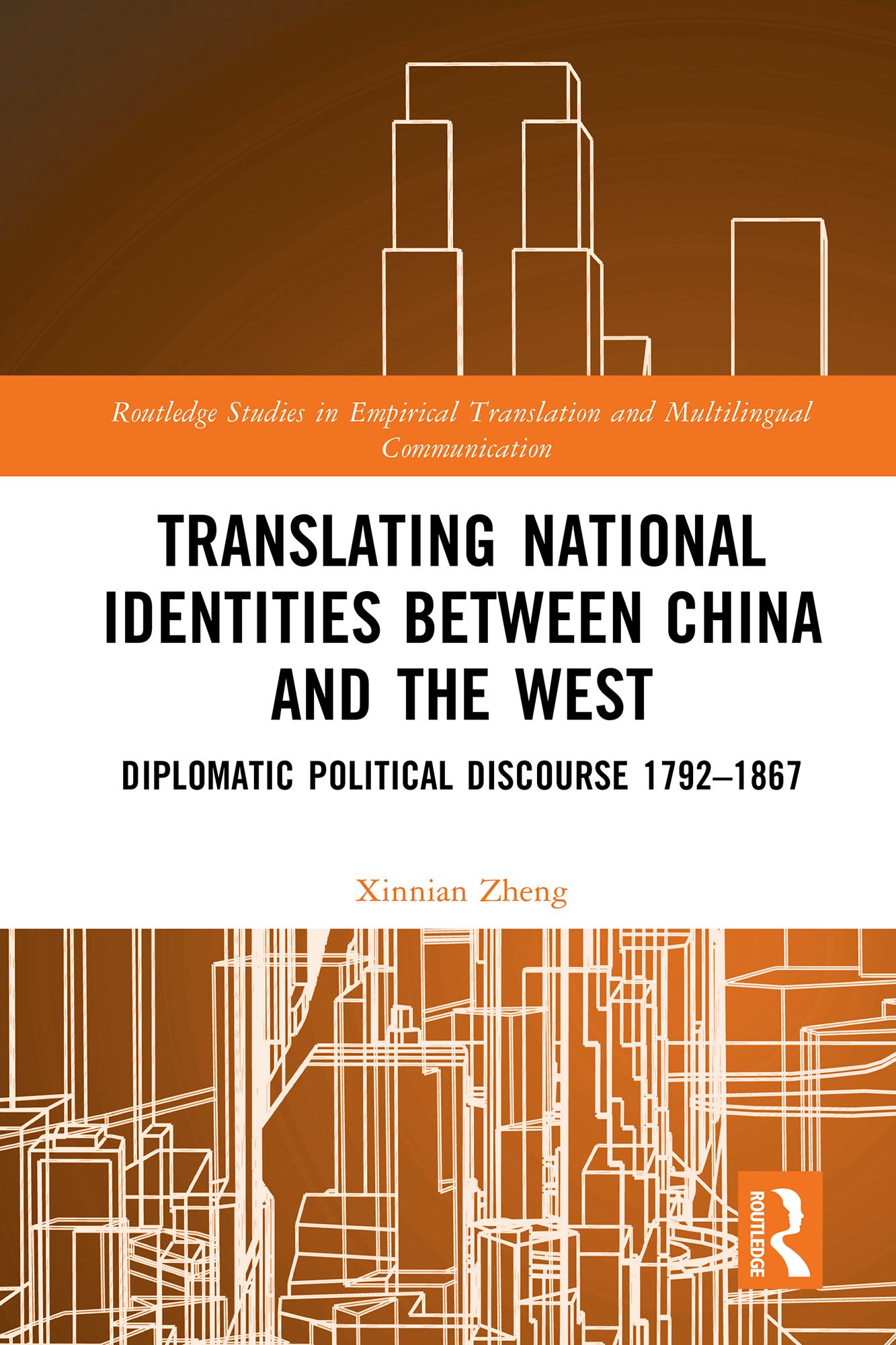
This book explores the discursive construction of national identities in diplomatic political discourse, focusing on translation’s pivotal role. It examines diplomatic exchanges between China and the West from 1792 to 1867, a period marked by China’s national identity crisis. By combining Descriptive Translation Studies (DTS) with Discourse-Historical Approach (DHA), the book uncovers how translation shaped the national identities of both China and the West during a time of intercultural conflict and change.
Through the analysis of 29 authentic historical documents, the book offers a groundbreaking analysis of how translators at the Qing court initially portrayed China as superior and the West as inferior. However, as China’s global position shifted, so did its translation strategies, gradually transforming China’s national identity to be seen as equal to the West. During diplomatic interactions, translators played a crucial role in shaping perceptions of both Chinese and Western identities, thereby influencing international relations.
Essential for scholars and students of translation studies, political discourse, and Chinese history, this book goes beyond traditional analysis, offering a new perspective on the intricate relationship between translation, power, and identity. Its blend of qualitative and quantitative methods provides a comprehensive view of East-West relations during a pivotal period in world history.
Płać wygodnie kartą, Klarną, Apple Pay lub Google Pay. Nie jesteś zadowolony? Zawsze masz 14-dniową gwarancję zwrotu pieniędzy. Więcej przeczytasz w naszych warunkach. Masz pytania? Napisz do nas na hello@memmo.org.
Memmo ułatwia naukę – gdziekolwiek jesteś na świecie. U nas znajdziesz podręczniki i sprytne narzędzia do nauki w jednym miejscu: streszczenia, quizy, podcasty i fiszki. A do tego Ted, Twój kumpel do nauki, który odpowie na wszystko, co Cię nurtuje. Ponad 50 000 studentów już tu się uczy – stworzone, byś uczył się szybciej i mniej stresował.