
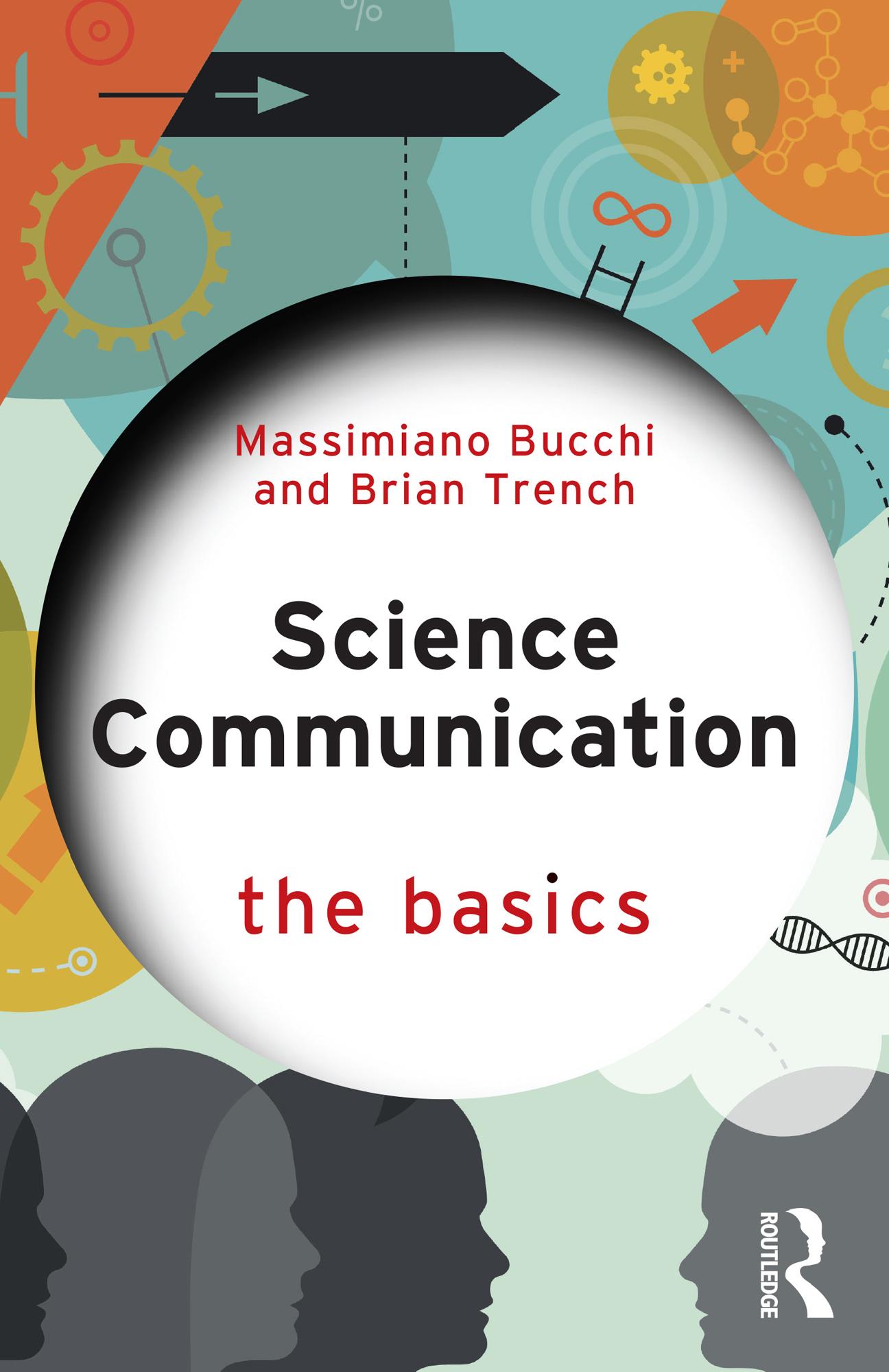
Science Communication: The Basics is an accessible yet critical introduction to science communication, which is viewed as the social conversation around science. It addresses why science communication matters, examines the evolution of theories and practices and explains concepts, myths, misunderstandings and challenges.
Massimiano Bucchi and Brian Trench navigate the foundations and key themes of science communication through numerous vignettes, examples, cases and arguments. They provide annotated recommended reading and a Lexicon summarising the understandings and uses of key terms in the field. Revealing science communication as a collective process and part of daily life, topics covered include science communication as part of culture and our understanding of ourselves and the world; the history of science communication and the development of ‘modern science’; policy and theoretical approaches; the growth of professional practice, formal education and research in the field; evolving platforms for science communication; and quality, trust and ethical awareness in science communication.
Science Communication: The Basics is designed to be a concise primer and essential reading for newcomers to the field, including staff in research and policy institutions, students of the natural, human and social sciences, and general readers curious about the ways science is presented and perceived in society.
Science Communication: The Basics is the third in a triptych of works on science communication from the two authors. The other two works are the Routledge Handbook of Public Communication of Science and Technology, first published in 2008 and now in its third edition (2021), and a four-volume anthology of readings, The Public Communication of Science (2016), also published by Routledge.
Płać wygodnie kartą, Klarną, Apple Pay lub Google Pay. Nie jesteś zadowolony? Zawsze masz 14-dniową gwarancję zwrotu pieniędzy. Więcej przeczytasz w naszych warunkach. Masz pytania? Napisz do nas na hello@memmo.org.
Memmo ułatwia naukę – gdziekolwiek jesteś na świecie. U nas znajdziesz podręczniki i sprytne narzędzia do nauki w jednym miejscu: streszczenia, quizy, podcasty i fiszki. A do tego Ted, Twój kumpel do nauki, który odpowie na wszystko, co Cię nurtuje. Ponad 50 000 studentów już tu się uczy – stworzone, byś uczył się szybciej i mniej stresował.