
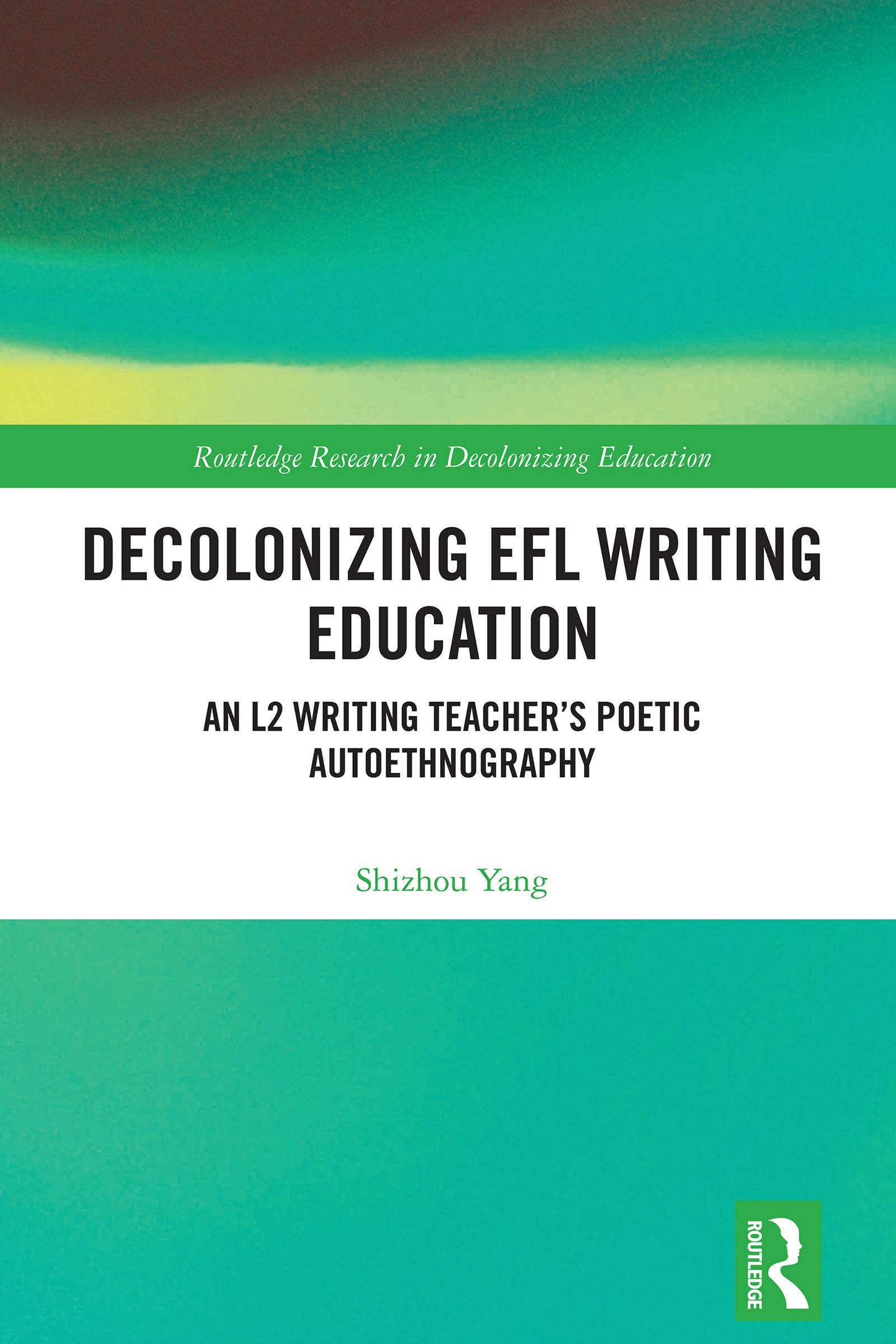
Arguably the first book-length exploration of decolonizing English as a Foreign Language (EFL) writing education, this novel volume uses poetic autoethnography to provide a situated, dynamic, and complex view of multilingual writers through their second language (L2) academic writing and creative writing.
Responding to contemporary calls to decolonize L2 writing as a field and diversify academic writing for multilingual students, this book is the first of its kind to explore the decolonization of EFL writing education from a Global Southern context. Chapters critically and creatively consider issues of educational technologies, translanguaging, academic writing, epistemology, and pedagogy from two writing courses from a Global South and classroom writing ecology perspective. Using poetic autoethnography alongside data from authentic writing classrooms in Thailand, the book posits that emergent translanguaging literature can be cultivated for decolonization purposes, critiquing and providing decolonial options in such areas as monolingual ideology, freewriting, student identity, and mind.
Empowering EFL writing teachers to raise students’ critical awareness of issues such as writing, culture, and coloniality, this book will be of key interest to researchers, scholars, and postgraduate students in the fields of applied linguistics, Teaching English to Speakers of Other Languages (TESOL), L2 writing, multilingual education, and language policy and planning.
Płać wygodnie kartą, Klarną, Apple Pay lub Google Pay. Nie jesteś zadowolony? Zawsze masz 14-dniową gwarancję zwrotu pieniędzy. Więcej przeczytasz w naszych warunkach. Masz pytania? Napisz do nas na hello@memmo.org.
Memmo ułatwia naukę – gdziekolwiek jesteś na świecie. U nas znajdziesz podręczniki i sprytne narzędzia do nauki w jednym miejscu: streszczenia, quizy, podcasty i fiszki. A do tego Ted, Twój kumpel do nauki, który odpowie na wszystko, co Cię nurtuje. Ponad 50 000 studentów już tu się uczy – stworzone, byś uczył się szybciej i mniej stresował.