
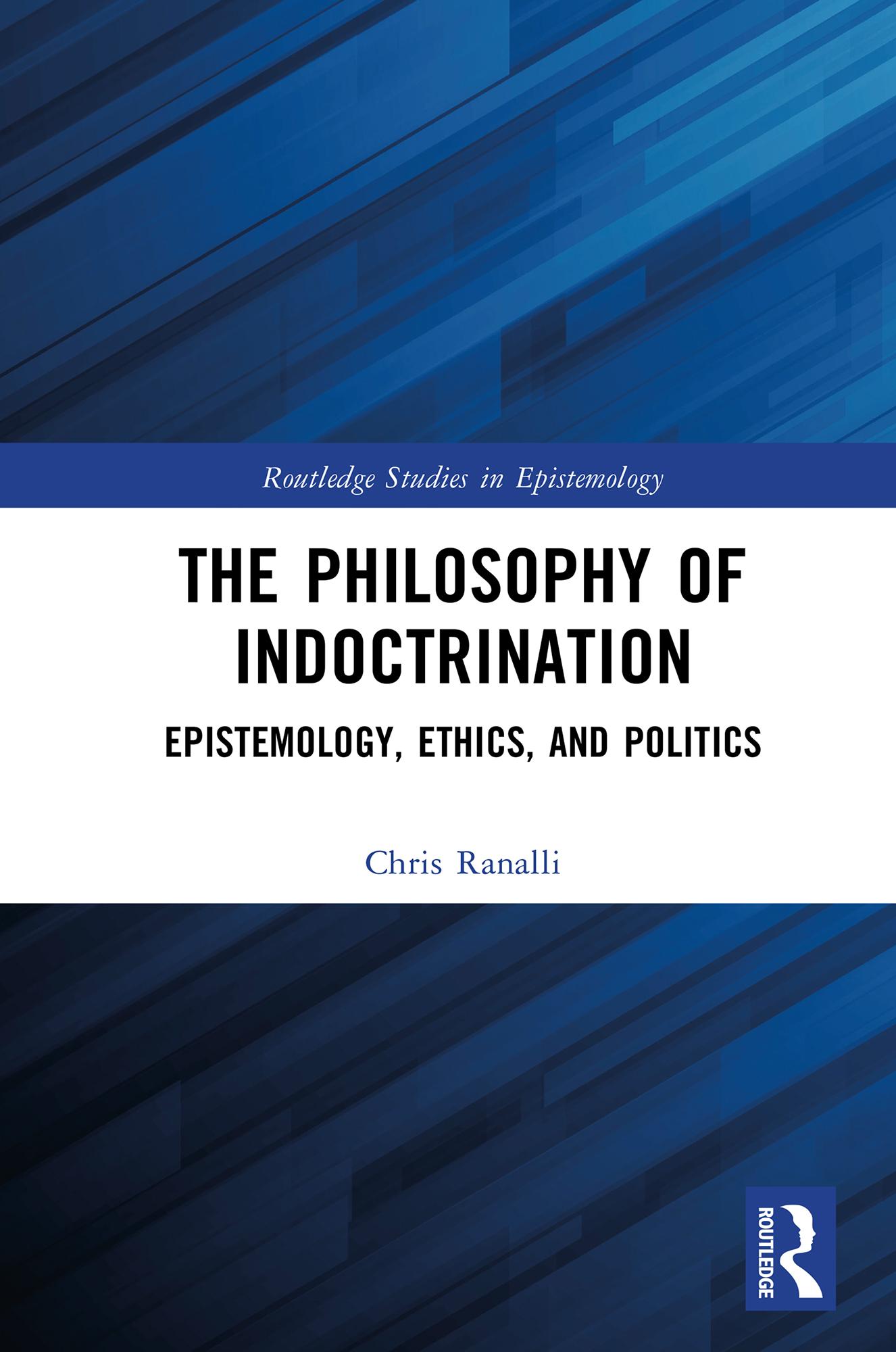
This book develops and defends a novel social epistemological account of indoctrination. It answers important epistemological, ethical, and political questions about what indoctrination is, why it is epistemically harmful, how it can be practiced, and how we should talk about indoctrination.
The author presents three views related to the epistemology of indoctrination. First, he argues that indoctrination is most fundamentally a structural epistemic phenomenon which results in closed-minded beliefs. The sources of indoctrination are diverse: institutional structures, technological systems, ideological frames, and individual actions. What unites them is that they lead to the systematic failure to consider seriously the relevant alternatives to what we are taught, whether by accident or by design. Second, he makes the case that indoctrination is always wrong because it disrespects agents in their capacity as epistemic agents, even when it results in true belief. Third and finally, he contends that public indoctrination-ascriptions are political propaganda; they function to promote political agendas, which can, ironically, breed the conditions for indoctrination rather than forestall it.
The Philosophy of Indoctrination is an essential resource for researchers and advanced students working in social and political epistemology, ethics, political philosophy, philosophy of education, and terrorism and radicalization studies.
Płać wygodnie kartą, Klarną, Apple Pay lub Google Pay. Nie jesteś zadowolony? Zawsze masz 14-dniową gwarancję zwrotu pieniędzy. Więcej przeczytasz w naszych warunkach. Masz pytania? Napisz do nas na hello@memmo.org.
Memmo ułatwia naukę – gdziekolwiek jesteś na świecie. U nas znajdziesz podręczniki i sprytne narzędzia do nauki w jednym miejscu: streszczenia, quizy, podcasty i fiszki. A do tego Ted, Twój kumpel do nauki, który odpowie na wszystko, co Cię nurtuje. Ponad 50 000 studentów już tu się uczy – stworzone, byś uczył się szybciej i mniej stresował.