
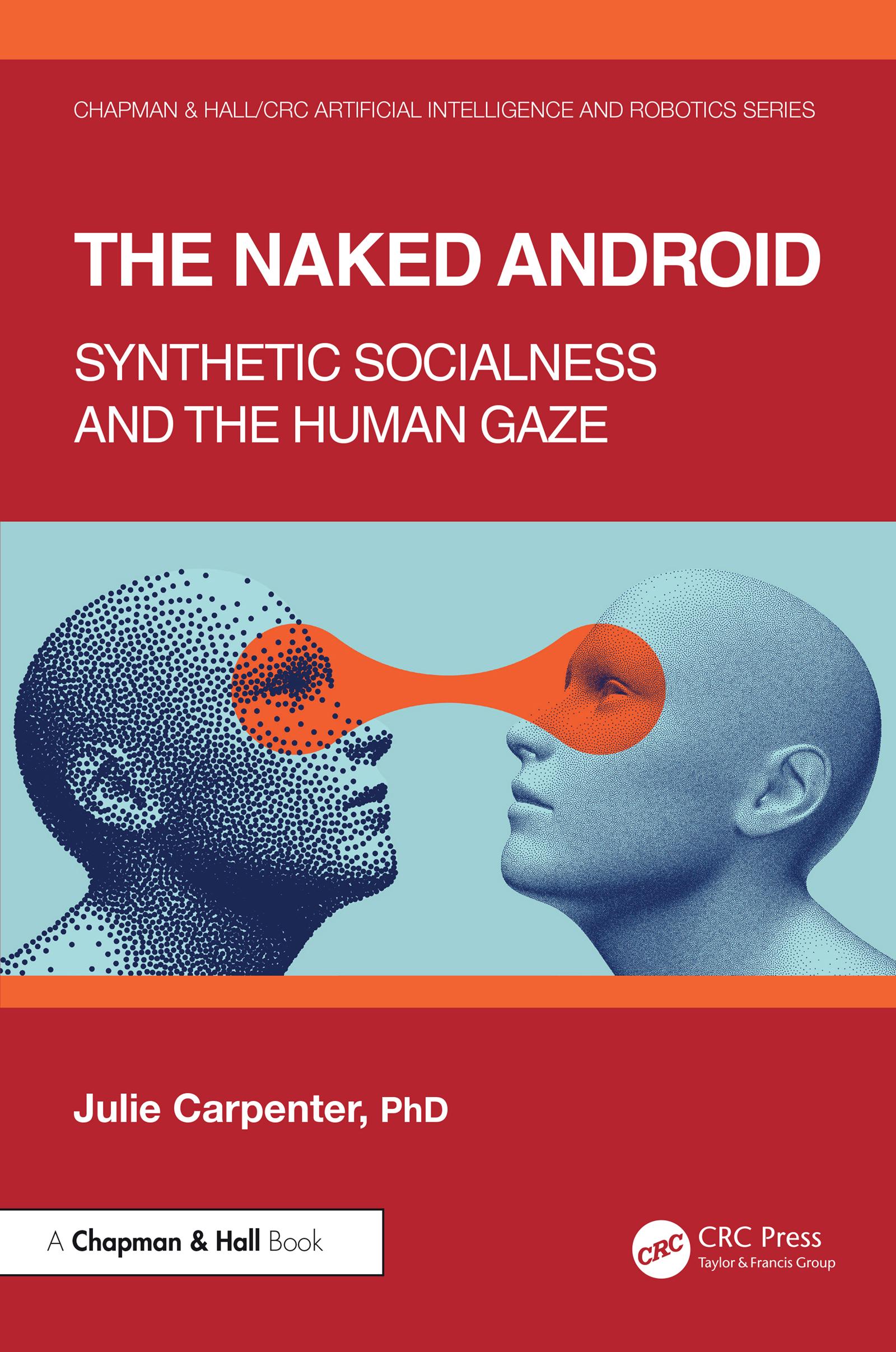
The Naked Android: Synthetic Socialness and the Human Gaze illuminates the connection between the stories people tell, their expectations of what a robot is, and how these beliefs and values manifest in how real robots are designed and used.
The introduction of the “human gaze” articulates how peoples’ expectations and perceptions about robots are ultimately based on deeply personal cultural interpretations of what is artificial or human and what problems social robots should –or should not –solve. The Naked Android clarifies how human qualities like understanding and desire are designed into robots as mediums as well as projected onto them by the people who live with them.
By investigating the fluidity of identities across human culture and social robotics, this book unpacks the contextual complexities of their interactions and mutual influences. Using ethnographic methods including in-depth interviews with a variety of stakeholders, each chapter explores how people are designing social robots, the experience of living with robots, and people whose jobs it is to dream about a future integrated with robots.
Key Features:
- Introduces the concept of the “human gaze” (and the “robot gaze”) as means of understanding how people live with robots.
- Each chapter includes in-depth interviews with people who make, live with, or create art about robots.
- Using ethnographic methods, paints a vivid description of the interconnecting influences of science fiction, human imagination, and real technology.
Płać wygodnie kartą, Klarną, Apple Pay lub Google Pay. Nie jesteś zadowolony? Zawsze masz 14-dniową gwarancję zwrotu pieniędzy. Więcej przeczytasz w naszych warunkach. Masz pytania? Napisz do nas na hello@memmo.org.
Memmo ułatwia naukę – gdziekolwiek jesteś na świecie. U nas znajdziesz podręczniki i sprytne narzędzia do nauki w jednym miejscu: streszczenia, quizy, podcasty i fiszki. A do tego Ted, Twój kumpel do nauki, który odpowie na wszystko, co Cię nurtuje. Ponad 50 000 studentów już tu się uczy – stworzone, byś uczył się szybciej i mniej stresował.