
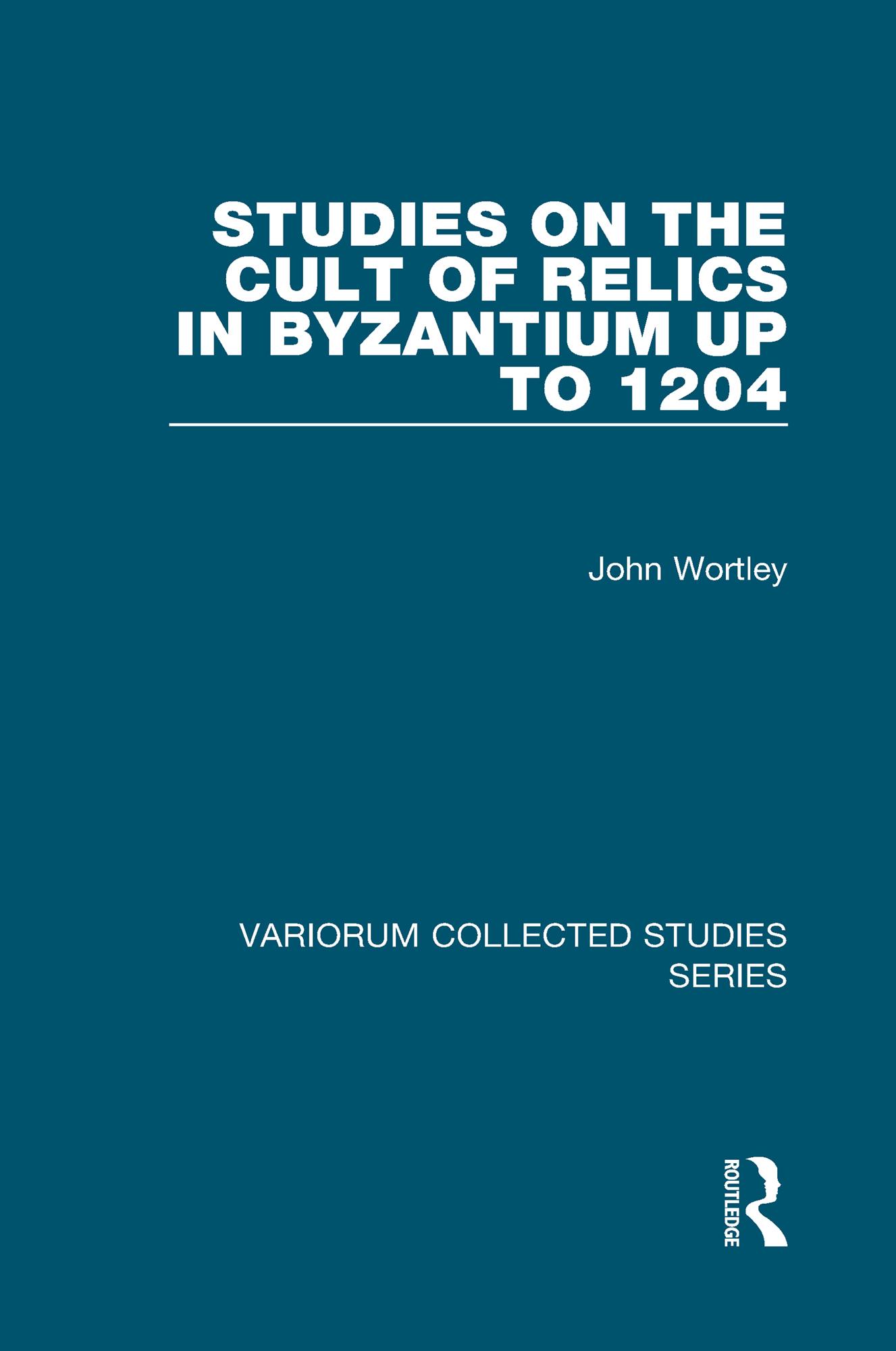
Constantinople was well known in its heyday for the enormous collection of relics housed in its churches: bones, even whole bodies and intimate possessions of holy men and women. Almost all these objects had been imported from various parts of the Roman Empire between the late 4th to the 10th centuries. They had been acquired because they were believed to have miraculous powers to ward off enemies, to heal sicknesses and to ensure that the capital was indeed the "God-guarded" (Theophylaktos) city it believed itself to be. These studies examine the means by which relics were acquired, the ways in which they were used and some of the reasons why for so long they were believed to be effective. The role of relics in the development of the cult of the Mother of God (Theotokos) is discussed as well as the curious relationship between relics and icons. The so-called 'deviation' of the Fourth Crusade and the subsequent sacking of Constantinople in 1204 may also in part be explained by an unbridled yearning to possess her relics; they were certainly pillaged and disseminated to the west, thus concluding an era of relic-history at Byzantium and initiating a different one in the west.
Strony: 300
Kategoria: Religion & Teologi
e-ISBN: 9781040241752
Waga przesyłki: 1.2 kg
Wysyłka w ciągu: 1-2 dni
Płać wygodnie kartą, Klarną, Apple Pay lub Google Pay. Nie jesteś zadowolony? Zawsze masz 14-dniową gwarancję zwrotu pieniędzy. Więcej przeczytasz w naszych warunkach. Masz pytania? Napisz do nas na hello@memmo.org.
Memmo ułatwia naukę – gdziekolwiek jesteś na świecie. U nas znajdziesz podręczniki i sprytne narzędzia do nauki w jednym miejscu: streszczenia, quizy, podcasty i fiszki. A do tego Ted, Twój kumpel do nauki, który odpowie na wszystko, co Cię nurtuje. Ponad 50 000 studentów już tu się uczy – stworzone, byś uczył się szybciej i mniej stresował.
Może Ci się spodobać
Kup książkę0