
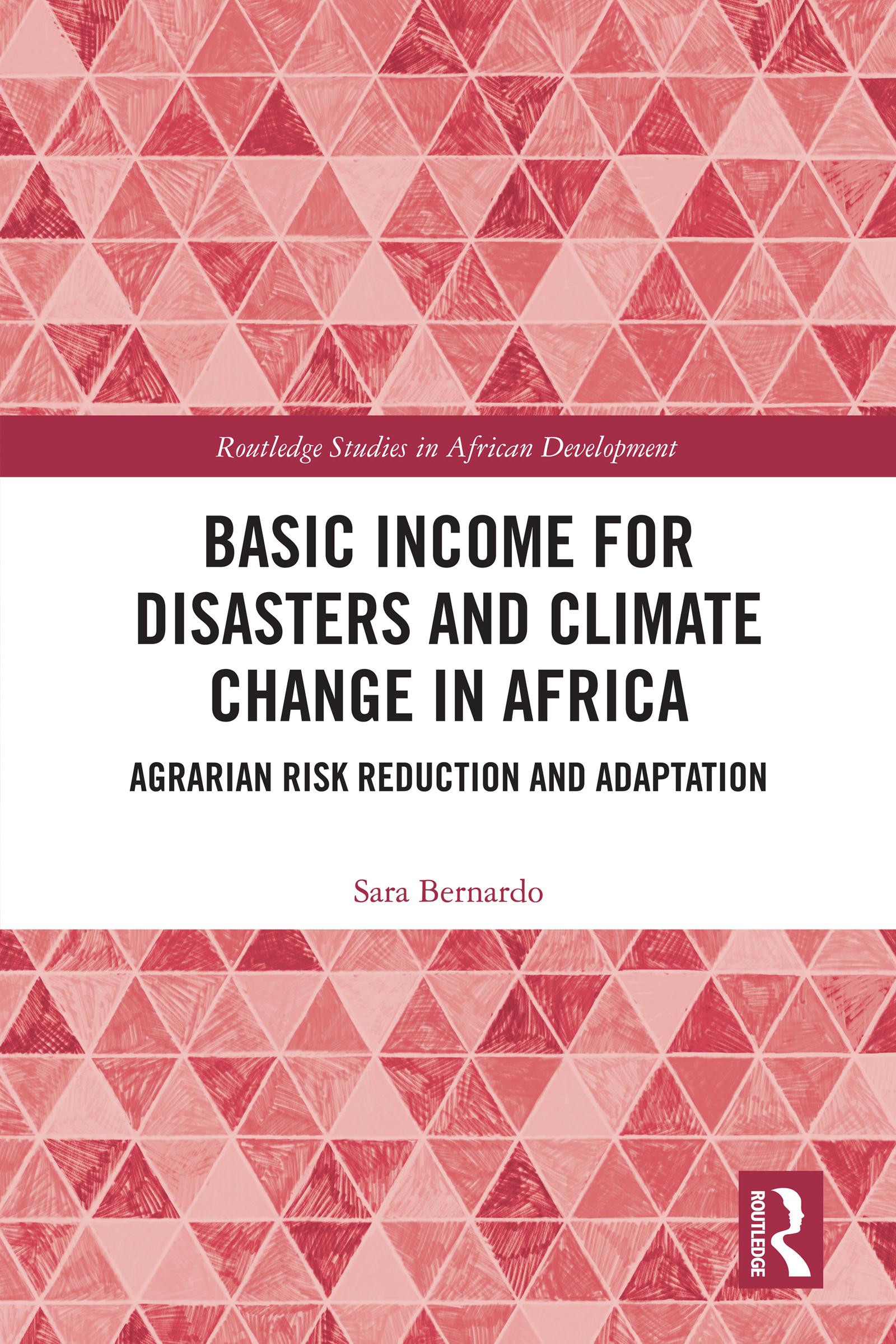
This book considers how basic income could be used as a mechanism for disaster risk reduction and climate change adaptation in African agrarian societies.
African agrarian societies are among those most severely impacted by disasters due to insufficient financial and technological resources to prepare for and respond to crises. This book argues that hazards and environmental disasters are increasingly not isolated occurrences, and the vulnerability of communities is cumulative event after event, with capacities to cope and adapt weakened progressively. With pre- and post-disaster operating as a single continuous process, basic income could provide communities with a stable flow of money, leaving them better able to adapt and respond to crises. To illustrate the theoretical framework, the book uses Mozambique, and more specifically the district of Búzi, as an instrumental case study.
This innovative book will be of interest to readers across the fields of global development, African studies and humanitarian and disaster studies.
Płać wygodnie kartą, Klarną, Apple Pay lub Google Pay. Nie jesteś zadowolony? Zawsze masz 14-dniową gwarancję zwrotu pieniędzy. Więcej przeczytasz w naszych warunkach. Masz pytania? Napisz do nas na hello@memmo.org.
Memmo ułatwia naukę – gdziekolwiek jesteś na świecie. U nas znajdziesz podręczniki i sprytne narzędzia do nauki w jednym miejscu: streszczenia, quizy, podcasty i fiszki. A do tego Ted, Twój kumpel do nauki, który odpowie na wszystko, co Cię nurtuje. Ponad 50 000 studentów już tu się uczy – stworzone, byś uczył się szybciej i mniej stresował.