
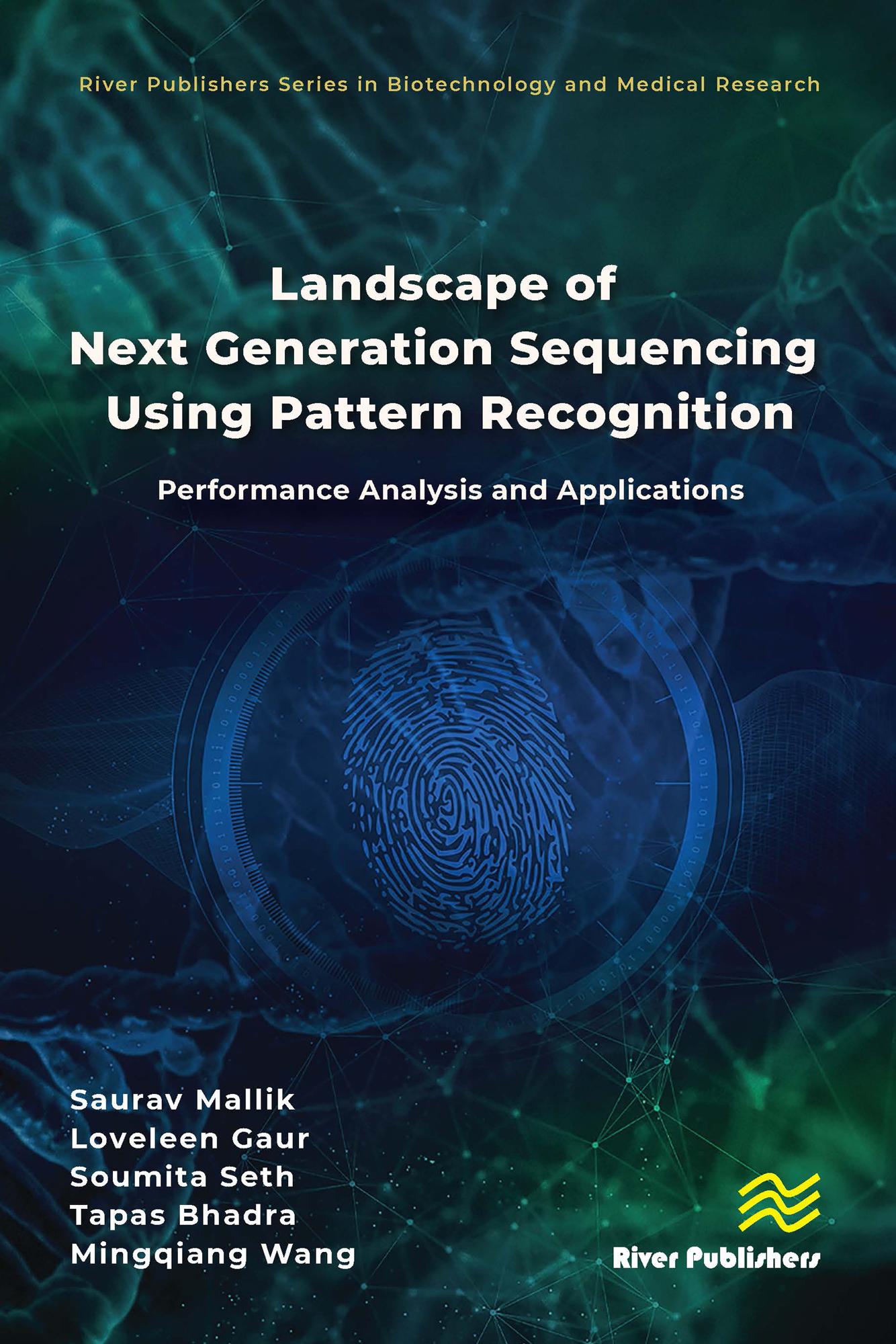
This book focuses on an eminent technology called next generation sequencing (NGS) which has entirely changed the procedure of examining organisms and will have a great impact on biomedical research and disease diagnosis. Numerous computational challenges have been brought on by the rapid advancement of large-scale next-generation sequencing (NGS) technologies and their application. The term ""biomedical imaging"" refers to the use of a variety of imaging techniques (such as X-rays, CT scans, MRIs, ultrasounds, etc.) to get images of the interior organs of a human being for potential diagnostic, treatment planning, follow-up, and surgical purposes. In these circumstances, deep learning, a new learning method that uses multi-layered artificial neural networks (ANNs) for unsupervised, supervised, and semi-supervised learning, has attracted a lot of interest for applications to NGS and imaging, even when both of these data are used for the same group of patients.
The three main research phenomena in biomedical research are disease classification, feature dimension reduction, and heterogeneity. AI approaches are used by clinical researchers to efficiently analyse extremely complicated biomedical datasets (e.g., multi-omic datasets. With the use of NGS data and biomedical imaging of various human organs, researchers may predict diseases using a variety of deep learning models. Unparalleled prospects to improve the work of radiologists, clinicians, and biomedical researchers, speed up disease detection and diagnosis, reduce treatment costs, and improve public health are presented by using deep learning models in disease prediction using NGS and biomedical imaging. This book influences a variety of critical disease data and medical images.
Płać wygodnie kartą, Klarną, Apple Pay lub Google Pay. Nie jesteś zadowolony? Zawsze masz 14-dniową gwarancję zwrotu pieniędzy. Więcej przeczytasz w naszych warunkach. Masz pytania? Napisz do nas na hello@memmo.org.
Memmo ułatwia naukę – gdziekolwiek jesteś na świecie. U nas znajdziesz podręczniki i sprytne narzędzia do nauki w jednym miejscu: streszczenia, quizy, podcasty i fiszki. A do tego Ted, Twój kumpel do nauki, który odpowie na wszystko, co Cię nurtuje. Ponad 50 000 studentów już tu się uczy – stworzone, byś uczył się szybciej i mniej stresował.