
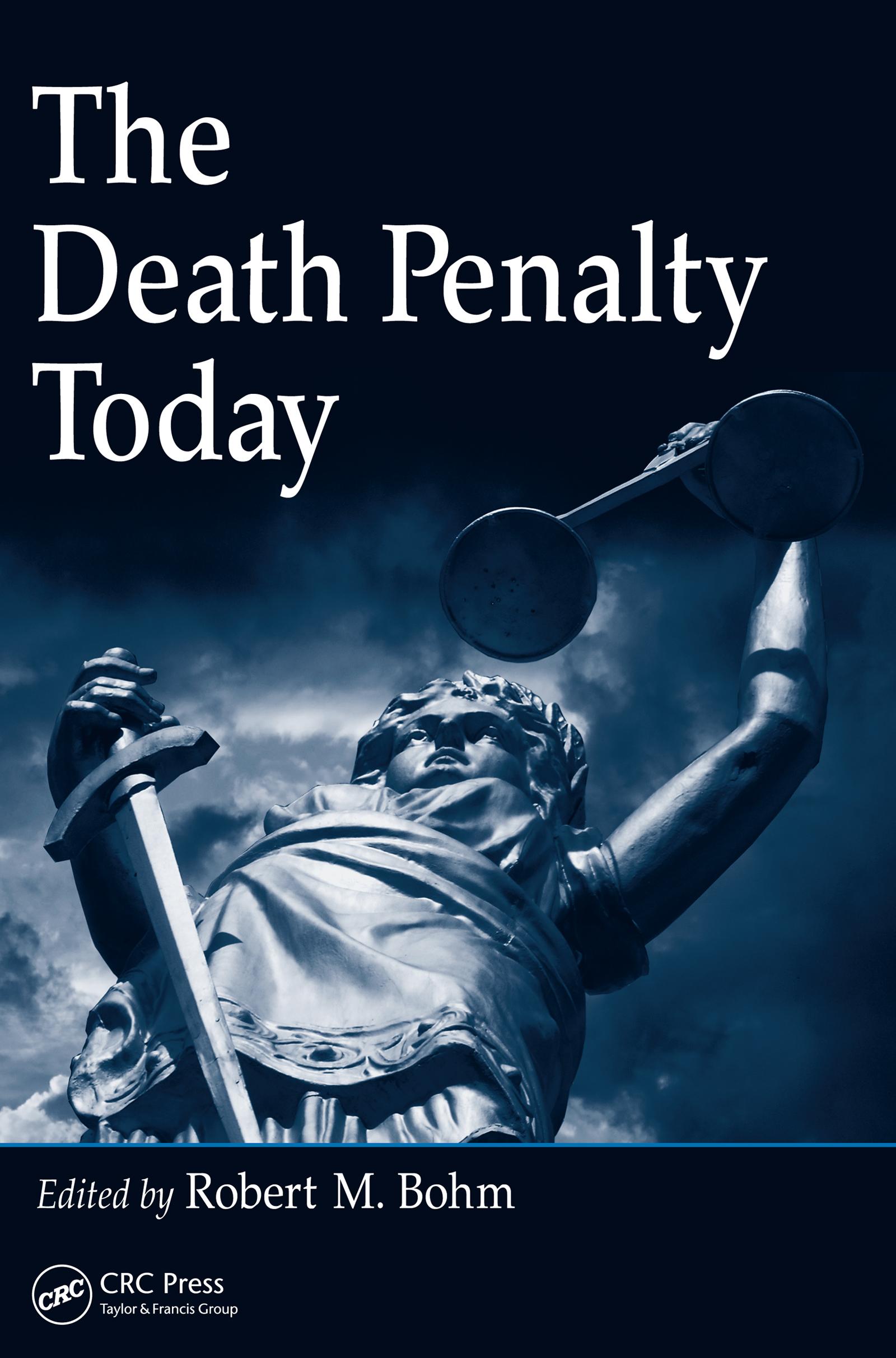
More than 30 years after the US Supreme Court reinstated the death penalty, it is still plagued with egregious problems. Issues of wrongful conviction, inhumane practices, and its efficacy as a deterrent are hotly debated topics. As of August 2007, two-thirds of the world’s countries have abolished the death penalty. Today, the US falls alongside Iran, Iraq, Sudan, China, and Pakistan as countries that continue to believe the death penalty is a necessary and productive practice.
Compiling articles and essays from leading experts, The Death Penalty Today presents an in-depth examination of the current points of debate. The first of two sections focuses on miscarriages of justice, including errors in conviction and possible remedies. It reviews 13 death penalty study commissions that reveal potential causes of wrongful conviction and discusses relevant factors such as geography, timeframe, and race. The first section also considers the responsibility of the state for reintegration of the wrongfully convicted after exoneration, as well as flaws with the ability of lethal injections to produce a “humane” and “painless” death.
The second section addresses death penalty opinion with a survey of scholarly experts as well as a survey of mid-level police managers. It considers the criminalization of reporting, televising, and photographing executions and the implications to the first amendment and government accountability. It reveals the phenomenon of consensual executions as assisted suicide and the curious dichotomy in logic between the reviled practice of lynching and its close cousin—the government sanctioned execution.
With lucid arguments supported by verifiable statistics and expert opinion, The Death Penalty Today provides a sober look at the death penalty in the US and begs the question of when, not if, the US will join the majority of the civilized world in its abolition.
Płać wygodnie kartą, Klarną, Apple Pay lub Google Pay. Nie jesteś zadowolony? Zawsze masz 14-dniową gwarancję zwrotu pieniędzy. Więcej przeczytasz w naszych warunkach. Masz pytania? Napisz do nas na hello@memmo.org.
Memmo ułatwia naukę – gdziekolwiek jesteś na świecie. U nas znajdziesz podręczniki i sprytne narzędzia do nauki w jednym miejscu: streszczenia, quizy, podcasty i fiszki. A do tego Ted, Twój kumpel do nauki, który odpowie na wszystko, co Cię nurtuje. Ponad 50 000 studentów już tu się uczy – stworzone, byś uczył się szybciej i mniej stresował.