
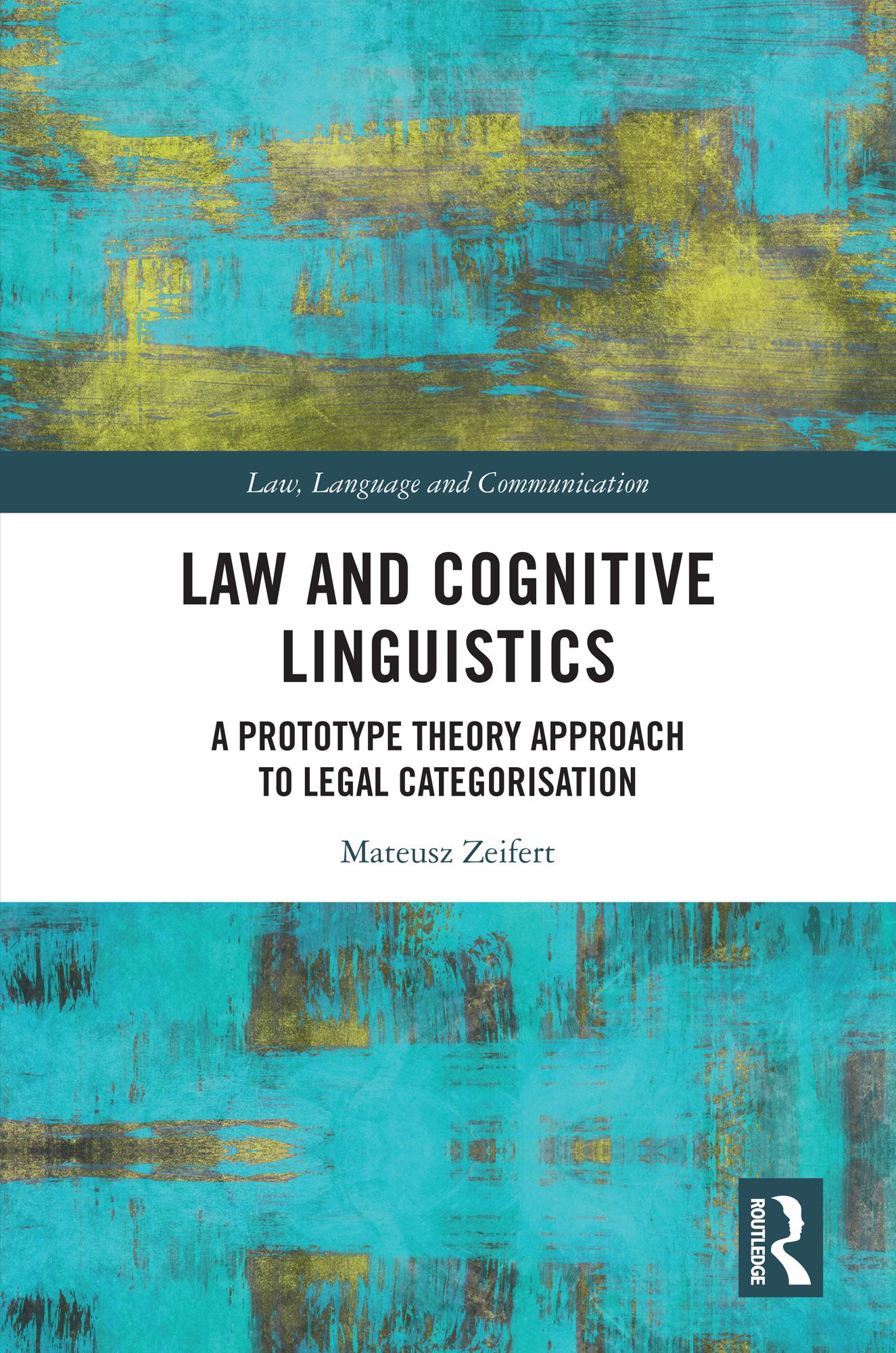
This book advances the prototype theory of categorisation within a legal context. The work adopts a multidisciplinary approach and draws on insights from cognitive psychology, cognitive linguistics, and analytic philosophy to discuss semantic problems present in law. Designed as a bridge between cognitive linguistics and legal theory, it argues that categorisation is a crucial cognitive operation for the application of law and that theories of categorisation are relevant to legal theory. It makes the case that the prototype approach is better suited than more formal approaches usually utilised in jurisprudence to explaining many familiar linguistic problems found in law, such as vagueness, polysemy, the flexibility of meaning, the generality of language, context dependence of meaning, linguistic indeterminacy, and so on. The book focuses on problems of semantic analysis in law, both in concrete cases, that is, particular cases before courts, and, at the theoretical level, on methods of statutory interpretation. It will be a valuable resource for academics and researchers working in the areas of Law and Language, Legal Theory, Legal Philosophy, and Legal Linguistics.
Płać wygodnie kartą, Klarną, Apple Pay lub Google Pay. Nie jesteś zadowolony? Zawsze masz 14-dniową gwarancję zwrotu pieniędzy. Więcej przeczytasz w naszych warunkach. Masz pytania? Napisz do nas na hello@memmo.org.
Memmo ułatwia naukę – gdziekolwiek jesteś na świecie. U nas znajdziesz podręczniki i sprytne narzędzia do nauki w jednym miejscu: streszczenia, quizy, podcasty i fiszki. A do tego Ted, Twój kumpel do nauki, który odpowie na wszystko, co Cię nurtuje. Ponad 50 000 studentów już tu się uczy – stworzone, byś uczył się szybciej i mniej stresował.