
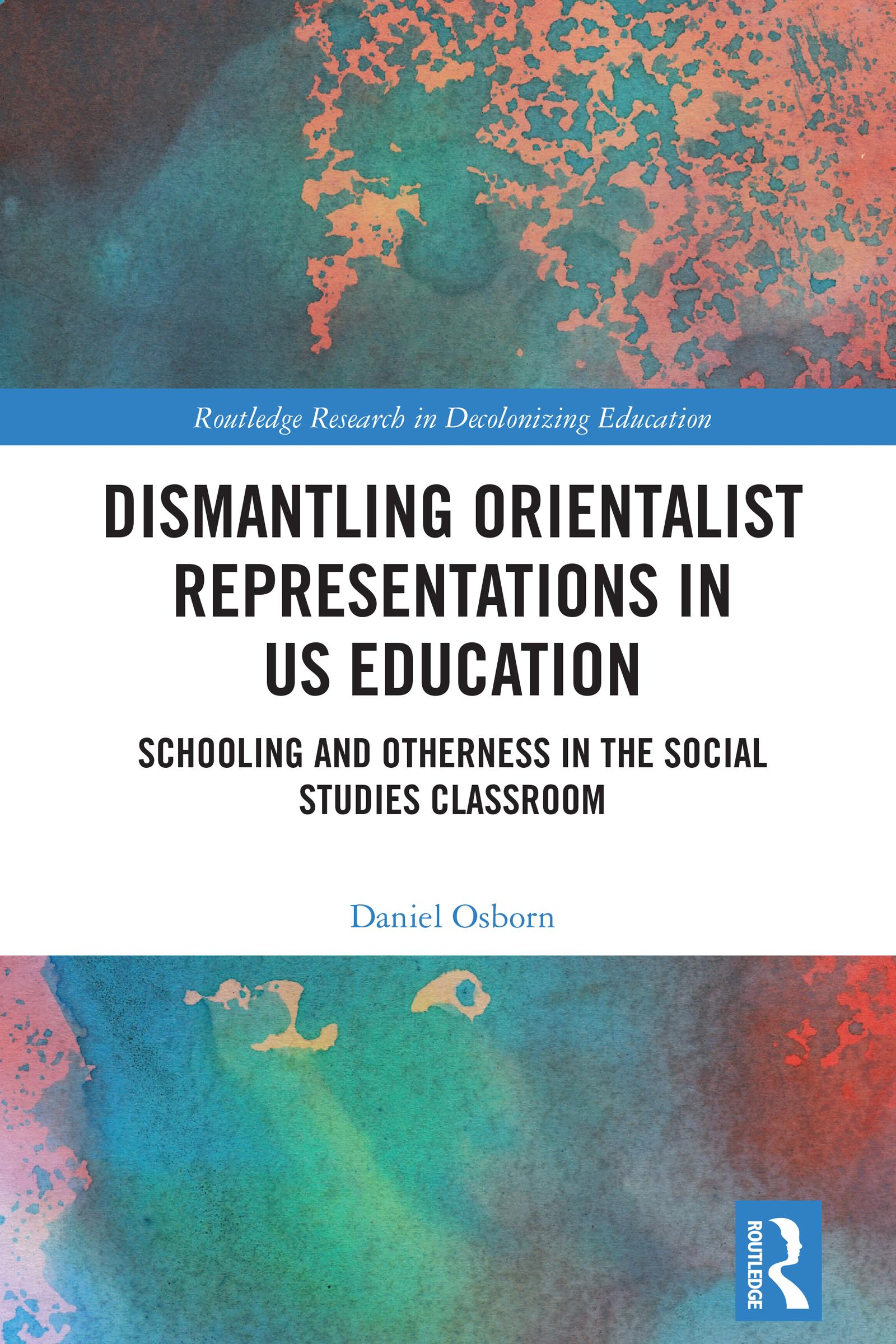
This book examines the evolving role played by the social studies classroom in shaping national identity and contributing to Orientalism, which depicts the peoples of the Middle East as “the Other” relative to those of the United States and Europe.
Building upon the momentum of critical approaches to examining the nature of knowledge, the role of schools in society, and the trends within social studies education and its hidden curriculum, the volume crucially shifts the focus toward a more global emphasis, examining the nature of Orientalism and the school as a setting where Orientalist logic and assumptions about the Middle East and its inhabitants are reified. Focusing on the ecosystem of social studies knowledge production and working within the sociology of knowledge, it traces this evolution across the 19th, 20th, and 21st centuries.
A novel and unique exploration of knowledge construction, and presenting a vision for a more nuanced and multifaceted portrayal of the Middle East that corrects for the deleterious aspects of Orientalism while avoiding a romanticized apologetic, it will appeal to scholars, researchers, and educators with interests in decolonizing education, social studies education, the history of education, and race and ethnicity studies.
Płać wygodnie kartą, Klarną, Apple Pay lub Google Pay. Nie jesteś zadowolony? Zawsze masz 14-dniową gwarancję zwrotu pieniędzy. Więcej przeczytasz w naszych warunkach. Masz pytania? Napisz do nas na hello@memmo.org.
Memmo ułatwia naukę – gdziekolwiek jesteś na świecie. U nas znajdziesz podręczniki i sprytne narzędzia do nauki w jednym miejscu: streszczenia, quizy, podcasty i fiszki. A do tego Ted, Twój kumpel do nauki, który odpowie na wszystko, co Cię nurtuje. Ponad 50 000 studentów już tu się uczy – stworzone, byś uczył się szybciej i mniej stresował.