
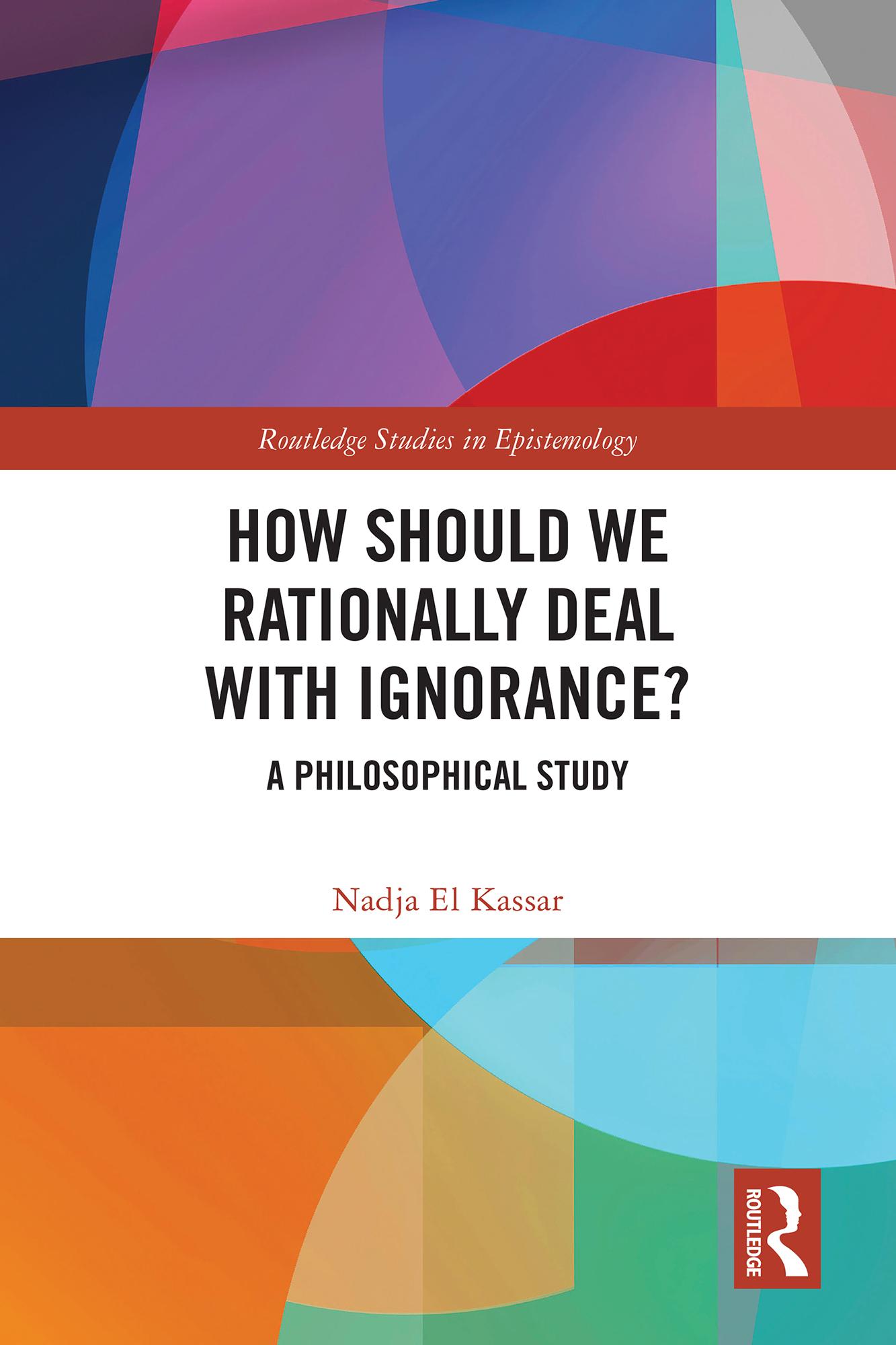
This book addresses two questions that are highly relevant for epistemology and for society: What is ignorance and how should we rationally deal with it? It proposes a new way of thinking about ignorance based on contemporary and historical philosophical theories.
In the first part of the book, the author shows that epistemological definitions of ignorance are quite heterogeneous and often address different phenomena under the label "ignorance." She then develops an integrated conception of ignorance that recognizes doxastic, attitudinal, and structural constituents of ignorance. Based on this new conception, she carves out suggestions for dealing with ignorance from the history of philosophy that have largely been overlooked: virtue-theoretic approaches based on Aristotle and Socrates, consequentialist approaches derived from James, and deontological approaches based on Locke, Clifford, and Kant. None of these approaches individually provide a satisfying approach to the task of rationally dealing with ignorance, and so the author develops an alternative maxim-based answer that extends Kant’s maxims of the sensus communis to the issue of ignorance. The last part of the book applies this maxim-based answer to different contexts in medicine and democracies.
How Should We Rationally Deal with Ignorance? will appeal to scholars and advanced students working in epistemology, political philosophy, feminist philosophy, and the social sciences.
Płać wygodnie kartą, Klarną, Apple Pay lub Google Pay. Nie jesteś zadowolony? Zawsze masz 14-dniową gwarancję zwrotu pieniędzy. Więcej przeczytasz w naszych warunkach. Masz pytania? Napisz do nas na hello@memmo.org.
Memmo ułatwia naukę – gdziekolwiek jesteś na świecie. U nas znajdziesz podręczniki i sprytne narzędzia do nauki w jednym miejscu: streszczenia, quizy, podcasty i fiszki. A do tego Ted, Twój kumpel do nauki, który odpowie na wszystko, co Cię nurtuje. Ponad 50 000 studentów już tu się uczy – stworzone, byś uczył się szybciej i mniej stresował.