
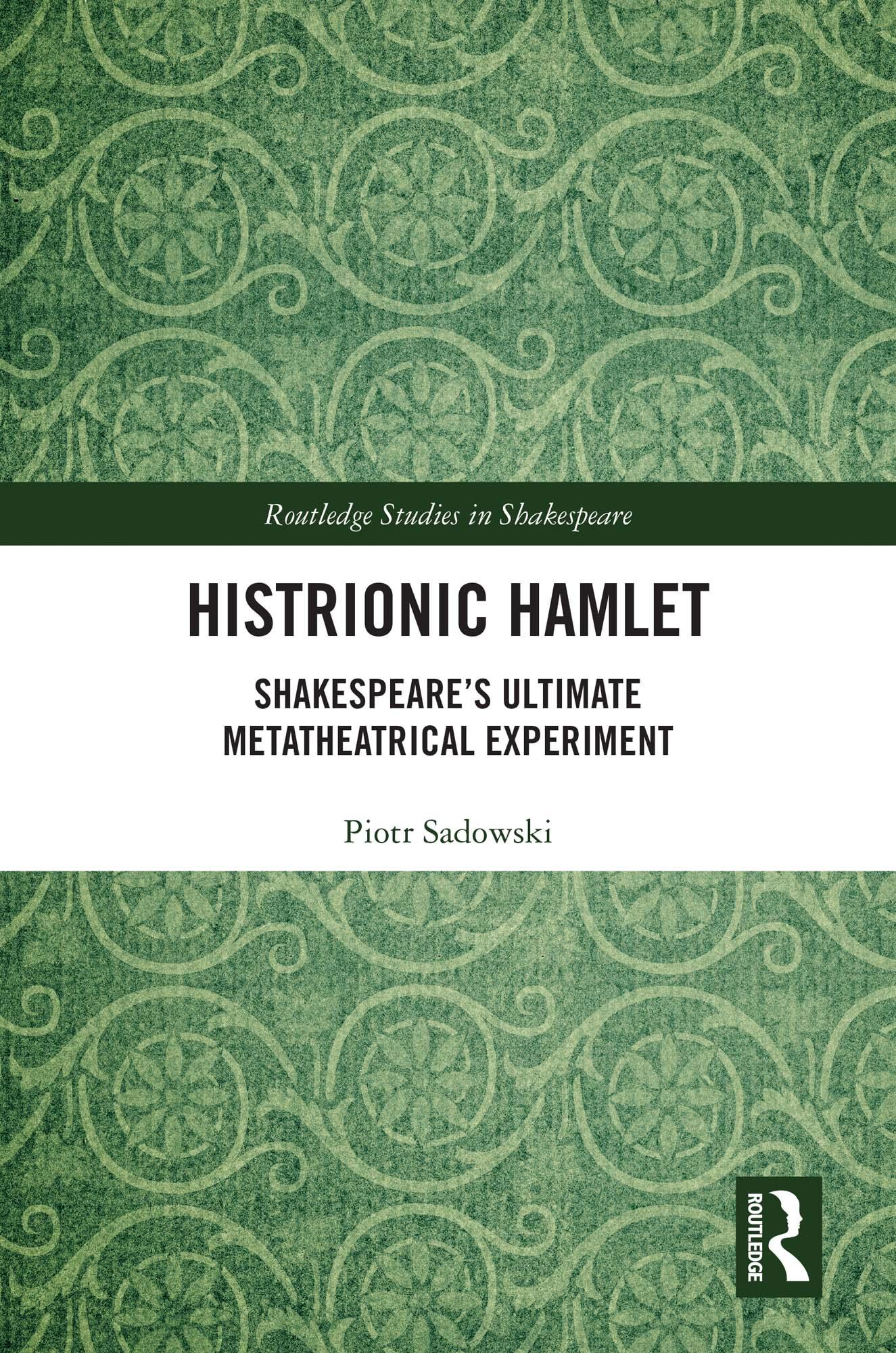
According to psychological research on acting, the histrionic personality consists of a compulsive tendency to play-act, exaggerate emotions, succumb to illusions, to seek attention through speech, body language, and costume, to be seductive and impulsive. An original intervention in the critical history of Shakespeare’s most famous play, Histrionic Hamlet argues that the Danish Prince is a stage representation of just such a personality—a born actor and a drama queen rather than a politician—incongruously thrown in the middle of ruthless high-stakes power struggle requiring pragmatic rather than theatrical skills. Uniquely among other English revenge tragedies, in Hamlet a histrionic protagonist striking a series of gratuitous, baffling, self-indulgent, and counterproductive poses is called upon to carry out a challenging and brutal political task, which he spectacularly and tragically mismanages. Unable to perform on a theatrical stage as a professional actor, the Clown Prince bitterly play-acts anyway, turning all situations into opportunities of pretend play rather than effective political action. In consequence, he wastes tactical advantages over his enemies, endangers himself, and jeopardizes his revenge plan, if ever there was one. Histrionic Hamlet should be of interest to students of Shakespeare, theater practitioners, and anyone interested in human dysfunctional and maladaptive behavior.
Płać wygodnie kartą, Klarną, Apple Pay lub Google Pay. Nie jesteś zadowolony? Zawsze masz 14-dniową gwarancję zwrotu pieniędzy. Więcej przeczytasz w naszych warunkach. Masz pytania? Napisz do nas na hello@memmo.org.
Memmo ułatwia naukę – gdziekolwiek jesteś na świecie. U nas znajdziesz podręczniki i sprytne narzędzia do nauki w jednym miejscu: streszczenia, quizy, podcasty i fiszki. A do tego Ted, Twój kumpel do nauki, który odpowie na wszystko, co Cię nurtuje. Ponad 50 000 studentów już tu się uczy – stworzone, byś uczył się szybciej i mniej stresował.