
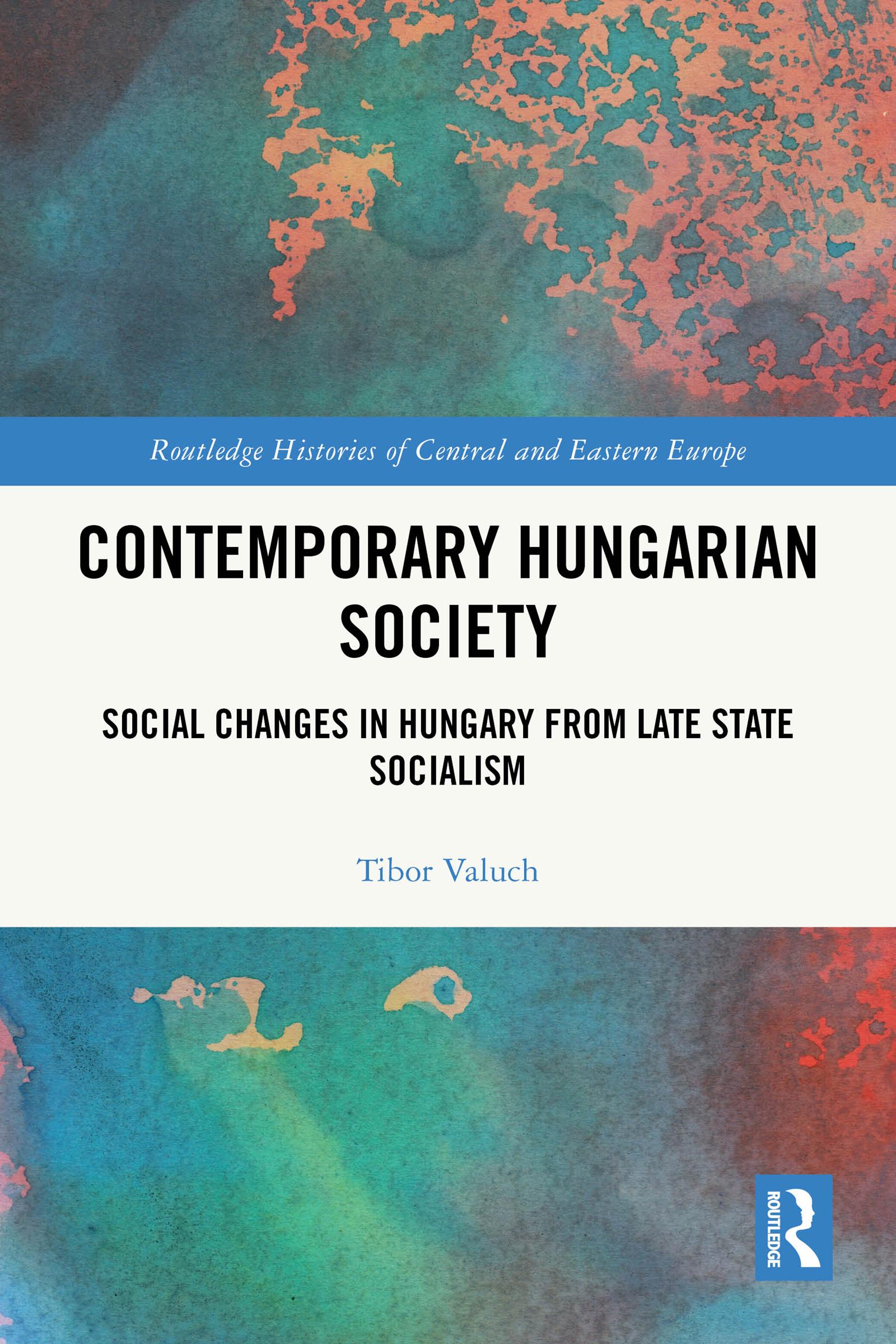
This book examines social change in Hungary, commencing with the period of late-stage socialism, the country’s immediate post-communist transition, its subsequent consolidation, and the emergence of authoritarian leadership since 2010. The volume seeks to employ a longitudinal and comparative perspective and provides comparison to other central and East European states that emerged from state socialism.
The Hungarian regime change of 1989–1990 led to previously unimaginable social and economic transition. In recent decades, regime change and socioeconomic transition in Central and Eastern Europe have produced a library of literature, and transition studies has periodically become a discipline in its own right. The author uses an interdisciplinary approach – drawing from social history, sociology, statistics, and contemporary history – in order to understand and analyse social change in all its complexity.
The book will be of interest to undergraduate and postgraduate students, social scientists, historians, experts, and those interested in Hungarian and Central and Eastern European history and social change.
Płać wygodnie kartą, Klarną, Apple Pay lub Google Pay. Nie jesteś zadowolony? Zawsze masz 14-dniową gwarancję zwrotu pieniędzy. Więcej przeczytasz w naszych warunkach. Masz pytania? Napisz do nas na hello@memmo.org.
Memmo ułatwia naukę – gdziekolwiek jesteś na świecie. U nas znajdziesz podręczniki i sprytne narzędzia do nauki w jednym miejscu: streszczenia, quizy, podcasty i fiszki. A do tego Ted, Twój kumpel do nauki, który odpowie na wszystko, co Cię nurtuje. Ponad 50 000 studentów już tu się uczy – stworzone, byś uczył się szybciej i mniej stresował.