
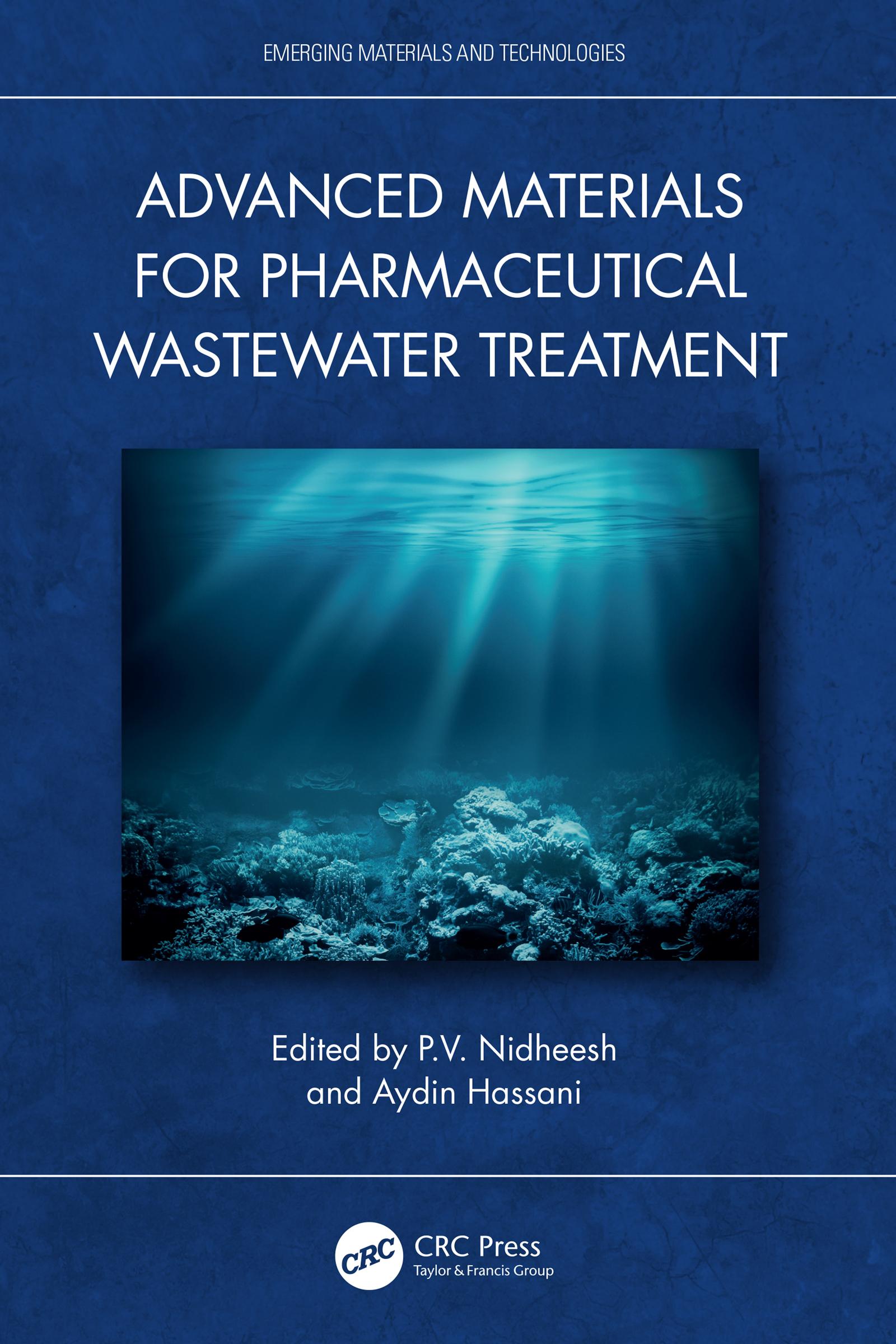
Effluents generated from the pharmaceutical industry contain organic and inorganic contaminants that create potential threats to human health and the environment. Pharmaceuticals cannot be effectively removed by conventional wastewater treatment plants owing to the complex composition, high concentration of organic contaminants, high salinity, and biological toxicity of pharmaceutical wastewater. This book provides an overview of the production and environmental impacts of pharmaceutical compounds and their advanced treatment methods, with a focus on advanced materials used for removing pharmaceutical contaminants from wastewater.
- Provides an overview of the current state of advanced research and applications of materials for pharmaceutical wastewater treatment
- Discusses various adsorbents, photocatalysts, and electrodes, with a special focus on carbon materials
- Covers advanced material synthesis and fabrication
- Features case studies and chapters that are fully application-oriented
This book is essential reading for researchers and practitioners in materials science and engineering, environmental science and engineering, chemical engineering, and water treatment who are seeking to develop and implement advanced technologies for waste minimization and mitigation.
Płać wygodnie kartą, Klarną, Apple Pay lub Google Pay. Nie jesteś zadowolony? Zawsze masz 14-dniową gwarancję zwrotu pieniędzy. Więcej przeczytasz w naszych warunkach. Masz pytania? Napisz do nas na hello@memmo.org.
Memmo ułatwia naukę – gdziekolwiek jesteś na świecie. U nas znajdziesz podręczniki i sprytne narzędzia do nauki w jednym miejscu: streszczenia, quizy, podcasty i fiszki. A do tego Ted, Twój kumpel do nauki, który odpowie na wszystko, co Cię nurtuje. Ponad 50 000 studentów już tu się uczy – stworzone, byś uczył się szybciej i mniej stresował.