
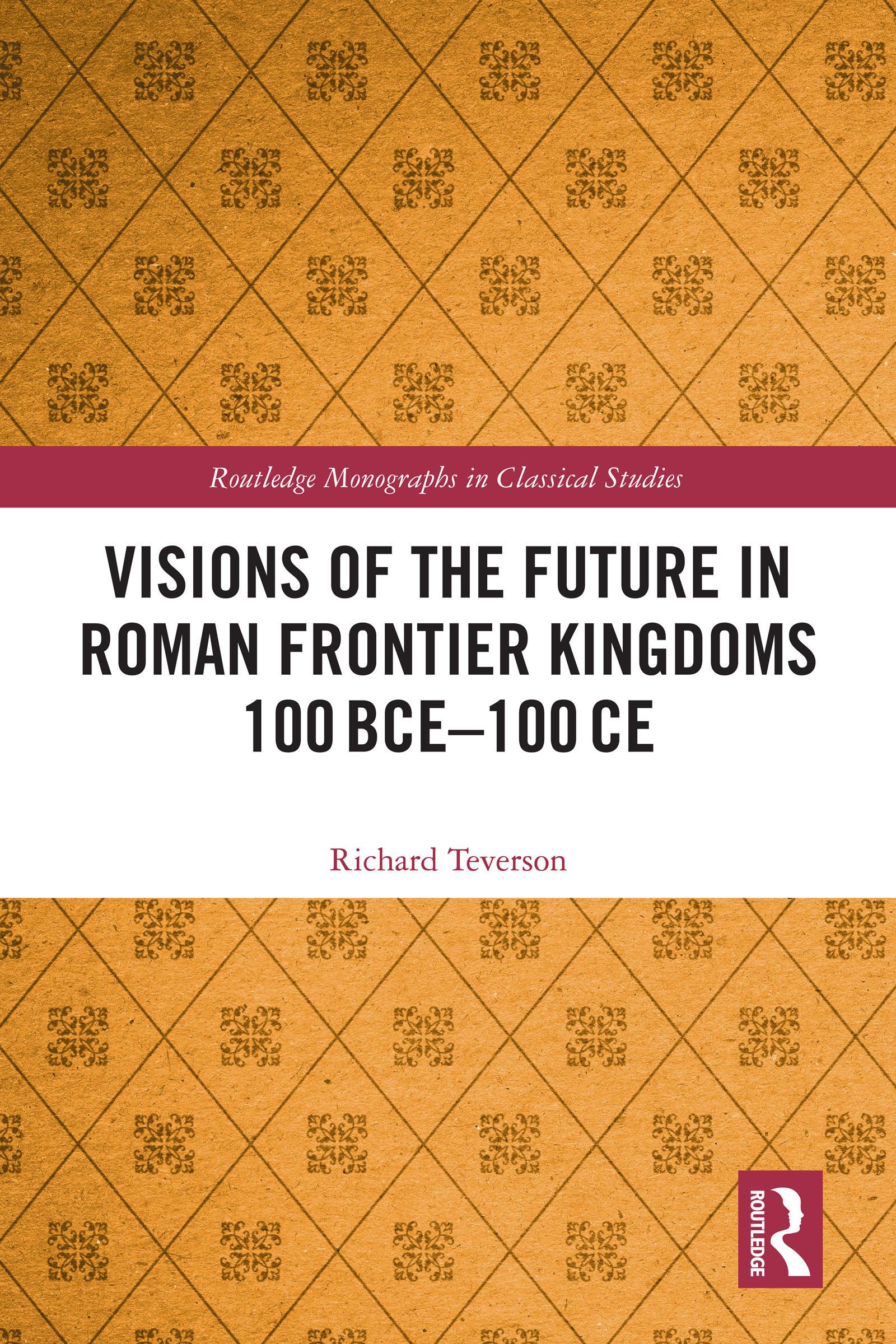
This is the first book-length exploration of the ways art from the edges of the Roman Empire represented the future, examining visual representations of time and the role of artwork in Roman imperial systems.
This book focuses on four kingdoms from across the empire: Cottius’s Alpine kingdom in the north, King Juba II’s Mauretania in the south-west, Herodian Judea in the east, and Kommagene to the north-east. Art from the imperial frontier is rarely considered through the lens of the aesthetics of time, and Roman provincial art and the monuments of allied rulers are typically interpreted as evidence of the interaction between Roman and local identities. In this interdisciplinary study, which explores statues, wall paintings, coins, monuments, and inscriptions, readers learn that these artworks served as something more: they were created to represent the futures that allied rulers and their people foresaw. The pressure of Roman imperialism drove patrons and artists on the empire’s borders to imbue their creations with increasingly sophisticated ideas about the future, as they wrestled with consequential decisions made under periods of intense political pressure.
Comprehensively illustrated and providing an important new approach to Roman material culture at the edge of empire, Visions of the Future in Roman Frontier Kingdoms 100 BCE–100 CE is suitable for students and scholars working on Rome and its frontiers, as well as Roman material culture more broadly, and those studying the aesthetics of time in art and art history.
Płać wygodnie kartą, Klarną, Apple Pay lub Google Pay. Nie jesteś zadowolony? Zawsze masz 14-dniową gwarancję zwrotu pieniędzy. Więcej przeczytasz w naszych warunkach. Masz pytania? Napisz do nas na hello@memmo.org.
Memmo ułatwia naukę – gdziekolwiek jesteś na świecie. U nas znajdziesz podręczniki i sprytne narzędzia do nauki w jednym miejscu: streszczenia, quizy, podcasty i fiszki. A do tego Ted, Twój kumpel do nauki, który odpowie na wszystko, co Cię nurtuje. Ponad 50 000 studentów już tu się uczy – stworzone, byś uczył się szybciej i mniej stresował.