
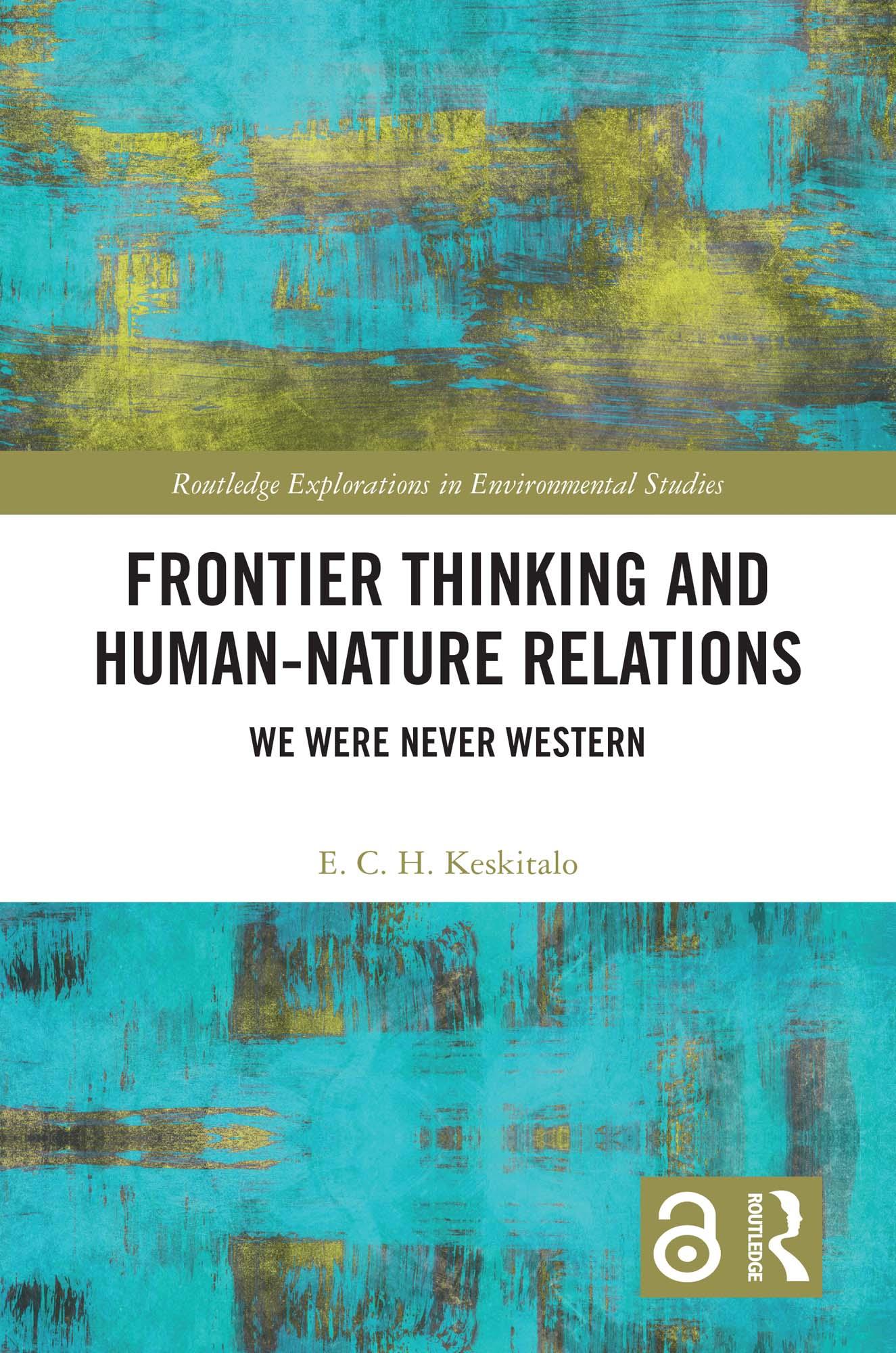
Combining historical, social and regulative analysis, this book builds a compelling critique of ‘frontier thinking’ as it continues to form our assumptions about social and environmental organisation – in ways that impact not least the present environmental crisis.
This book systematically identifies the ways in which images of nature and society are formed by the historically developed frontier-oriented narratives which have underpinned much Anglo-American and Anglocentric thought. The book confronts these conceptions at large, showing that they never held empirically, and contrasts them with the situation in northern Europe, where diverging assumptions are integral to this day. Through this juxtaposition, this book illustrates not only the pervasiveness of structures of understanding in steering policy but also the varying traditions regarding how understandings of the environment can be formed.
This study highlights how historical thought patterns, formed for very different reasons than exist today, continue to shape our assumptions about nature, the relation between urban and rural areas and our understanding of ourselves in relation to the environment. This book will be of wide interest to a range of academics and students in the fields of geography, anthropology, environmental studies, sociology, political science and development studies, amongst others.
The Open Access version of this book, available at http://www.taylorfrancis.com, has been made available under a Creative Commons Attribution-Non Commercial-No Derivatives (CC-BY-NC-ND) 4.0 license.
Płać wygodnie kartą, Klarną, Apple Pay lub Google Pay. Nie jesteś zadowolony? Zawsze masz 14-dniową gwarancję zwrotu pieniędzy. Więcej przeczytasz w naszych warunkach. Masz pytania? Napisz do nas na hello@memmo.org.
Memmo ułatwia naukę – gdziekolwiek jesteś na świecie. U nas znajdziesz podręczniki i sprytne narzędzia do nauki w jednym miejscu: streszczenia, quizy, podcasty i fiszki. A do tego Ted, Twój kumpel do nauki, który odpowie na wszystko, co Cię nurtuje. Ponad 50 000 studentów już tu się uczy – stworzone, byś uczył się szybciej i mniej stresował.