
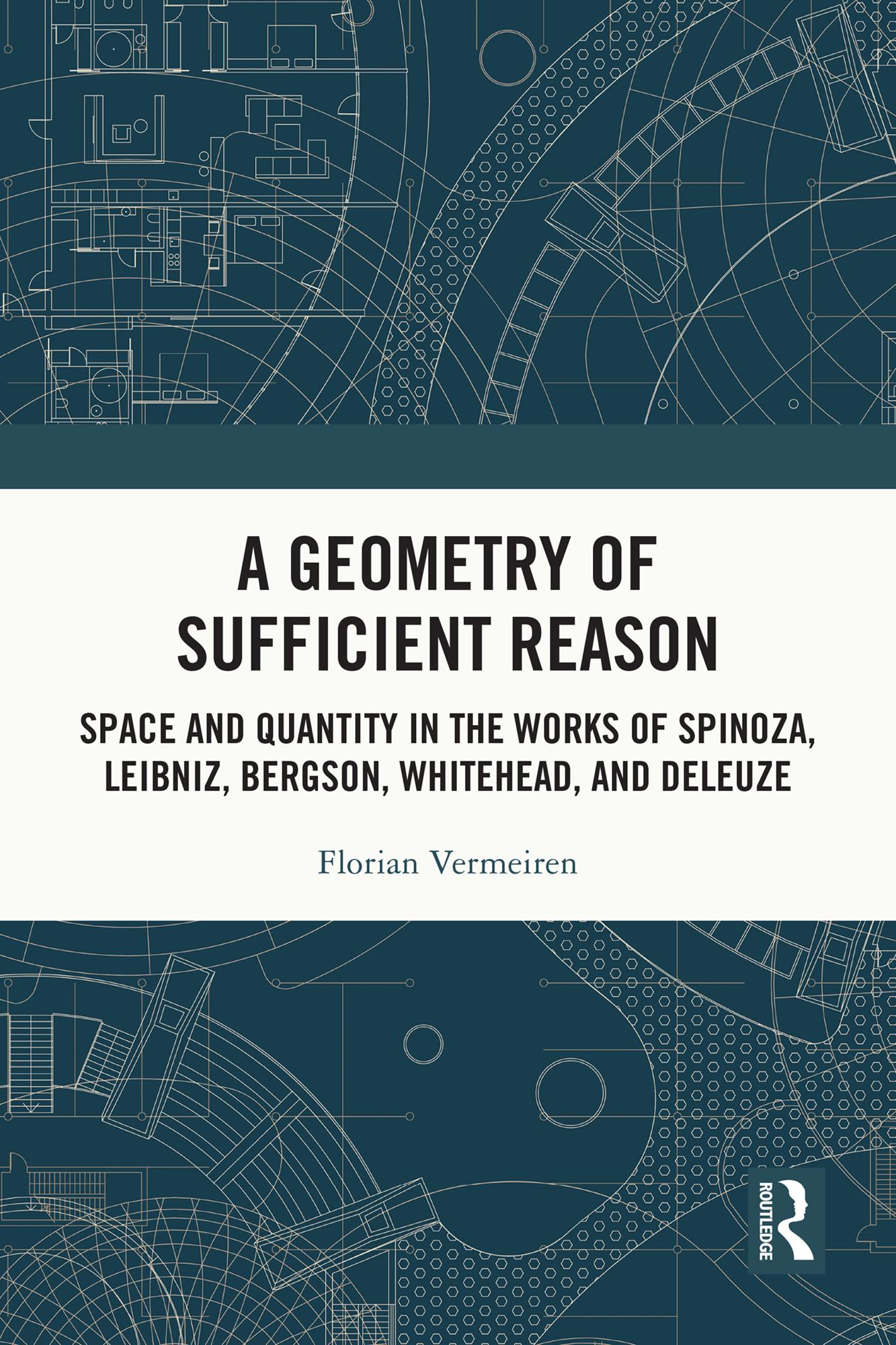
This book explores and compares the reflections on space and quantity found in the works of five philosophers: Spinoza, Leibniz, Bergson, Whitehead, and Deleuze. What unites these philosophers is a series of metaphysical concerns rooted in 17th-century rationalism and embraced in 20th-century philosophies of process and difference.
At the heart of these concerns is the need for a comprehensive metaphysical account of the diversity and individuality of things. This demand leads to a shared critique of Cartesian and Newtonian conceptions of space. The most problematic aspect of those notions of space is homogeneity. In essence, uniform space fails to explain the differences between locations, thus violating the Principle of Sufficient Reason. Cartesian and Newtonian theories of space thereby fail to meet the metaphysical requirement for explaining diversity and individuality. The traditional concept of quantity faces similar issues. Motivated by these problems, these five philosophers developed an alternative conception of space and quantity. By examining these theories, the book sheds new light on an unexplored relation between rationalism and 20th-century Continental philosophy.
A Geometry of Sufficient Reason will appeal to scholars and graduate students working in Continental philosophy, history of philosophy, metaphysics, and the history and philosophy of science.
Płać wygodnie kartą, Klarną, Apple Pay lub Google Pay. Nie jesteś zadowolony? Zawsze masz 14-dniową gwarancję zwrotu pieniędzy. Więcej przeczytasz w naszych warunkach. Masz pytania? Napisz do nas na hello@memmo.org.
Memmo ułatwia naukę – gdziekolwiek jesteś na świecie. U nas znajdziesz podręczniki i sprytne narzędzia do nauki w jednym miejscu: streszczenia, quizy, podcasty i fiszki. A do tego Ted, Twój kumpel do nauki, który odpowie na wszystko, co Cię nurtuje. Ponad 50 000 studentów już tu się uczy – stworzone, byś uczył się szybciej i mniej stresował.