
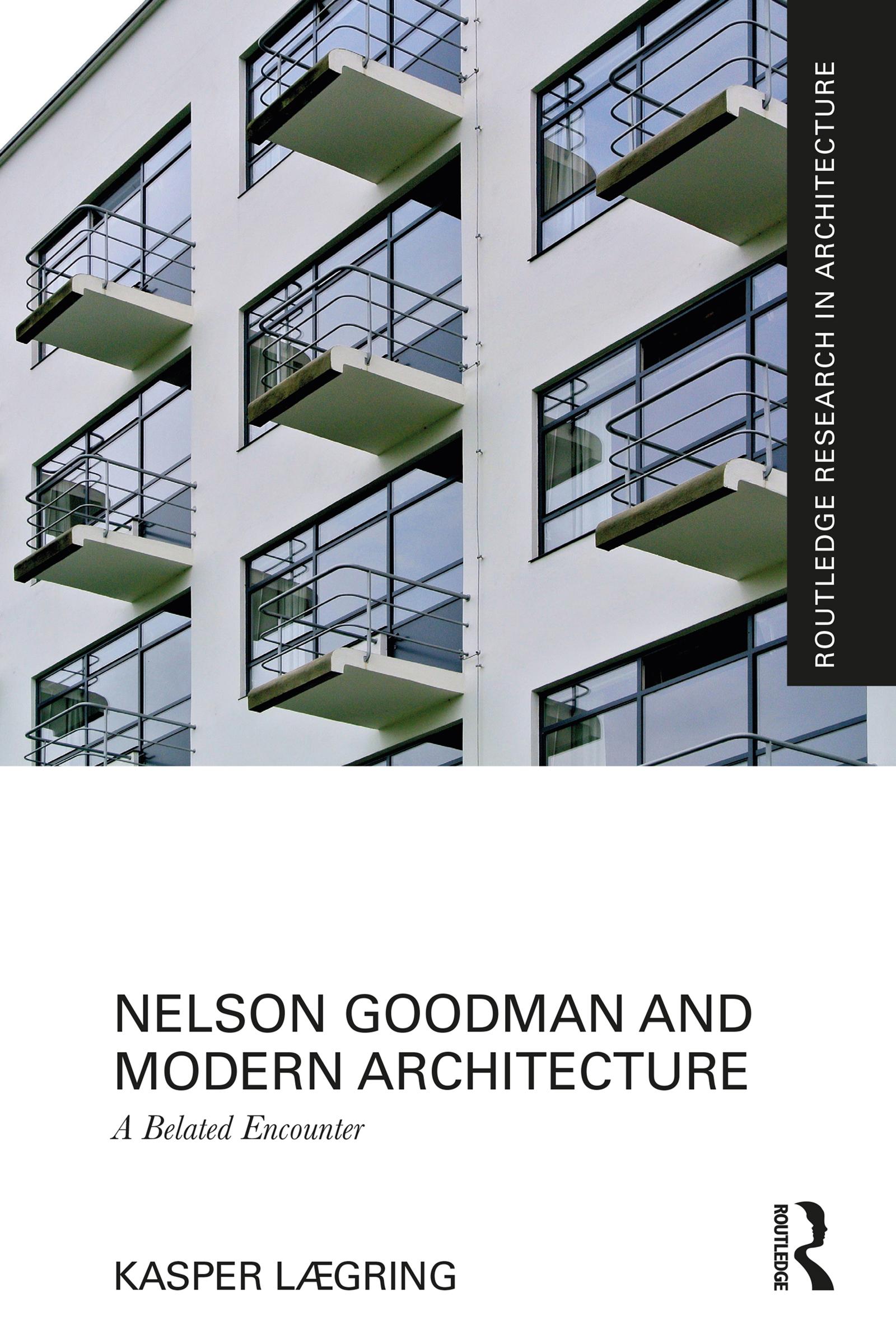
This book orchestrates a convergence of two discourses from the 1960s—Nelson Goodman’s aesthetic theory on one side and critiques of modern architecture articulated by figures like Peter Blake, Charles Jencks, and Robert Venturi/Denise Scott Brown on the other. Grounded in Goodman’s aesthetic theory, the book explores his conceptual framework within the context of modern architecture.
At the heart of the investigation lies Goodman’s concept of exemplification. While his notion of denotation pertains to representational elements, often ornaments, in architecture, exemplification accentuates specific formal properties at the expense of others, including color, spatial orientation, transparency, seriality, and the like. Supplemented by findings from phenomenology, the book traces these effects in buildings, notably those by Ludwig Mies van der Rohe, Walter Gropius, Le Corbusier, and Frank Lloyd Wright—all key figures in the critiques of modern architecture.
Employing Goodman’s framework, the book aims to address accusations of emptiness and alienation directed at modern architecture in the postwar era. It illustrates that modern architecture symbolizes aesthetically in a fundamentally different way than architecture from earlier periods.
This book will be of interest to architects, artists, researchers, and students in architecture, architectural history, theory, cultural theory, philosophy, and aesthetics.
Płać wygodnie kartą, Klarną, Apple Pay lub Google Pay. Nie jesteś zadowolony? Zawsze masz 14-dniową gwarancję zwrotu pieniędzy. Więcej przeczytasz w naszych warunkach. Masz pytania? Napisz do nas na hello@memmo.org.
Memmo ułatwia naukę – gdziekolwiek jesteś na świecie. U nas znajdziesz podręczniki i sprytne narzędzia do nauki w jednym miejscu: streszczenia, quizy, podcasty i fiszki. A do tego Ted, Twój kumpel do nauki, który odpowie na wszystko, co Cię nurtuje. Ponad 50 000 studentów już tu się uczy – stworzone, byś uczył się szybciej i mniej stresował.