
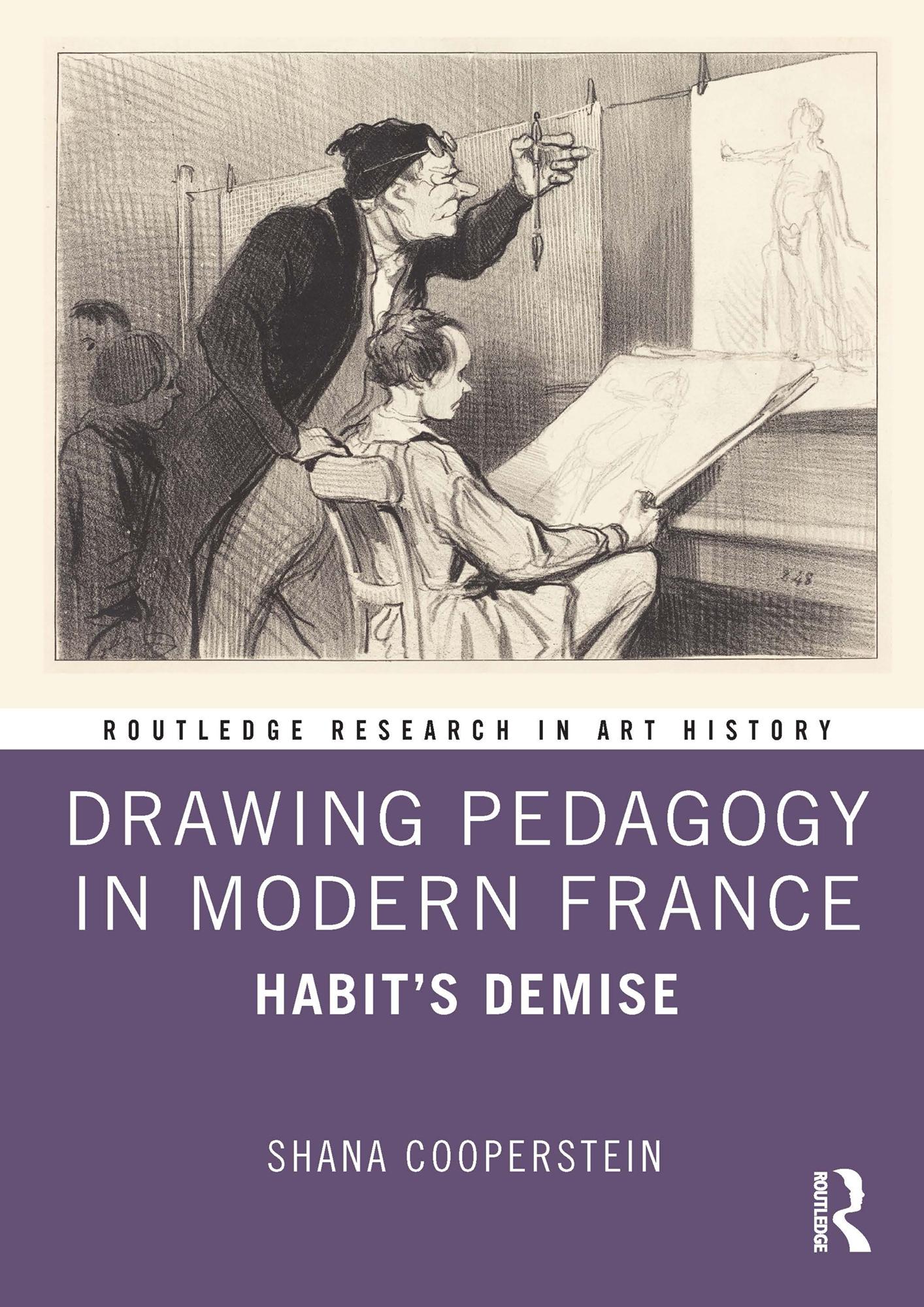
This study uncovers the plethora of new, innovative drawing strategies that shaped French visual arts at the height of France’s imperial power.
Horace Lecoq de Boisbaudran, Eugene Guillaume, and Félix Ravaisson, among others, designed new drawing procedures that responded to leading concerns of modern art and the exigencies of modern life: landscape painting and picturesque tourism, industrial design, and the use of drawing as vehicles of knowledge production and in social control. From graphic regimes that were “purement mathématique” and demanded the practice of orthographic projection, to those that privileged the articulation of proportions and the cultivation of an internal measuring system, fin de siècle educators in the fine and applied arts radically transformed drawing strategies and its history. The shifting parameters of drawing pedagogy and practice unfold onto a wider set of theoretical concerns central to humanistic inquiry and art-making today: the philosophy and cultural history of habit-based learning, the relation between industrialization and drawing, and the relation between art and mathematics.
The book will be of interest to scholars working in art history, French studies, history of art education, history of philosophy, and history of science.
Płać wygodnie kartą, Klarną, Apple Pay lub Google Pay. Nie jesteś zadowolony? Zawsze masz 14-dniową gwarancję zwrotu pieniędzy. Więcej przeczytasz w naszych warunkach. Masz pytania? Napisz do nas na hello@memmo.org.
Memmo ułatwia naukę – gdziekolwiek jesteś na świecie. U nas znajdziesz podręczniki i sprytne narzędzia do nauki w jednym miejscu: streszczenia, quizy, podcasty i fiszki. A do tego Ted, Twój kumpel do nauki, który odpowie na wszystko, co Cię nurtuje. Ponad 50 000 studentów już tu się uczy – stworzone, byś uczył się szybciej i mniej stresował.