
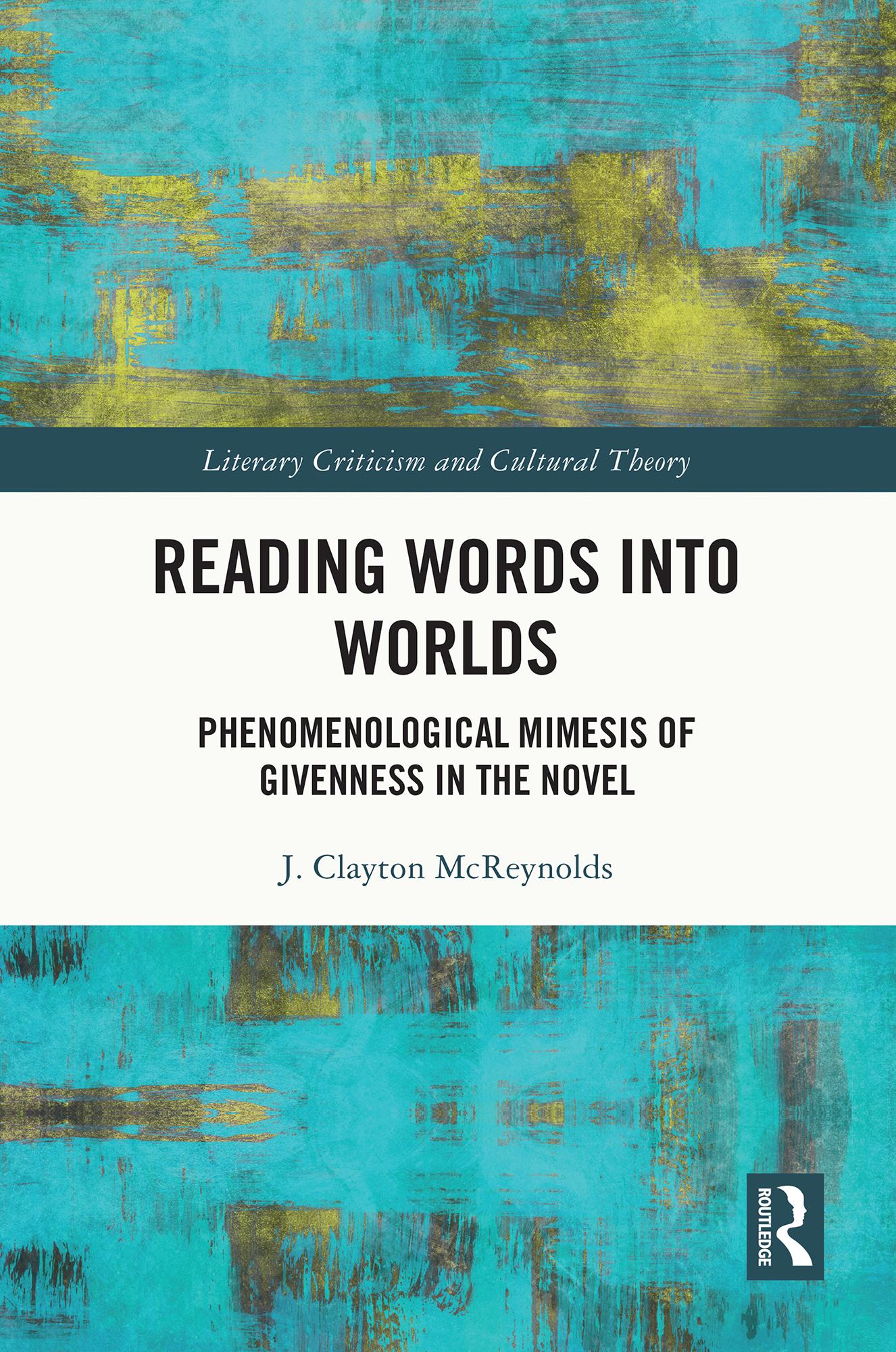
Reading Words into Worlds asks how it is that reading a novel can feel in some ways like being-in-a-world. The book explores how novels give themselves to readers in ways that mimetically resemble our phenomenological reception of given beings in reality. McReynolds refers to this process as phenomenological mimesis of givenness, and he draws on the phenomenological philosophy of Husserl, Heidegger, and Jean-Luc Marion to explore how masterful novels can make reading ink marks on a page feel like seeing things, feeling things, and meeting (even loving) others. McReynolds blends rigorous phenomenological study with a personable style, first laying out his theory in detail and then applying that theory through close studies of his reading experiences of four British realist masterpieces: Defoe’s Robinson Crusoe, Austen’s Northanger Abbey, Eliot’s Middlemarch, and Hardy’s Jude the Obscure. Ultimately, this book offers a grounded phenomenology of novel-reading, illuminating what gives novels such power to not only thrill readers—but to change them.
Płać wygodnie kartą, Klarną, Apple Pay lub Google Pay. Nie jesteś zadowolony? Zawsze masz 14-dniową gwarancję zwrotu pieniędzy. Więcej przeczytasz w naszych warunkach. Masz pytania? Napisz do nas na hello@memmo.org.
Memmo ułatwia naukę – gdziekolwiek jesteś na świecie. U nas znajdziesz podręczniki i sprytne narzędzia do nauki w jednym miejscu: streszczenia, quizy, podcasty i fiszki. A do tego Ted, Twój kumpel do nauki, który odpowie na wszystko, co Cię nurtuje. Ponad 50 000 studentów już tu się uczy – stworzone, byś uczył się szybciej i mniej stresował.