
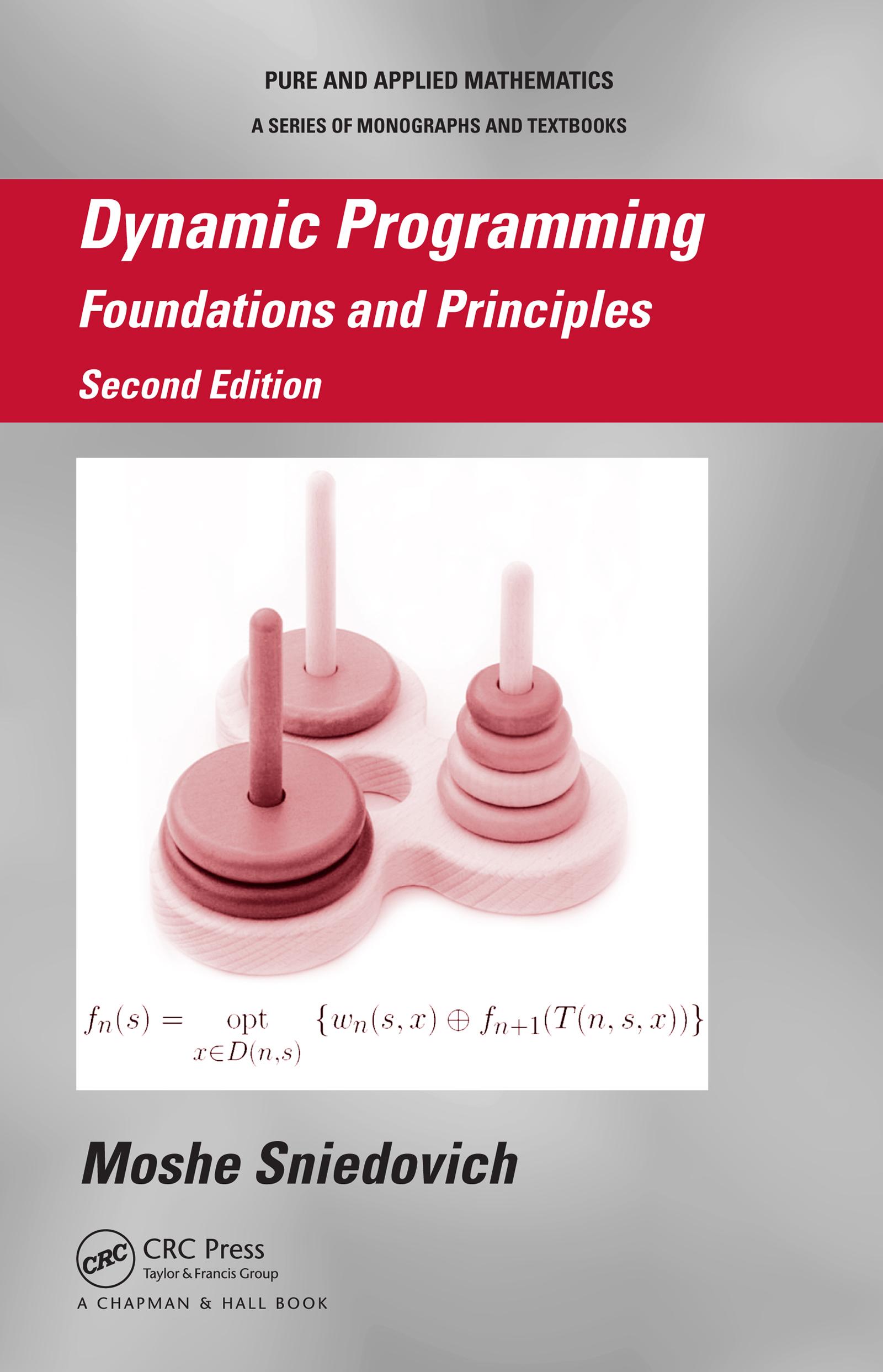
Incorporating a number of the author’s recent ideas and examples, Dynamic Programming: Foundations and Principles, Second Edition presents a comprehensive and rigorous treatment of dynamic programming. The author emphasizes the crucial role that modeling plays in understanding this area. He also shows how Dijkstra’s algorithm is an excellent example of a dynamic programming algorithm, despite the impression given by the computer science literature.
New to the Second Edition
- Expanded discussions of sequential decision models and the role of the state variable in modeling
- A new chapter on forward dynamic programming models
- A new chapter on the Push method that gives a dynamic programming perspective on Dijkstra’s algorithm for the shortest path problem
- A new appendix on the Corridor method
Taking into account recent developments in dynamic programming, this edition continues to provide a systematic, formal outline of Bellman’s approach to dynamic programming. It looks at dynamic programming as a problem-solving methodology, identifying its constituent components and explaining its theoretical basis for tackling problems.
Płać wygodnie kartą, Klarną, Apple Pay lub Google Pay. Nie jesteś zadowolony? Zawsze masz 14-dniową gwarancję zwrotu pieniędzy. Więcej przeczytasz w naszych warunkach. Masz pytania? Napisz do nas na hello@memmo.org.
Memmo ułatwia naukę – gdziekolwiek jesteś na świecie. U nas znajdziesz podręczniki i sprytne narzędzia do nauki w jednym miejscu: streszczenia, quizy, podcasty i fiszki. A do tego Ted, Twój kumpel do nauki, który odpowie na wszystko, co Cię nurtuje. Ponad 50 000 studentów już tu się uczy – stworzone, byś uczył się szybciej i mniej stresował.