
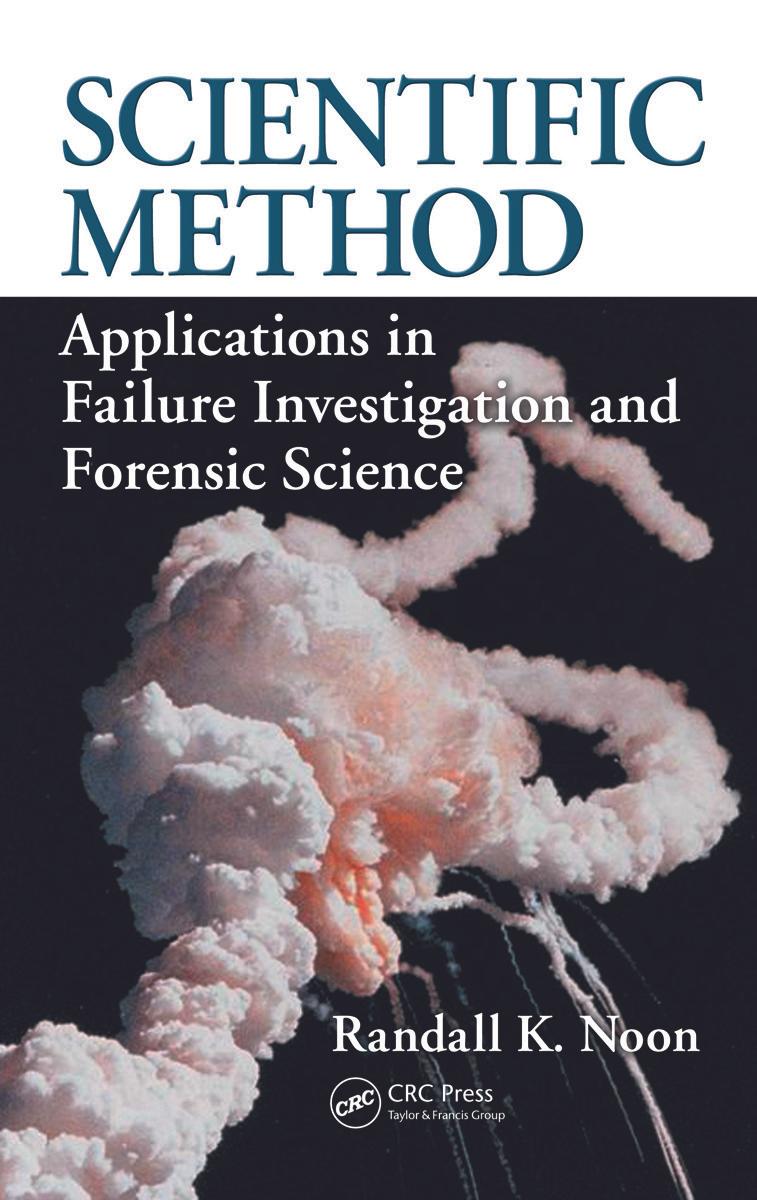
Most failure or accident investigations begin at the end of the story: after the explosion, after the fire has been extinguished, or after the collapse. In many instances, information about the last event and the starting event is known reasonably well. Information about what occurred between these endpoints, however, is often unclear, confusing, and perhaps contradictory. Scientific Method: Applications in Failure Investigation and Forensic Science explains how scientific investigative methods can best be used to determine why and how a particular event occurred.
While employing examples from forensic engineering, the book uses principles and ideas applicable to most of the forensic sciences. The author examines the role of the failure investigator, describes the fundamental method for investigation, discusses the optimal way to organize evidence, and explores the four most common reasons why some investigations fail. The book provides three case studies that exemplify proper report writing, contains a special chapter profiling a criminal case by noted forensic specialist Jon J. Nordby, and offers a reading list of resources for further study.
Concise and illustrative, this volume demonstrates how the scientific method can be applied to failure investigation in ways that avoid flawed reasoning while delivering convincing reconstruction scenarios. Investigators can pinpoint where things went wrong, providing valuable information that can prevent another catastrophe.
Płać wygodnie kartą, Klarną, Apple Pay lub Google Pay. Nie jesteś zadowolony? Zawsze masz 14-dniową gwarancję zwrotu pieniędzy. Więcej przeczytasz w naszych warunkach. Masz pytania? Napisz do nas na hello@memmo.org.
Memmo ułatwia naukę – gdziekolwiek jesteś na świecie. U nas znajdziesz podręczniki i sprytne narzędzia do nauki w jednym miejscu: streszczenia, quizy, podcasty i fiszki. A do tego Ted, Twój kumpel do nauki, który odpowie na wszystko, co Cię nurtuje. Ponad 50 000 studentów już tu się uczy – stworzone, byś uczył się szybciej i mniej stresował.