
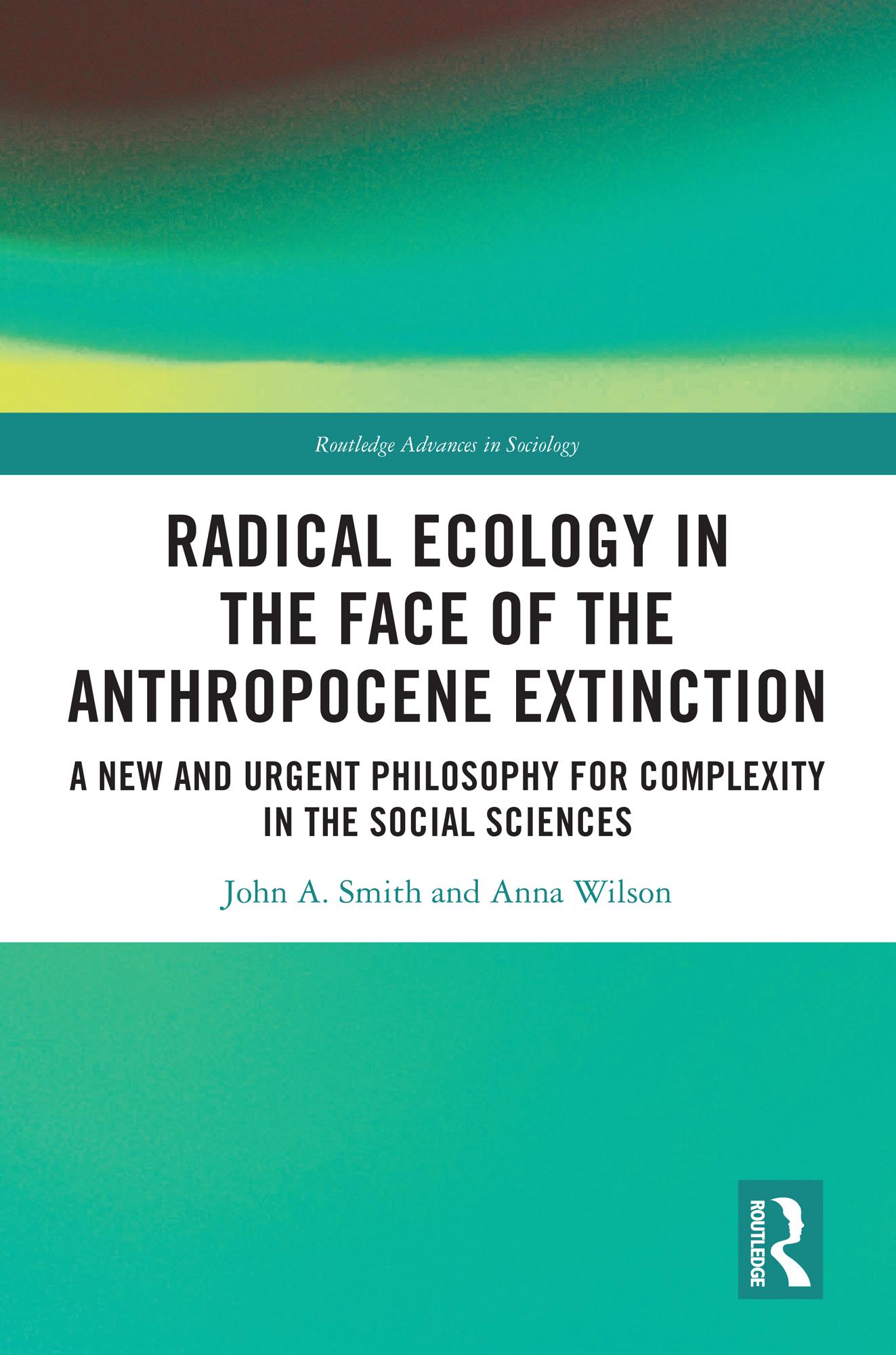
This book has two interlocking ambitions. The first is to steer what we purposefully call the idioms of critical philosophy towards a more ecologically informed paradigm. The second is to recognise that what has rightly come to be called The Anthropocene extinction is not and cannot be treated as simply a scientific fact but rather a socio-political and ecological dispute of immense complexity.
We start with an exploration of the consequences of a critical tradition which, under the name Enlightenment, has placed humanity at its centre and chance as its most general – and problematic – characteristic. We argue that this leads to a schizophrenic relationship between radical critique and science which can be avoided if we take the implications of biosemiotics seriously and develop a new, ecologically informed social science. We argue that in practice this means that for science to be practical in addressing the Anthropocene extinction, we have to recognise that it operates in a historically emergent, highly differentiated technopolitical ecology. Science, as it is currently commonly understood and used, is not ecological enough.
This book will interest social scientists interested in not only describing and critiquing but also understanding and responding to the complex problems facing humanity; scientists wanting to make sense of social phenomena; those educating the next generation of social scientists; and climate activists and policy-makers.
Płać wygodnie kartą, Klarną, Apple Pay lub Google Pay. Nie jesteś zadowolony? Zawsze masz 14-dniową gwarancję zwrotu pieniędzy. Więcej przeczytasz w naszych warunkach. Masz pytania? Napisz do nas na hello@memmo.org.
Memmo ułatwia naukę – gdziekolwiek jesteś na świecie. U nas znajdziesz podręczniki i sprytne narzędzia do nauki w jednym miejscu: streszczenia, quizy, podcasty i fiszki. A do tego Ted, Twój kumpel do nauki, który odpowie na wszystko, co Cię nurtuje. Ponad 50 000 studentów już tu się uczy – stworzone, byś uczył się szybciej i mniej stresował.