
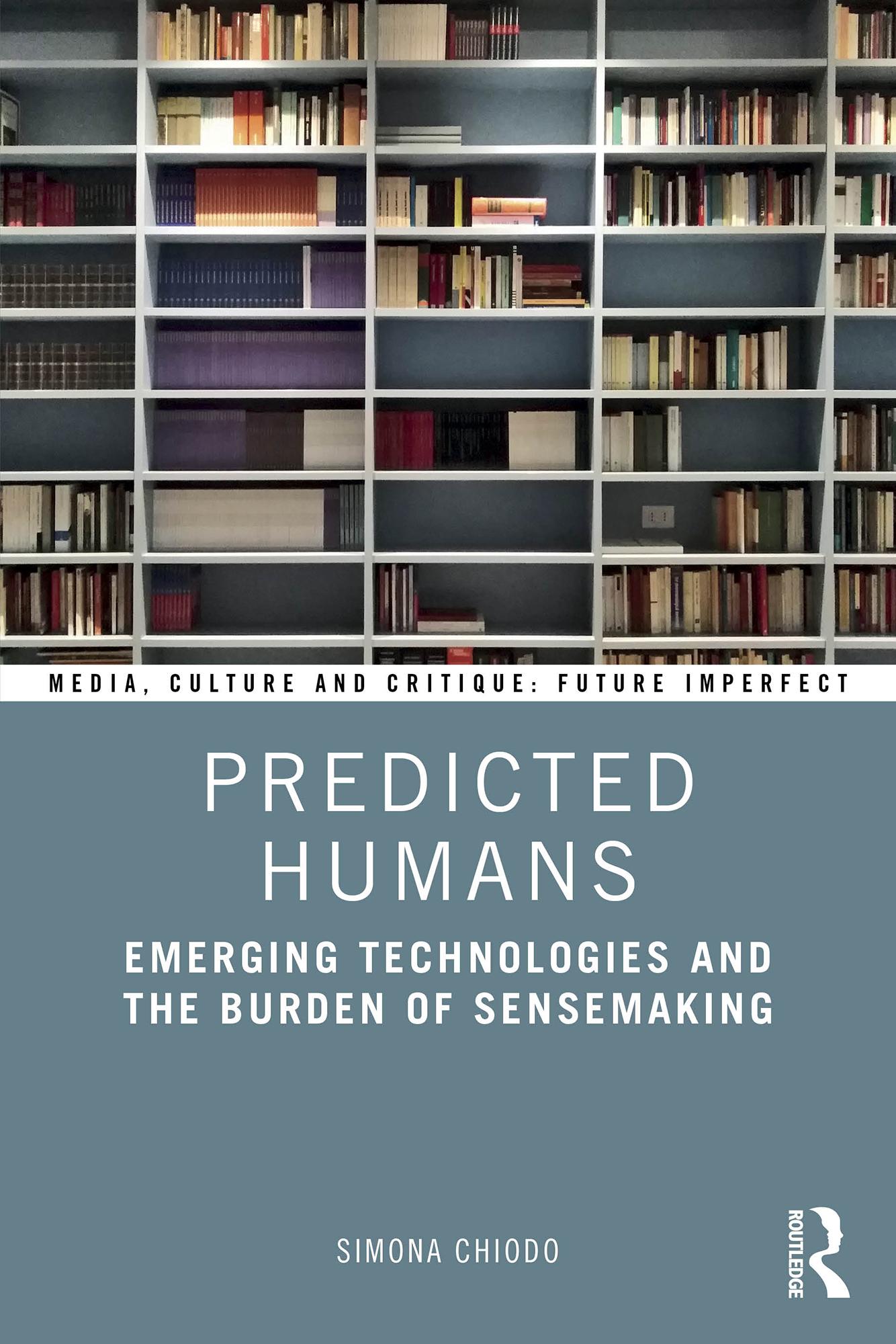
Predicting our future as individuals is central to the role of much emerging technology, from hiring algorithms that predict our professional success (or failure) to biomarkers that predict how long (or short) our healthy (or unhealthy) life will be. Yet, much in Western culture, from scripture to mythology to philosophy, suggests that knowing one’s future may not be in the subject’s best interests and might even lead to disaster. If predicting our future as individuals can be harmful as well as beneficial, why are we so willing to engage in so much prediction, from cradle to grave?
This book offers a philosophical answer, reflecting on seminal texts in Western culture to argue that predicting our future renders much of our existence the automated effect of various causes, which, in turn, helps to alleviate the existential burden of autonomously making sense of our lives in a more competitive, demanding, accelerated society. An exploration of our tendency in a technological era to engineer and so rid ourselves of that which has hitherto been our primary reason for being – making life plans for a successful future, while faced with epistemological and ethical uncertainties – Predicted Humans will appeal to scholars of philosophy and social theory with interests in questions of moral responsibility and meaning in an increasingly technological world.
Płać wygodnie kartą, Klarną, Apple Pay lub Google Pay. Nie jesteś zadowolony? Zawsze masz 14-dniową gwarancję zwrotu pieniędzy. Więcej przeczytasz w naszych warunkach. Masz pytania? Napisz do nas na hello@memmo.org.
Memmo ułatwia naukę – gdziekolwiek jesteś na świecie. U nas znajdziesz podręczniki i sprytne narzędzia do nauki w jednym miejscu: streszczenia, quizy, podcasty i fiszki. A do tego Ted, Twój kumpel do nauki, który odpowie na wszystko, co Cię nurtuje. Ponad 50 000 studentów już tu się uczy – stworzone, byś uczył się szybciej i mniej stresował.