
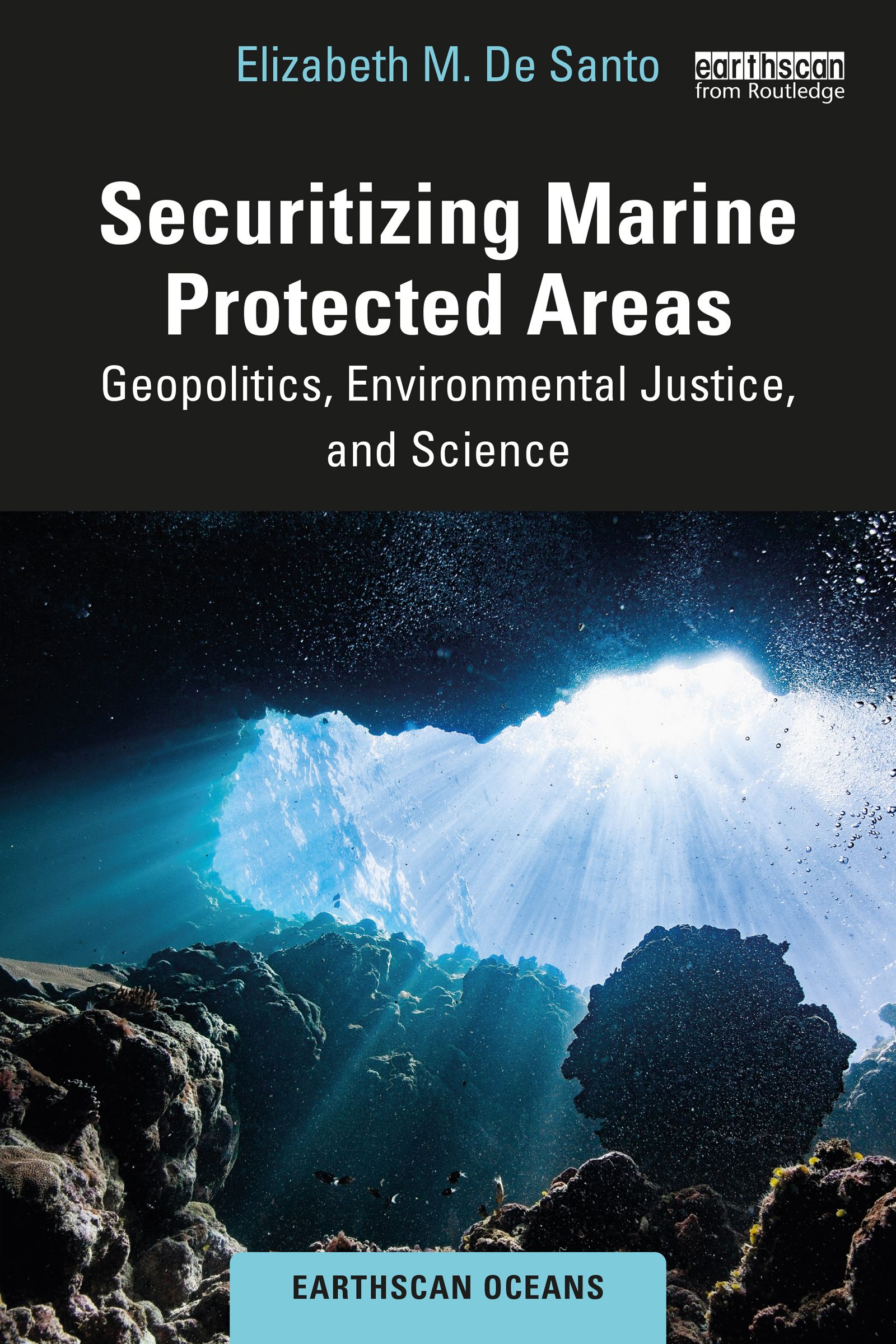
This book presents a novel examination of Marine Protected Areas within a security context, bridging science, policy, and geopolitics, and addressing the often-under-emphasized aspect of environmental justice.
The book argues that Marine Protected Areas (MPAs) are not only a critical tool for protecting marine biodiversity in a changing climate, but they also play an important role at the intersection of geopolitics and environmental justice, and they provide a case study of environmental governance at the science-policy interface. The book takes an interdisciplinary and critical approach and builds on the author's two decades of experience working in this field. Geopolitically, it explores the ways in which MPAs provide footprints for influence and access to resources far from home for nations with overseas territories. MPAs also raise important issues connected to equity, environmental justice, and social justice, including access to resources and participation in environmental decision-making processes, key aspects for achieving long-term conservation goals. The book also demonstrates how MPAs are a critical lens for understanding how policy makers cope with scientific uncertainty, and the necessity of well-designed and precautionary science advisory processes. While the ecological contribution of MPAs is paramount, social issues and geopolitical considerations are often less obvious in the discourse underpinning MPAs, and the resulting tensions can undermine long-term conservation objectives. By applying the three lenses of geopolitics, environmental justice and science, this book provides key insights to help the international community moving past the 2030 biodiversity targets and beyond, towards a future of meaningful, equitable, and effective conservation approaches.
This book will be of great interest to students and scholars of biodiversity conservation, marine studies, political geography, environmental governance, and science-policy studies. It will also be of interest to marine conservation governance professionals and policymakers.
Płać wygodnie kartą, Klarną, Apple Pay lub Google Pay. Nie jesteś zadowolony? Zawsze masz 14-dniową gwarancję zwrotu pieniędzy. Więcej przeczytasz w naszych warunkach. Masz pytania? Napisz do nas na hello@memmo.org.
Memmo ułatwia naukę – gdziekolwiek jesteś na świecie. U nas znajdziesz podręczniki i sprytne narzędzia do nauki w jednym miejscu: streszczenia, quizy, podcasty i fiszki. A do tego Ted, Twój kumpel do nauki, który odpowie na wszystko, co Cię nurtuje. Ponad 50 000 studentów już tu się uczy – stworzone, byś uczył się szybciej i mniej stresował.