
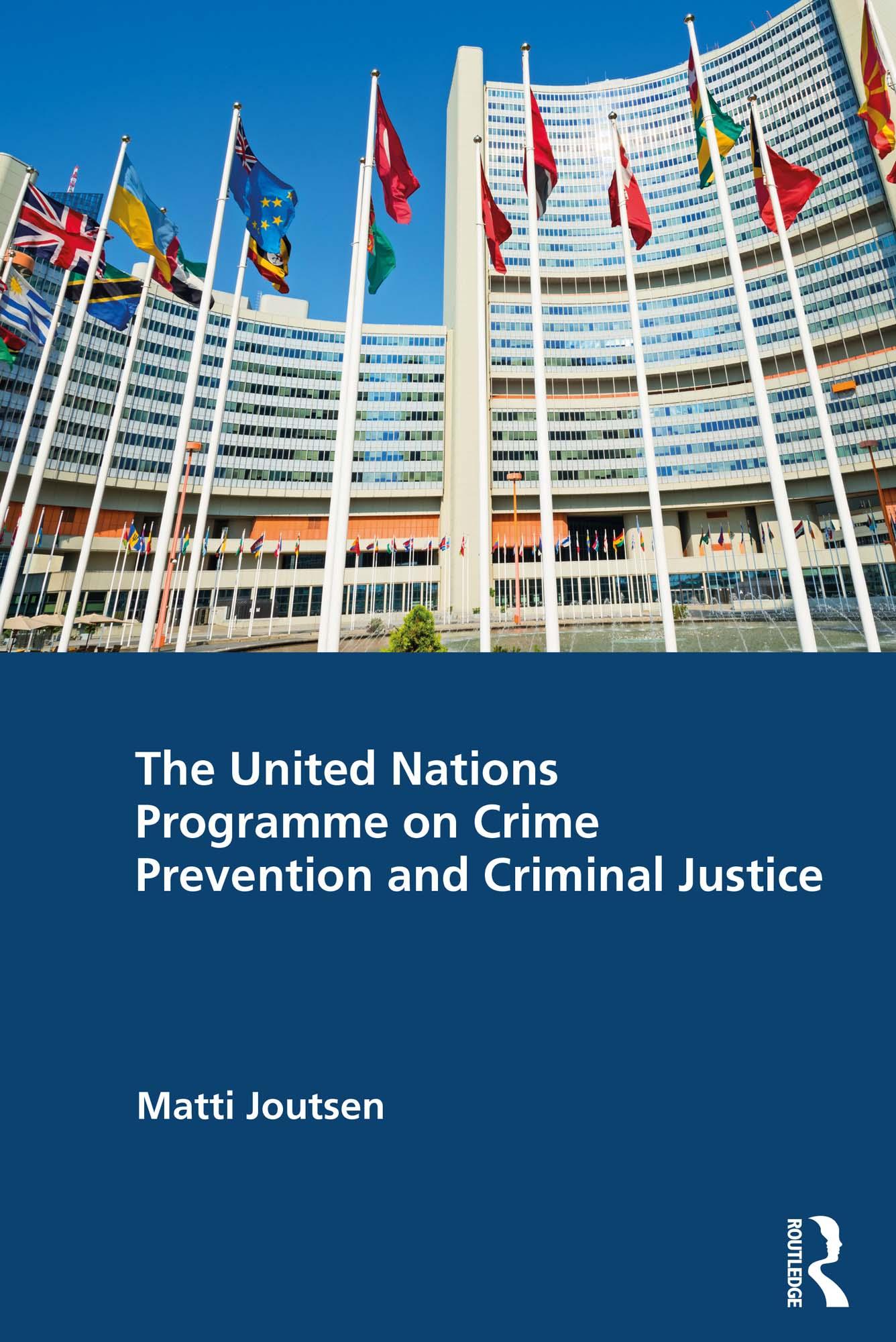
This book documents the evolution of the United Nations (UN) Crime Programme and its changing priorities, from the early focus on juvenile delinquency and correctional treatment, to the present preoccupation with transnational organized crime. It analyses what factors have contributed to this evolution, and to the shift from the original work on “soft law” resolutions and international standards, to “hard law” conventions, and to the expansion of technical assistance. It also examines the changing structure and working methods of the Programme, such as the UN Crime Commission and the UN Secretariat unit responsible for the Programme, the UN Crime Congresses, and the Programme Network Institutes. Drawing on almost 50 years of experience on the “inside” of the UN Crime Programme and his hands-on knowledge of the working of governmental and intergovernmental processes, Matti Joutsen explores the transitions that have taken place in the UN Crime Programme over the seven decades of its existence, assesses the changing impact of the Programme, and suggests possible future directions in international cooperation in crime prevention and criminal justice.
An accessible and compelling read, this book will appeal to students and scholars of criminology, sociology, politics, criminal justice, policy makers, and those interested in the evolution of the UN Crime Programme.
Płać wygodnie kartą, Klarną, Apple Pay lub Google Pay. Nie jesteś zadowolony? Zawsze masz 14-dniową gwarancję zwrotu pieniędzy. Więcej przeczytasz w naszych warunkach. Masz pytania? Napisz do nas na hello@memmo.org.
Memmo ułatwia naukę – gdziekolwiek jesteś na świecie. U nas znajdziesz podręczniki i sprytne narzędzia do nauki w jednym miejscu: streszczenia, quizy, podcasty i fiszki. A do tego Ted, Twój kumpel do nauki, który odpowie na wszystko, co Cię nurtuje. Ponad 50 000 studentów już tu się uczy – stworzone, byś uczył się szybciej i mniej stresował.