
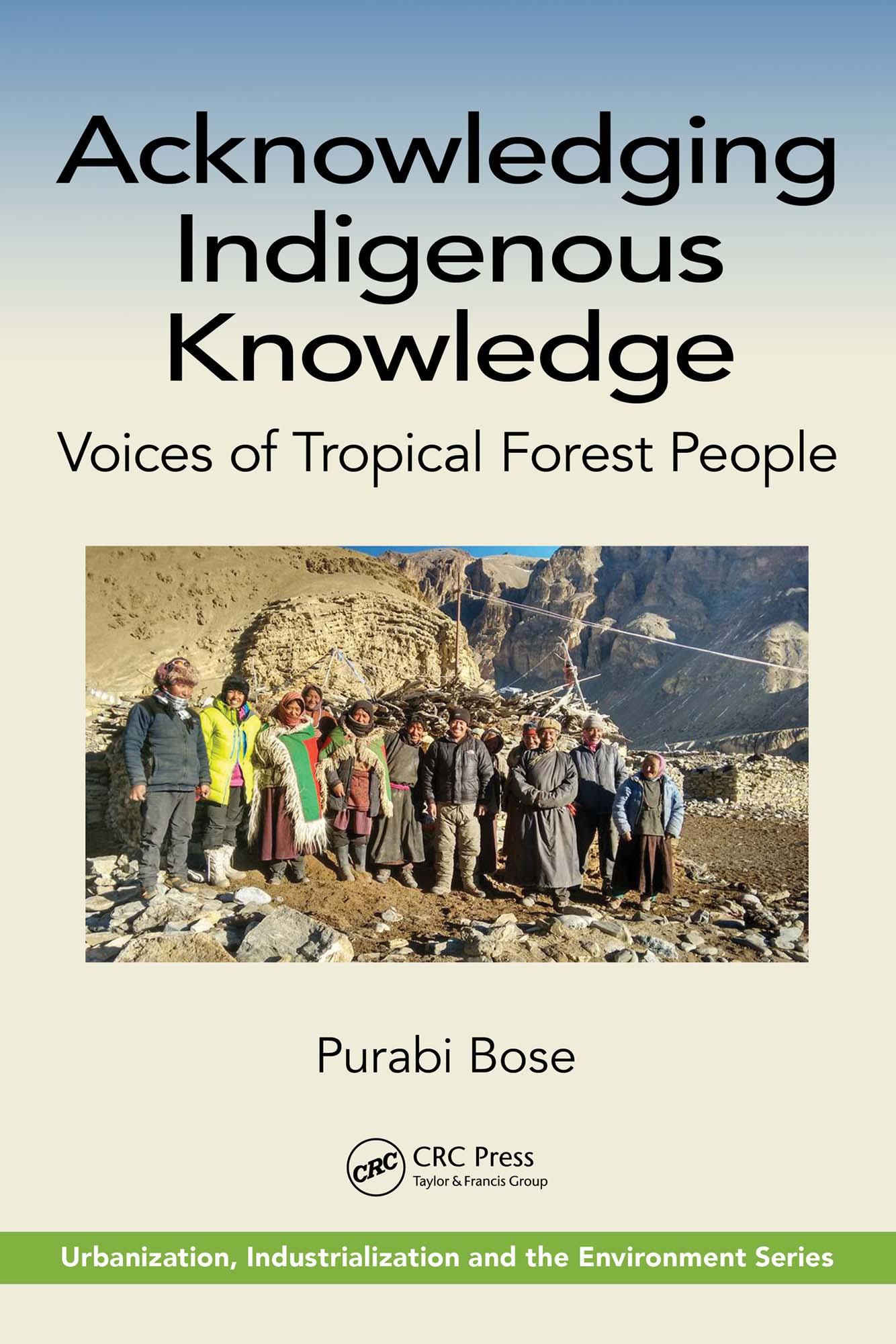
This book explores how the landscapes in indigenous territories are rapidly changing due to increased global industrial demand. This deforestation and urbanization have isolated the indigenous people from practicing ‘traditional ways of life.’ Portrayed in this book is the indigenous people’s perspective of their indigenous knowledge (IK) about the environment and why losing IK is a threat to humans, wildlife, and nature. Insight is shared into why acknowledging IK as a science can help solve climate change, food and nutrition insecurity, and increasing new types of pandemics through evidence‑based stories from indigenous people.
Features:
• Bridges the fractured space between science and nature.
• Documents the perspectives of indigenous peoples about their ancestral knowledge.
• Provides ethnographic qualitative comparative case studies of forest‑dwelling indigenous peoples over a 19‑year period.
• Covers largely remote indigenous territories of ten tropical countries in the Global South.
• Provides evidence‑based stories examining indigenous knowledge’s role in the tropics in preserving diverse landscapes and providing nature‑based solutions.
Płać wygodnie kartą, Klarną, Apple Pay lub Google Pay. Nie jesteś zadowolony? Zawsze masz 14-dniową gwarancję zwrotu pieniędzy. Więcej przeczytasz w naszych warunkach. Masz pytania? Napisz do nas na hello@memmo.org.
Memmo ułatwia naukę – gdziekolwiek jesteś na świecie. U nas znajdziesz podręczniki i sprytne narzędzia do nauki w jednym miejscu: streszczenia, quizy, podcasty i fiszki. A do tego Ted, Twój kumpel do nauki, który odpowie na wszystko, co Cię nurtuje. Ponad 50 000 studentów już tu się uczy – stworzone, byś uczył się szybciej i mniej stresował.