
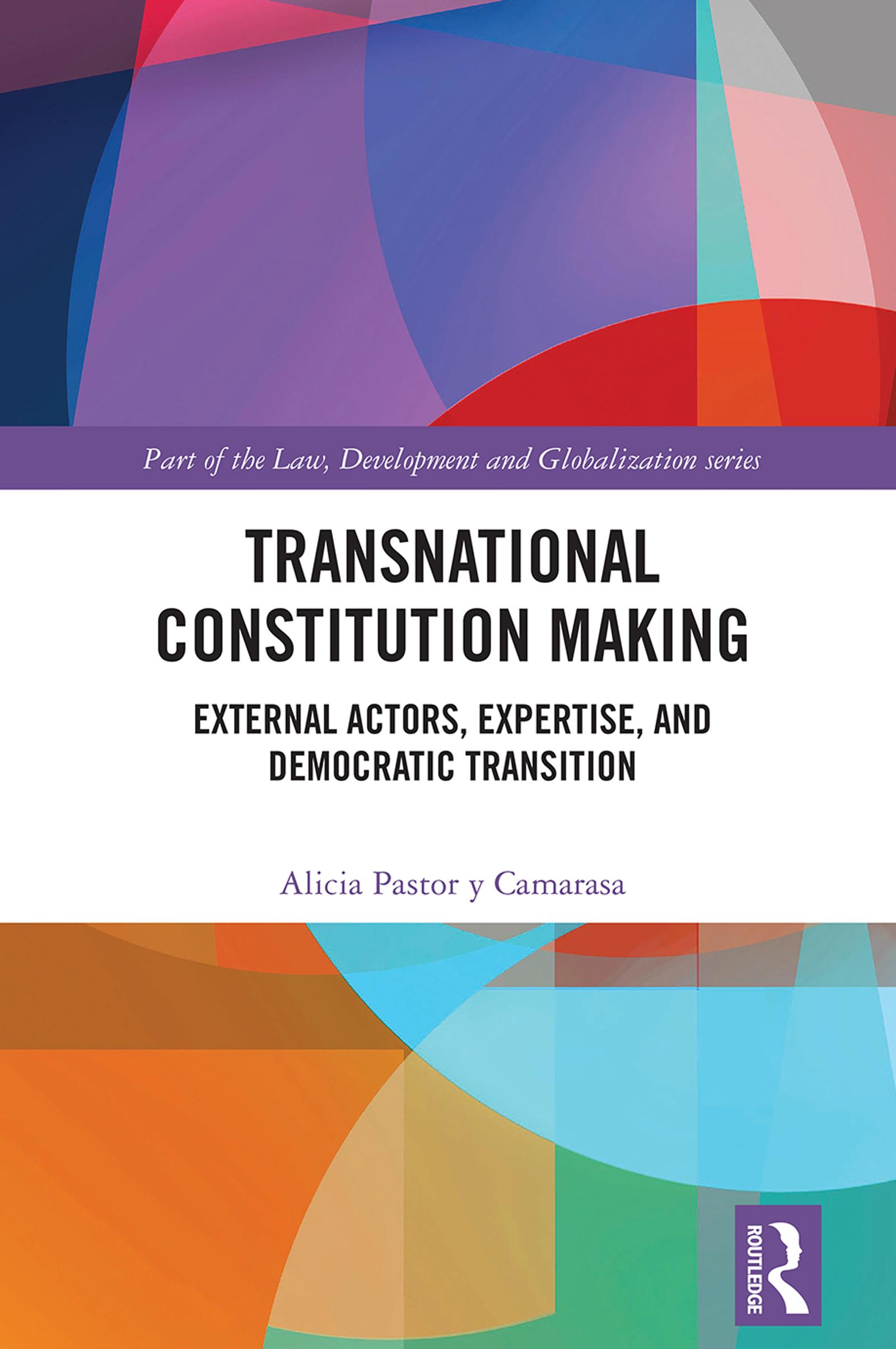
This book examines the largely neglected but crucial role of transnational actors in democratic constitution-making.
The writing or rewriting of constitutions is usually a key moment in democratic transitions. But how exactly does this take place? Most contemporary comparative constitutional literature draws on the concept of constituent power – the power of the people – to address this moment. But what this overlooks, this book argues, is the important role of external, transnational actors who tend to play a crucial role in the process. Drawing on sociolegal methodologies but informed by new legal realism, this book develops a new theoretical framework for examining the involvement of such actors in constitution-making. Empirically grounded, the book uncovers a more comprehensive picture of how constitution-making unfolds on the ground. Illuminating the power dynamics at play during the legal process, it reveals not only the wide range of external actors involved but also the continuity between decolonisation and post-Cold War constitution-making.
This book, the first to provide an in-depth examination of external actor involvement in constitution-making, will appeal to scholars of constitutional law, sociolegal studies, law and development, and transitional justice.
Płać wygodnie kartą, Klarną, Apple Pay lub Google Pay. Nie jesteś zadowolony? Zawsze masz 14-dniową gwarancję zwrotu pieniędzy. Więcej przeczytasz w naszych warunkach. Masz pytania? Napisz do nas na hello@memmo.org.
Memmo ułatwia naukę – gdziekolwiek jesteś na świecie. U nas znajdziesz podręczniki i sprytne narzędzia do nauki w jednym miejscu: streszczenia, quizy, podcasty i fiszki. A do tego Ted, Twój kumpel do nauki, który odpowie na wszystko, co Cię nurtuje. Ponad 50 000 studentów już tu się uczy – stworzone, byś uczył się szybciej i mniej stresował.