
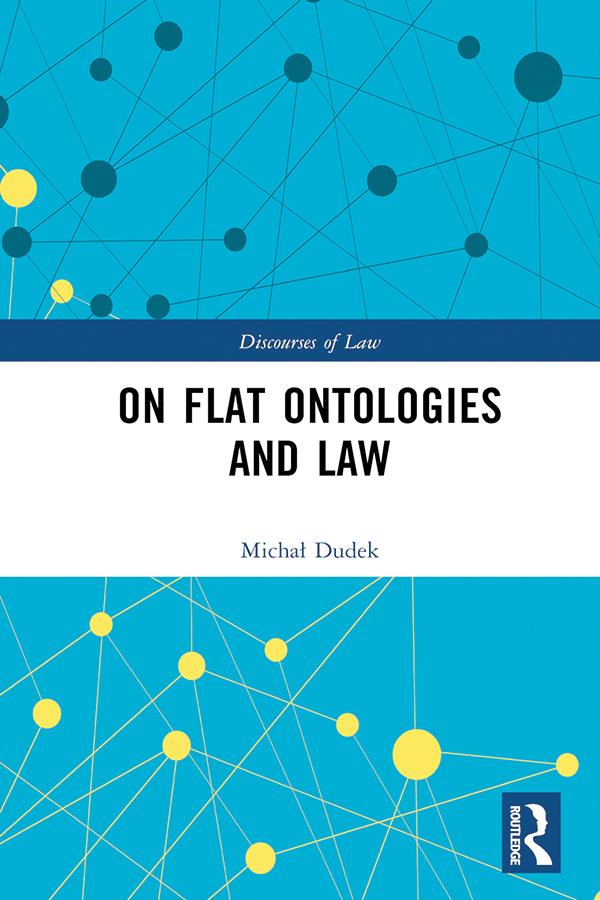
This book examines the importance of flat ontologies for law and sociolegal theory. Associated with the emergence of new materialism in the humanities and social sciences, the elaboration of flat ontologies challenges the binarism that has maintained the separation of culture from nature, and the human from the nonhuman. Although most work in legal theory and sociolegal studies continues to adopt a non-flat, anthropocentric and immaterial take on law, the critique of this perspective is becoming more and more influential. Engaging the increasing legal interest in flat ontologies, this book offers an account of the main theoretical perspectives, and their importance for law. Covering the work of the five major theorists in the area – Gabriel Tarde, Bruno Latour, Manuel DeLanda, Karen Barad and Graham Harman – the book aims to encourage this interest, as well as to explicate the important problems of and differences between these perspectives. Flat ontologies, the book demonstrates, can offer a valuable new perspective for understanding and thinking about law.
This book will appeal mainly to scholars and students in legal theory and sociolegal studies; as well as others with interests in the posthumanist turn in philosophy and social theory.
Płać wygodnie kartą, Klarną, Apple Pay lub Google Pay. Nie jesteś zadowolony? Zawsze masz 14-dniową gwarancję zwrotu pieniędzy. Więcej przeczytasz w naszych warunkach. Masz pytania? Napisz do nas na hello@memmo.org.
Memmo ułatwia naukę – gdziekolwiek jesteś na świecie. U nas znajdziesz podręczniki i sprytne narzędzia do nauki w jednym miejscu: streszczenia, quizy, podcasty i fiszki. A do tego Ted, Twój kumpel do nauki, który odpowie na wszystko, co Cię nurtuje. Ponad 50 000 studentów już tu się uczy – stworzone, byś uczył się szybciej i mniej stresował.