
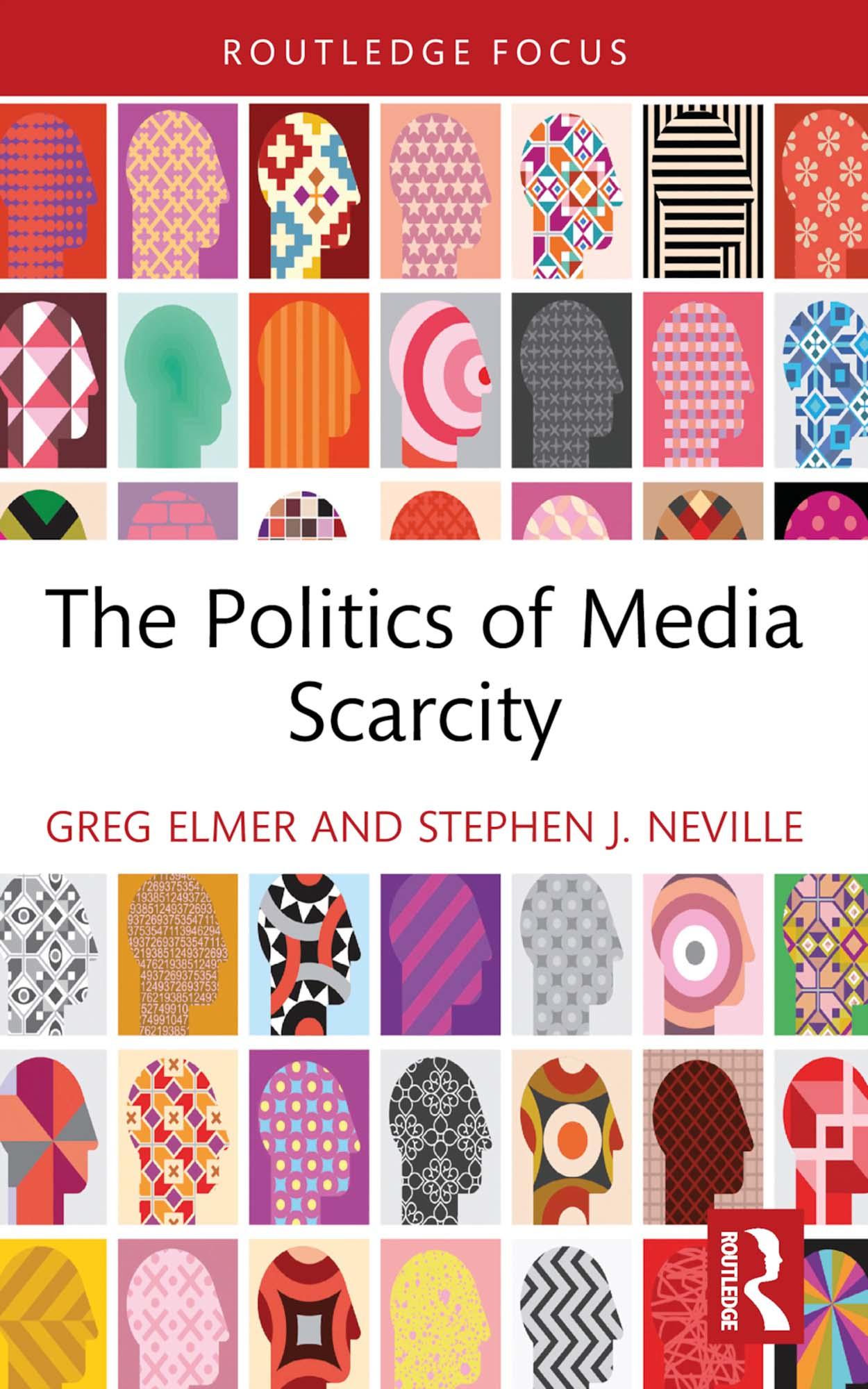
This book questions the predominance of “media abundance” as a guiding concept for contemporary mediated politics. The authors argue that media abundance is not a universal condition, and that certain individuals, communities, and even nations can more accurately be referred to as media scarce – where access to media technologies and content is limited, highly controlled, or surveilled.
Through case studies that focus on guerilla militants, incarcerated Indigenous people, and cold war‑era infrastructure, including Soviet “closed” or “secret” cities and Canadian nuclear bunkers, the book’s chapters interrogate how the once media scarce later “speak” to – and can be heard by – the predominant, abundant media culture. Drawing from several art projects and diverse cultural sites, the book highlights how media scarce communities negotiate and otherwise narrate their place in the world, their past experiences and lives, and escape from subjugation. To better understand media scarce politics, the book asks how and when communities become – by accident or force, by choice or necessity – media scarce.
This innovative and insightful text will appeal to students and scholars around the world working in the areas of media and politics, art and politics, visual studies, surveillance studies, and communication studies.
Płać wygodnie kartą, Klarną, Apple Pay lub Google Pay. Nie jesteś zadowolony? Zawsze masz 14-dniową gwarancję zwrotu pieniędzy. Więcej przeczytasz w naszych warunkach. Masz pytania? Napisz do nas na hello@memmo.org.
Memmo ułatwia naukę – gdziekolwiek jesteś na świecie. U nas znajdziesz podręczniki i sprytne narzędzia do nauki w jednym miejscu: streszczenia, quizy, podcasty i fiszki. A do tego Ted, Twój kumpel do nauki, który odpowie na wszystko, co Cię nurtuje. Ponad 50 000 studentów już tu się uczy – stworzone, byś uczył się szybciej i mniej stresował.