
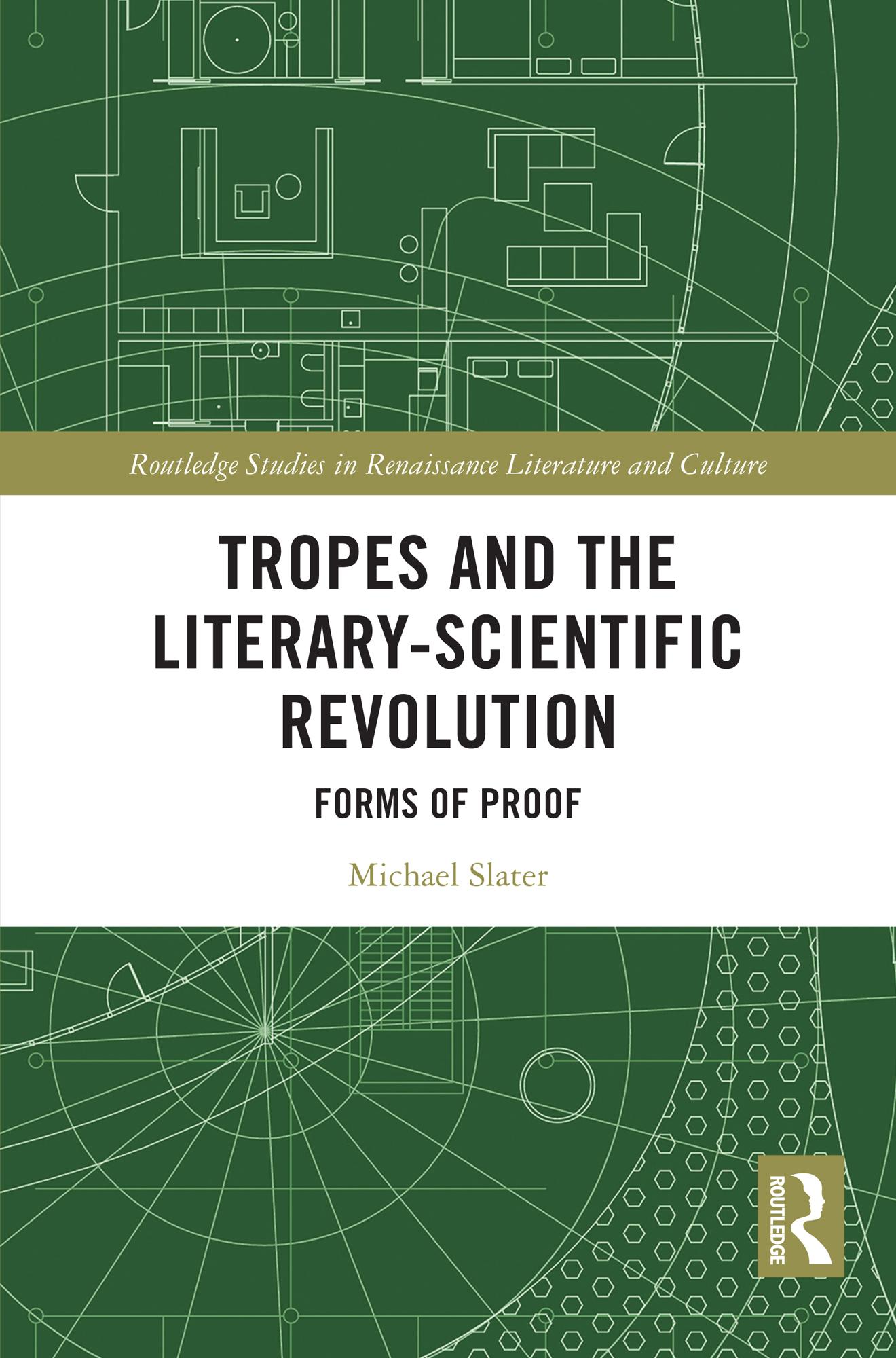
Tropes and the Literary-Scientific Revolution: Forms of Proof argues that the rise of mechanical science in the seventeenth century had a profound impact on both language and literature. To the extent that new ideas about things were accompanied by new attitudes toward words, what we commonly regard as the “scientific revolution” inevitably bore literary dimensions as well. Literary tropes and forms underwent tremendous reassessment in the seventeenth century, and early modern science was shaped just as powerfully by contest over the place of literary figures, from personification and metaphor to anamorphosis and allegory. In their rejection of teleological explanations of natural motion, for instance, early modern philosophers often disputed the value of personification, a figural projection of interiority onto what was becoming increasingly a mechanical world. And allegory—a dominant mode of literature from the late Middle Ages until well into the Renaissance—became “the vice of those times,” as Thomas Rymer described it in 1674. This book shows that its acute devaluation was possible only in conjunction with a distinctively modern physics. Analyzing writings by Sidney, Shakespeare, Bacon, Jonson, Brahe, Kepler, Galileo, Hobbes, Descartes, and more, it asserts that the scientific revolution was a literary phenomenon, just as the literary revolution was also a scientific one.
Płać wygodnie kartą, Klarną, Apple Pay lub Google Pay. Nie jesteś zadowolony? Zawsze masz 14-dniową gwarancję zwrotu pieniędzy. Więcej przeczytasz w naszych warunkach. Masz pytania? Napisz do nas na hello@memmo.org.
Memmo ułatwia naukę – gdziekolwiek jesteś na świecie. U nas znajdziesz podręczniki i sprytne narzędzia do nauki w jednym miejscu: streszczenia, quizy, podcasty i fiszki. A do tego Ted, Twój kumpel do nauki, który odpowie na wszystko, co Cię nurtuje. Ponad 50 000 studentów już tu się uczy – stworzone, byś uczył się szybciej i mniej stresował.