
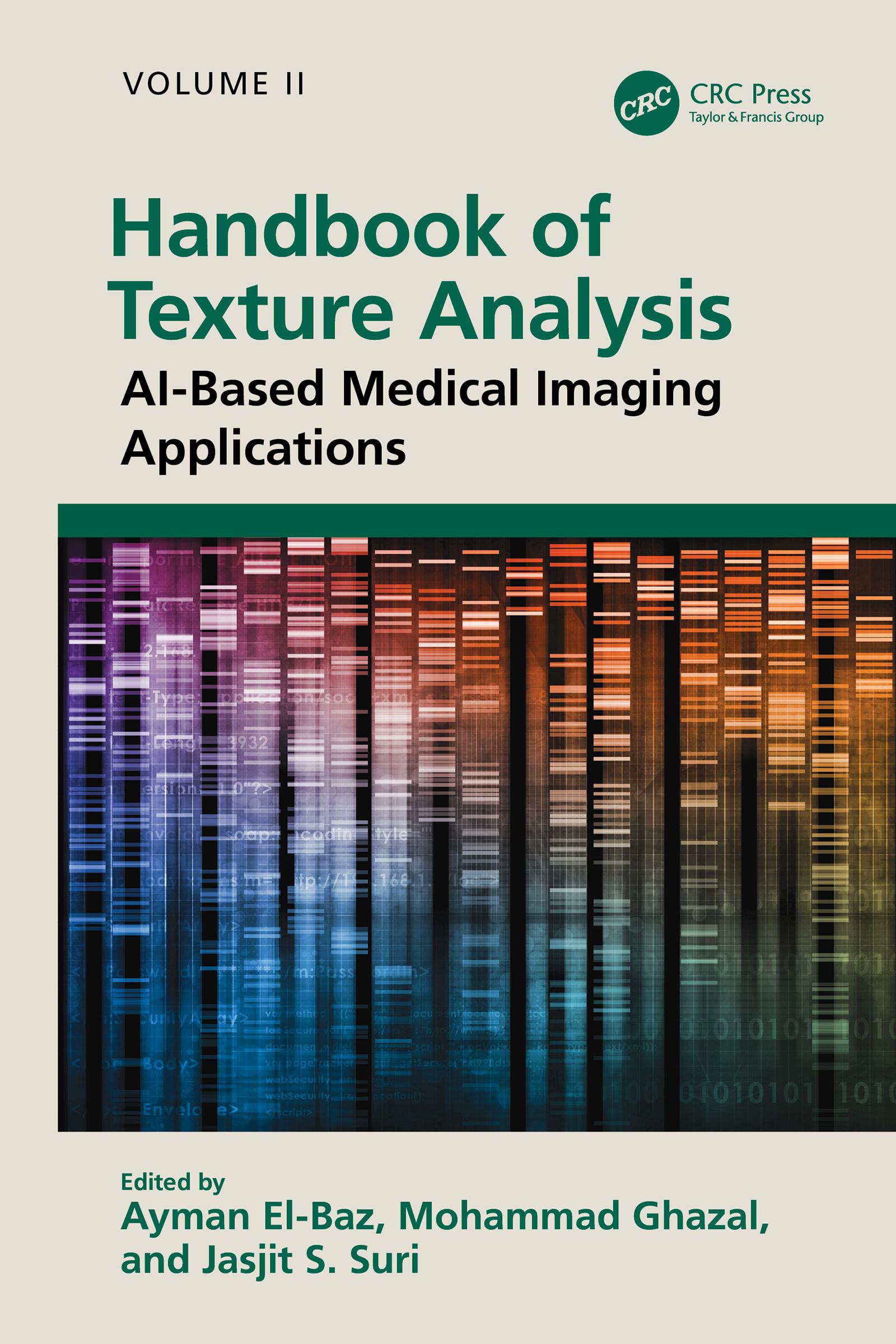
The major goals of texture research in computer vision are to understand, model, and process texture and, ultimately, to simulate the human visual learning process using computer technologies. In the last decade, artificial intelligence has been revolutionized by machine learning and big data approaches, outperforming human prediction on a wide range of problems. In particular, deep learning convolutional neural networks (CNNs) are particularly well suited to texture analysis. This volume presents important branches of texture analysis methods which find a proper application in AI-based medical image analysis. This book:
- Discusses first-order, second-order statistical methods, local binary pattern (LBP) methods, and filter bank-based methods
- Covers spatial frequency-based methods, Fourier analysis, Markov random fields, Gabor filters, and Hough transformation
- Describes advanced textural methods based on DL as well as BD and advanced applications of texture to medial image segmentation
- Is aimed at researchers, academics, and advanced students in biomedical engineering, image analysis, cognitive science, and computer science and engineering
This is an essential reference for those looking to advance their understanding in this applied and emergent field.
Płać wygodnie kartą, Klarną, Apple Pay lub Google Pay. Nie jesteś zadowolony? Zawsze masz 14-dniową gwarancję zwrotu pieniędzy. Więcej przeczytasz w naszych warunkach. Masz pytania? Napisz do nas na hello@memmo.org.
Memmo ułatwia naukę – gdziekolwiek jesteś na świecie. U nas znajdziesz podręczniki i sprytne narzędzia do nauki w jednym miejscu: streszczenia, quizy, podcasty i fiszki. A do tego Ted, Twój kumpel do nauki, który odpowie na wszystko, co Cię nurtuje. Ponad 50 000 studentów już tu się uczy – stworzone, byś uczył się szybciej i mniej stresował.