
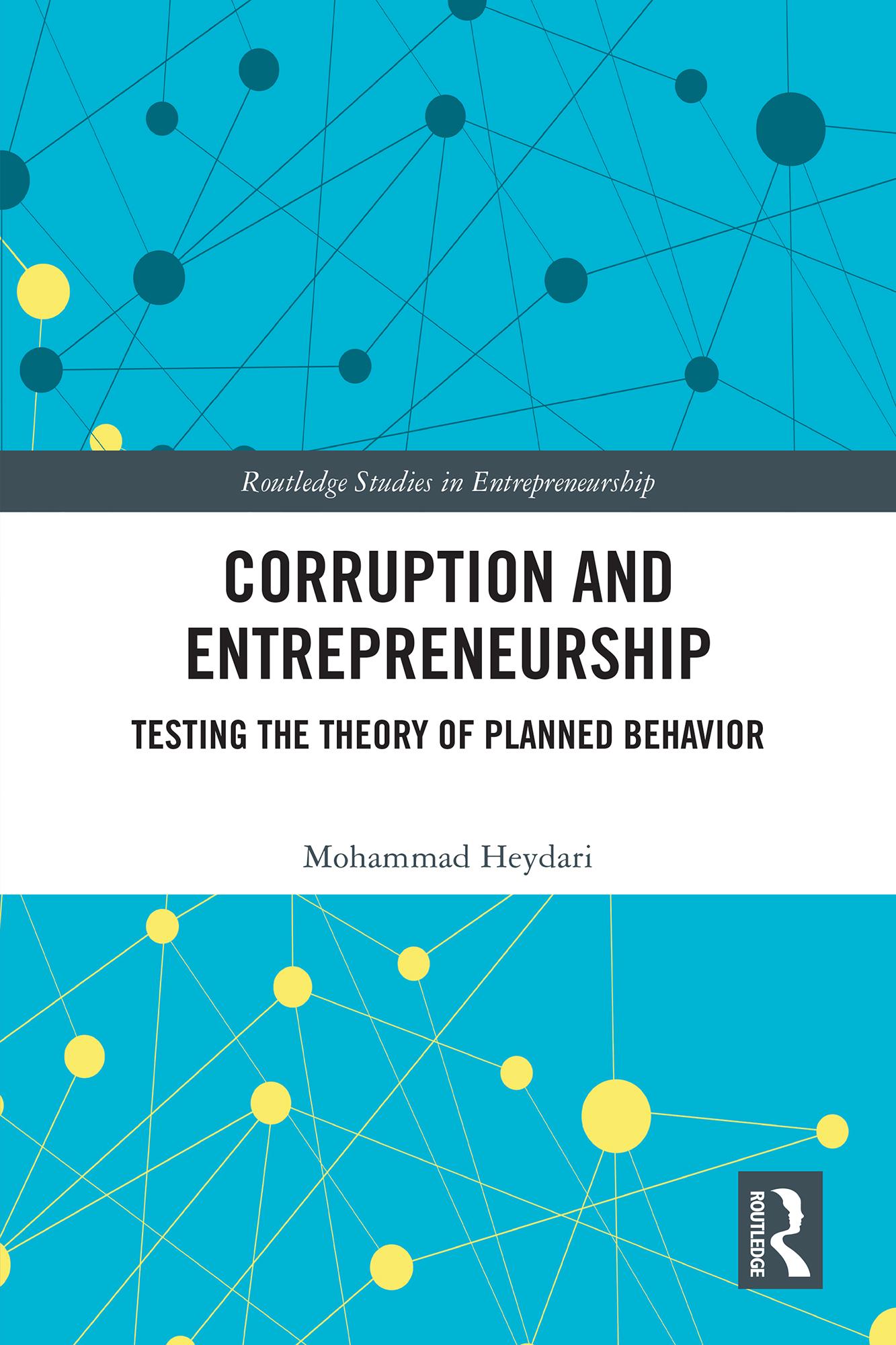
This book examines corruption as a collective behavior problem for entrepreneurs. In particular, it considers Azjen’s theory of planned behavior (TPB) to explain perceived corruption and its effects on entrepreneurship.
Heydari argues that behavioral intentions are shaped by variables such as attitude, subjective norms and perceived behavioral control. He proposes the novel Heydari Behavioral Synthesis Theory (HBST) model and applies it to two case studies to highlight the institutional, individual and societal factors that may inhibit entrepreneurial behavior. He concludes that corruption may persist not just because of difficulties in monitoring and prosecuting, but because it is systemically pervasive and discourages individual countermeasures. He closes by looking at anti-corruption policies and outlining future research directions.
Arguing that widespread corruption may be theoretically mischaracterized in the literature, this book is of interest to policy-makers, researchers and postgraduate students in the fields of management science, industrial and organizational psychology, entrepreneurship and corruption studies.
Płać wygodnie kartą, Klarną, Apple Pay lub Google Pay. Nie jesteś zadowolony? Zawsze masz 14-dniową gwarancję zwrotu pieniędzy. Więcej przeczytasz w naszych warunkach. Masz pytania? Napisz do nas na hello@memmo.org.
Memmo ułatwia naukę – gdziekolwiek jesteś na świecie. U nas znajdziesz podręczniki i sprytne narzędzia do nauki w jednym miejscu: streszczenia, quizy, podcasty i fiszki. A do tego Ted, Twój kumpel do nauki, który odpowie na wszystko, co Cię nurtuje. Ponad 50 000 studentów już tu się uczy – stworzone, byś uczył się szybciej i mniej stresował.