
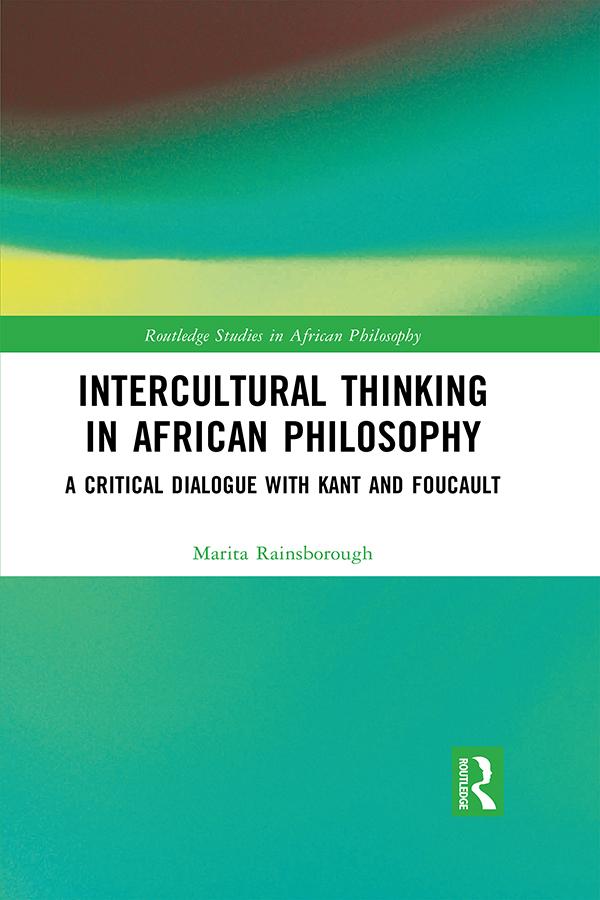
This book sets up a rich intercultural dialogue between the philosophy of Immanuel Kant and Michel Foucault, and that of key African thinkers such as Kwame Anthony Appiah, Achille Mbembe, Kwasi Wiredu, Kwame Gyekye, Tsenay Serequeberhahn, and Henry Odera Oruka.
The book challenges western-centric visions of an African future by demonstrating the richness of thought that can be found in African and Afrodiasporic philosophy. The book shows how thinkers such as Serequeberhan have criticised the inconsistencies in Kant’s work, whereas others such as Wiredu, Gyekye, Appiah and Mbembe have referenced his work more positively and developed progressive political concepts such as the metanational state; partial cosmopolitanism and Afropolitanism. The book goes on to consider how Mbembe and Mudimbe have responded to Foucault’s ideas in deciphering the various Western, African and Afrodiasporic discourses of knowledge on Africa. The book concludes by considering various theories of intercultural exchange, from Gyekye’s cultural borrowing, to Appiah’s conversation across boundaries, Wiredu’s cross cultural dialogue, Mbembe’s thinking outside the frame, Serequeberhan’s dialogue at a distance, and Oruka’s call for global re-distribution and a new ecophilosophical attitude to safeguard human existence on the planet.
This book invites us all to engage in intercultural dialogue and mutual respect for different cultural creations. It will be an important read for researchers in Philosophy wherever they are in the world.
Płać wygodnie kartą, Klarną, Apple Pay lub Google Pay. Nie jesteś zadowolony? Zawsze masz 14-dniową gwarancję zwrotu pieniędzy. Więcej przeczytasz w naszych warunkach. Masz pytania? Napisz do nas na hello@memmo.org.
Memmo ułatwia naukę – gdziekolwiek jesteś na świecie. U nas znajdziesz podręczniki i sprytne narzędzia do nauki w jednym miejscu: streszczenia, quizy, podcasty i fiszki. A do tego Ted, Twój kumpel do nauki, który odpowie na wszystko, co Cię nurtuje. Ponad 50 000 studentów już tu się uczy – stworzone, byś uczył się szybciej i mniej stresował.