
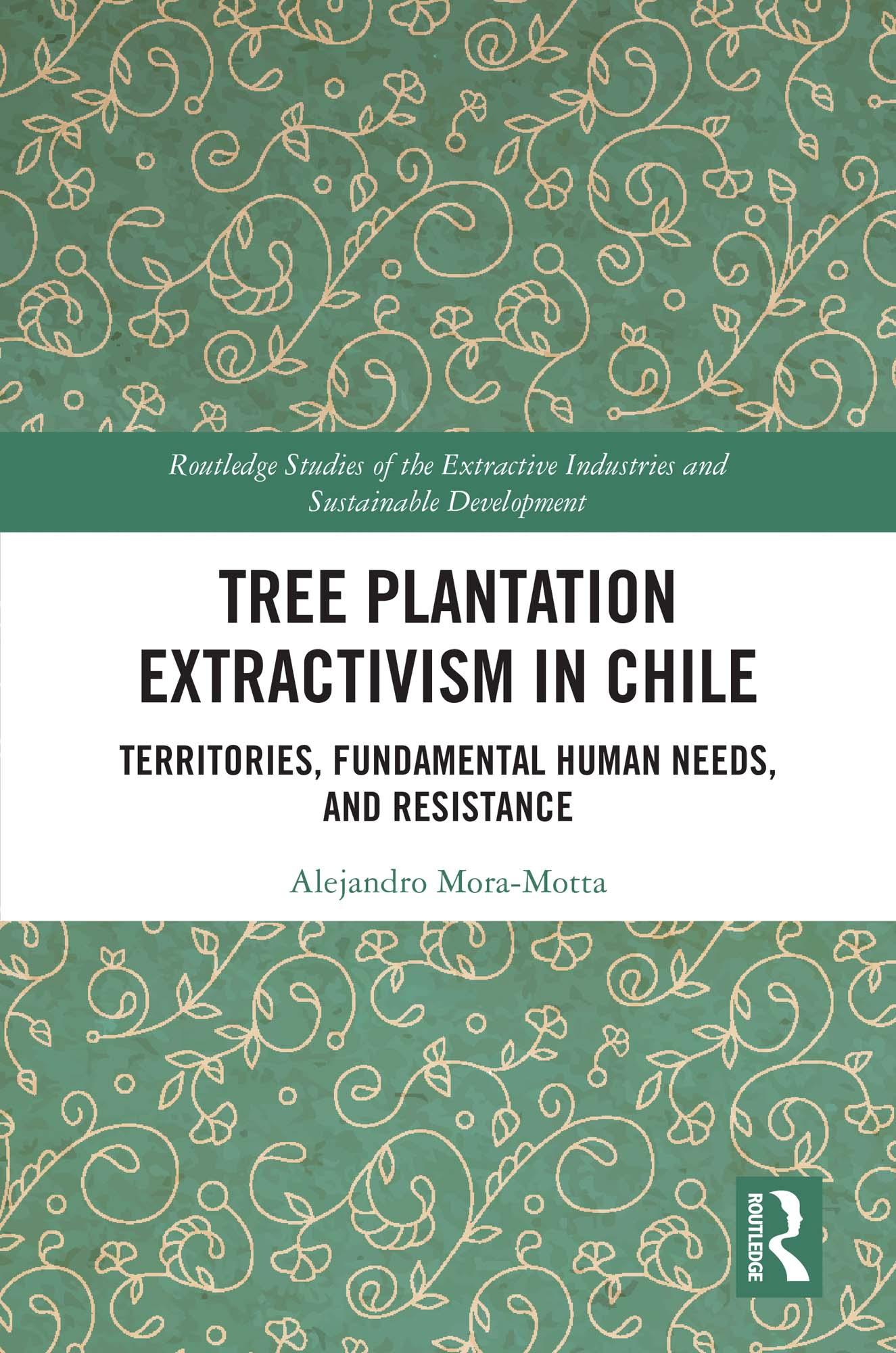
This book examines how extractivism transforms territories and affects the well-being of rural people, drawing on in-depth fieldwork conducted on tree plantations in Chile.
The book argues that pine and eucalyptus monoculture plantations in southern Chile are a form of extractivism representing a mode of nature appropriation that captures large amounts of natural resources to produce wooden-based raw materials with little processing and an export-oriented focus. The book discusses the nexus of extractivism, territorial transformations, well-being, and emerging resistances using a participatory action research methodological approach in the Region of Los Ríos, southern Chile. The findings show how the configuration of an extractivist logging enclave generated a substantial and irrevocable reordering of human-nature relations, resulting in the territorial and ontological occupation of rural places that disrupted the fundamental human needs of peasants and indigenous people. The book maintains that Chile's green growth development approach does not challenge the consolidated tree plantation enclave controlled by large multinationals. Instead, green growth legitimises the extractivist logic. The book draws parallels with other countries and regions to contribute to wider debates surrounding these topics.
This book will be of great interest to students and scholars of the extractive industries, development studies, political ecology, and natural resource governance.
Płać wygodnie kartą, Klarną, Apple Pay lub Google Pay. Nie jesteś zadowolony? Zawsze masz 14-dniową gwarancję zwrotu pieniędzy. Więcej przeczytasz w naszych warunkach. Masz pytania? Napisz do nas na hello@memmo.org.
Memmo ułatwia naukę – gdziekolwiek jesteś na świecie. U nas znajdziesz podręczniki i sprytne narzędzia do nauki w jednym miejscu: streszczenia, quizy, podcasty i fiszki. A do tego Ted, Twój kumpel do nauki, który odpowie na wszystko, co Cię nurtuje. Ponad 50 000 studentów już tu się uczy – stworzone, byś uczył się szybciej i mniej stresował.