
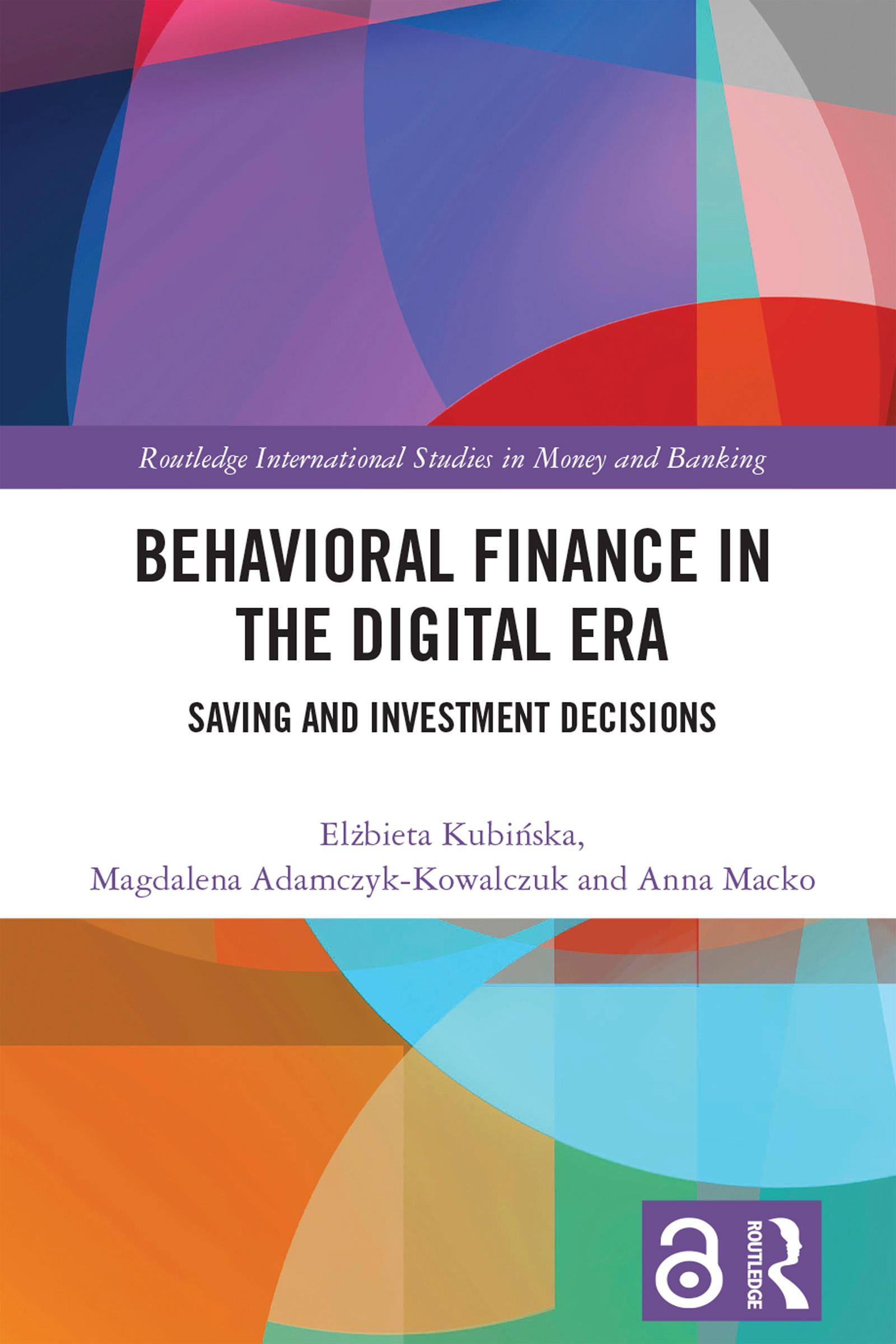
Due to swift technological changes and the resultant digital revolution, a wide range of new digital financial products and services have emerged in the financial markets, as witnessed in the context of the fintech sector, the economics of blockchain and NFT issuance. This book takes an in-depth look at the challenges faced by individuals who make investment decisions in a rapidly changing financial world and presents a concise and thorough overview of the multifaceted approach to investment and savings behavior. It explores behavioral digital finance, referencing the latest theories in economic psychology and financial markets and provides an analysis of the process of saving and investing in the context of our new digital reality, where an understanding of human–AI interaction and its benefits and threats is extremely important. It combines an accessible overview of classical and new behavioral theories, models of financial decision making as well as an analysis of the new trends in financial decision making. Special attention is given to financial decision support systems and the role of financial advice services, which are of growing importance, due to their increasing complexity and difficulty.
The book combines theoretical considerations and wide-reaching empirical analyses from a representative sample of international respondents. It deals with the individual approach to human risk-taking, and human–AI interaction and its benefits and threats. The book explores how people react to algorithms, what drives algorithm aversion and appreciation, and how understanding of those mechanisms can be employed to improve financial advisory systems and also considers the impact of the Covid-19 pandemic on financial behavior.
Chapter 4 of this book is freely available as a downloadable Open Access PDF at www.taylorfrancis.com under a Creative Commons Attribution-Non Commercial-No Derivatives (CC-BY-NC-ND) 4.0 International license.
Płać wygodnie kartą, Klarną, Apple Pay lub Google Pay. Nie jesteś zadowolony? Zawsze masz 14-dniową gwarancję zwrotu pieniędzy. Więcej przeczytasz w naszych warunkach. Masz pytania? Napisz do nas na hello@memmo.org.
Memmo ułatwia naukę – gdziekolwiek jesteś na świecie. U nas znajdziesz podręczniki i sprytne narzędzia do nauki w jednym miejscu: streszczenia, quizy, podcasty i fiszki. A do tego Ted, Twój kumpel do nauki, który odpowie na wszystko, co Cię nurtuje. Ponad 50 000 studentów już tu się uczy – stworzone, byś uczył się szybciej i mniej stresował.