
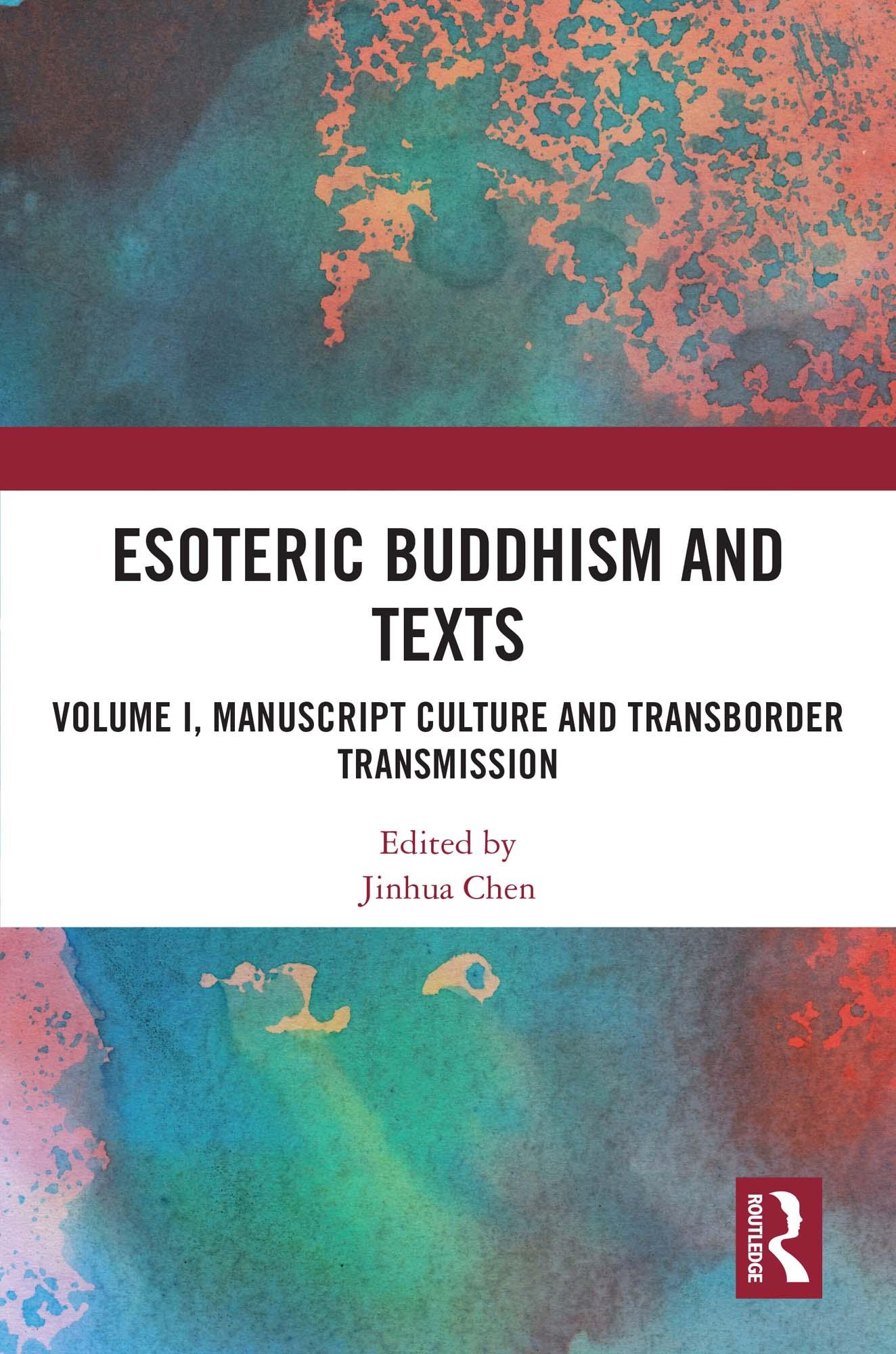
This book explores trans-cultural and cross-border transmission and transformation of Esoteric Buddhism in East Asia, focusing on its manuscript culture and the transborder transmission of Esoteric Buddhist texts.
In East Asia, Esoteric Buddhism’s influences can be seen across all levels of society: not only in that it achieved a recognizable sectarian identity, but also because elements of esoteric teachings were absorbed by other religious schools, influencing their philosophical tenets and everyday practices. The influence was not confined to the religious sphere: scholars have been paying more and more attention to the significance of Tang Esoteric Buddhism in relation to material culture and the dissemination of Esoteric Buddhist technologies in South, Central, and East Asia. No matter how one looks at a maṇḍala—an integral feature of esoteric practice—or the uncannily expressive statues of Buddhas, Bodhisattvas or Yidam that come in all shapes and sizes, or the murals that depict the variegated, mysterious themes of the esoteric tradition, one can always recognise the profound connection between art and Esoteric Buddhism. Esoteric Iifluences also abound in East Asian literature across different genres, displaying its unique characters both in poetry and prose. Likewise, in architecture, one can readily make out the enigmatic, colorful and distinctive elements characteristic of the esoteric tradition. Monks initiated into the esoteric lineages not only brought Buddhist classics and practices to China but also advanced knowledge in astronomy, calendarial calculations and mathematical theories.
The chapters in this volume focus on two major aspects of textual Esoteric Buddhism—its manuscript culture and transborder transmission. This book will be beneficial to advanced students and researchers interested in Religious Studies, History and Buddhist studies. It was originally published as a special issue of Studies in Chinese Religions.
Płać wygodnie kartą, Klarną, Apple Pay lub Google Pay. Nie jesteś zadowolony? Zawsze masz 14-dniową gwarancję zwrotu pieniędzy. Więcej przeczytasz w naszych warunkach. Masz pytania? Napisz do nas na hello@memmo.org.
Memmo ułatwia naukę – gdziekolwiek jesteś na świecie. U nas znajdziesz podręczniki i sprytne narzędzia do nauki w jednym miejscu: streszczenia, quizy, podcasty i fiszki. A do tego Ted, Twój kumpel do nauki, który odpowie na wszystko, co Cię nurtuje. Ponad 50 000 studentów już tu się uczy – stworzone, byś uczył się szybciej i mniej stresował.