
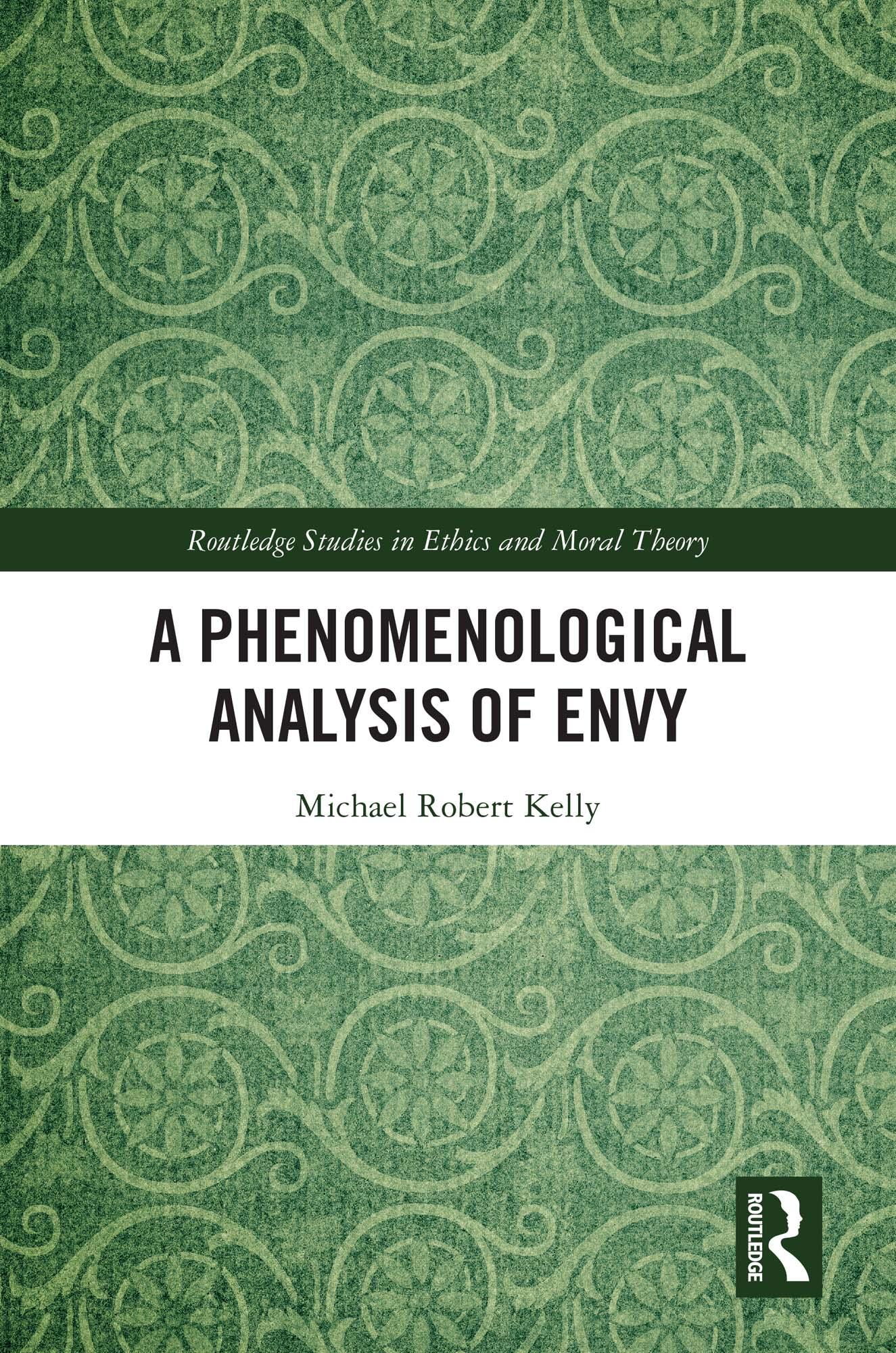
This book provides a phenomenological analysis of envy. The author’s account takes a descriptive look at the whole experience of envy as it pertains to the envier’s sense of self and the envied.
Philosophical work on envy has predominately focused on how the envier perceives, thinks about, or schemes against the person envied. This book proposes a phenomenological analysis of envy that articulates its essentially comparative character according to which we can further incorporate the role of the envier. This approach offers a novel contribution in three ways. First, it develops a notion of two predominant ways in which envy expresses itself: one that is bad for the envied and the other that is bad for the envier. Second, it renews the traditional defense of the view that envy is bad or vicious. Third, it provides original phenomenological descriptions of differences between envy and covetousness, indignation, emulation, ressentiment, and jealousy. By drawing on literary sources and social scientific literature, the author provides concrete examples of the lived experience of an envier.
A Phenomenological Analysis of Envy will appeal to researchers and advanced students working in ethics, moral psychology, phenomenology, and philosophy of emotion.
Płać wygodnie kartą, Klarną, Apple Pay lub Google Pay. Nie jesteś zadowolony? Zawsze masz 14-dniową gwarancję zwrotu pieniędzy. Więcej przeczytasz w naszych warunkach. Masz pytania? Napisz do nas na hello@memmo.org.
Memmo ułatwia naukę – gdziekolwiek jesteś na świecie. U nas znajdziesz podręczniki i sprytne narzędzia do nauki w jednym miejscu: streszczenia, quizy, podcasty i fiszki. A do tego Ted, Twój kumpel do nauki, który odpowie na wszystko, co Cię nurtuje. Ponad 50 000 studentów już tu się uczy – stworzone, byś uczył się szybciej i mniej stresował.