
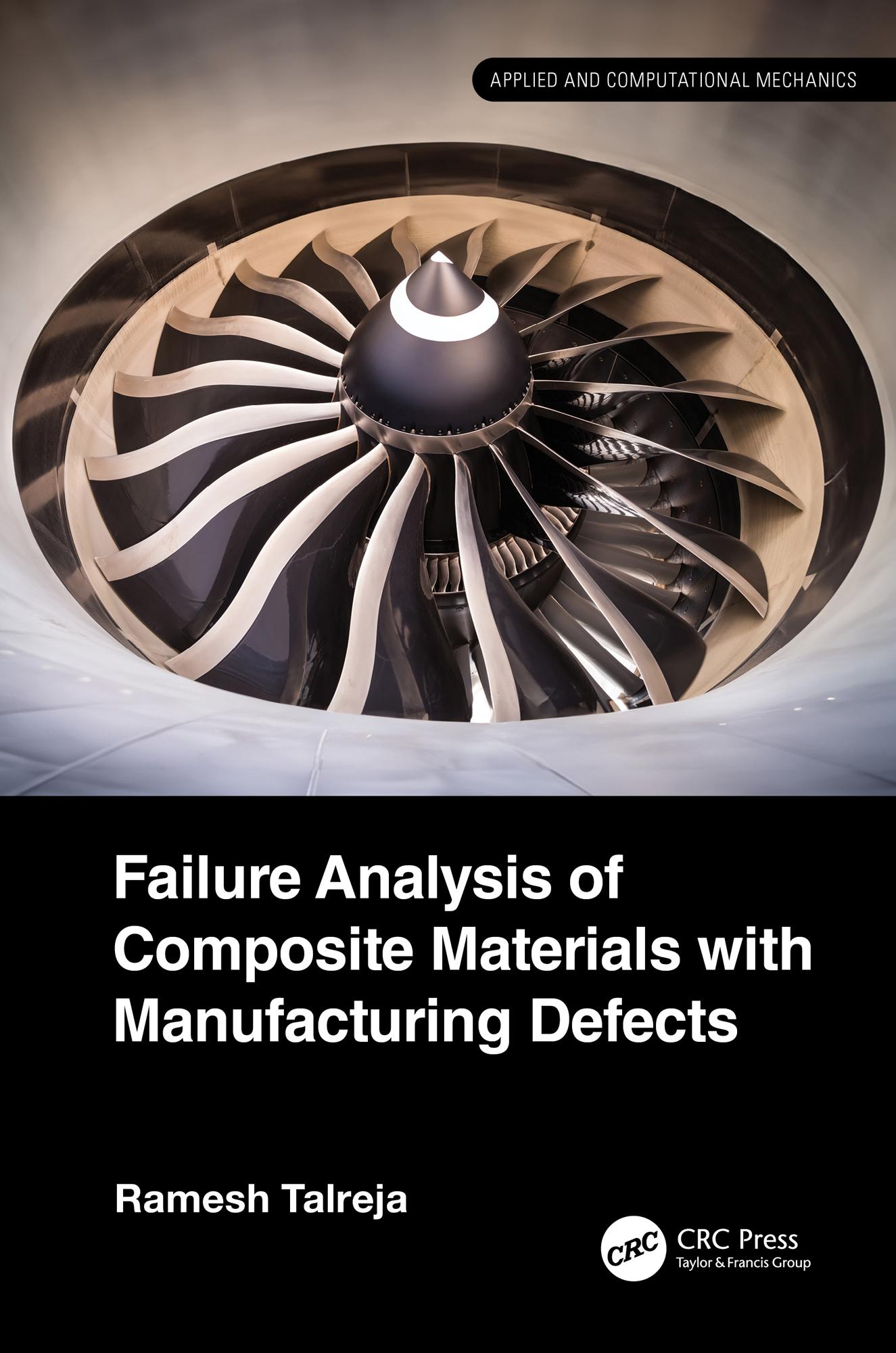
In contrast to metals, a composite material acquires an internal structure where the imprint of its manufacturing process history is a significant part of the internal structure’s makeup and in many cases determines how the material responds to external impulses. The performance for which a composite material is designed must therefore be assessed with due consideration to the manufacturing-induced features in the material volume. Failure theories based on homogenized composites cannot deliver reliable methodologies for performance assessment. This book details approaches that depart from traditional treatments by accounting for manufacturing defects in composite materials. It discusses how manufacturing defects are produced and how they affect the performance of composite materials.
- Serves as the only book to bring knowledge on manufacturing and failure modeling together in a coherent manner.
- Guides readers on mechanisms-based modeling with a focus on defects.
- Treats statistical simulation of microstructure with defects aimed at physical modeling.
- Covers manufacturing methods for polymer matrix composites.
- Describes failure modes in unidirectional composites and laminates in the presence of defects.
- Discusses fatigue damage in the presence of defects.
This book is aimed at researchers in industry and academia in aerospace engineering, mechanical engineering, and materials science and engineering. It also serves as a reference for students taking advanced courses in composite materials.
Płać wygodnie kartą, Klarną, Apple Pay lub Google Pay. Nie jesteś zadowolony? Zawsze masz 14-dniową gwarancję zwrotu pieniędzy. Więcej przeczytasz w naszych warunkach. Masz pytania? Napisz do nas na hello@memmo.org.
Memmo ułatwia naukę – gdziekolwiek jesteś na świecie. U nas znajdziesz podręczniki i sprytne narzędzia do nauki w jednym miejscu: streszczenia, quizy, podcasty i fiszki. A do tego Ted, Twój kumpel do nauki, który odpowie na wszystko, co Cię nurtuje. Ponad 50 000 studentów już tu się uczy – stworzone, byś uczył się szybciej i mniej stresował.